Niagara Falls by Augustin Satra (American, 1877–1909)
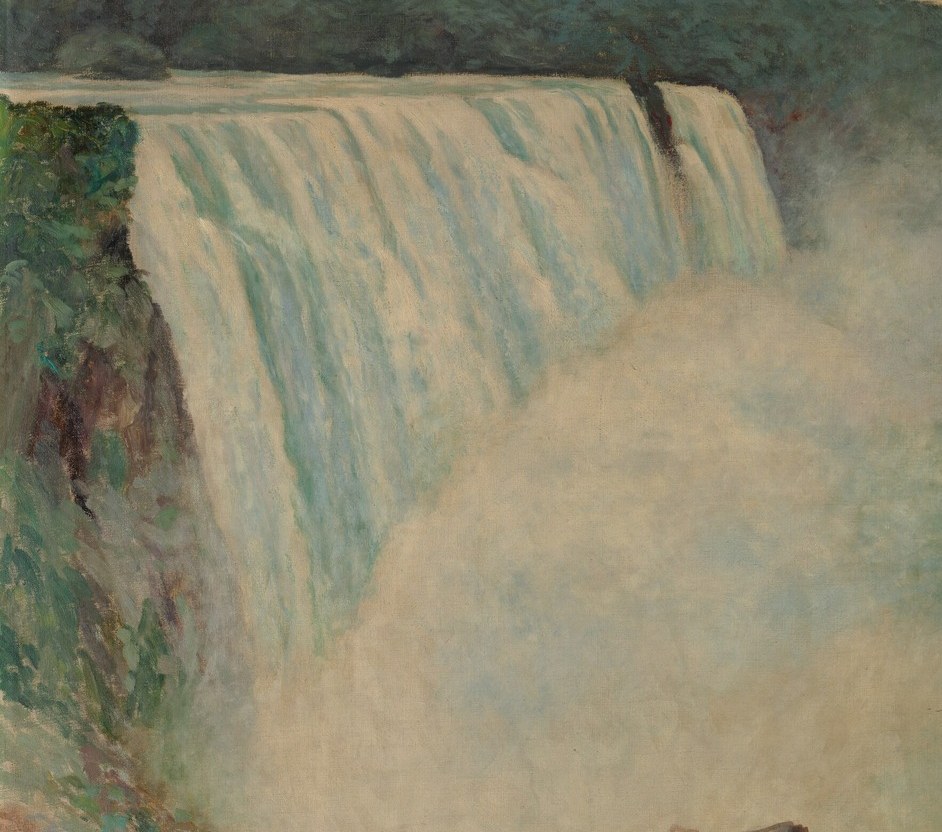
Augustin Satra's 1907 oil painting "Niagara Falls," held at The Cleveland Museum of Art, captures the breathtaking power of one of nature's wonders. Satra, an American artist, was known for his dynamic landscapes. This work was created just two years before his early death in 1909.
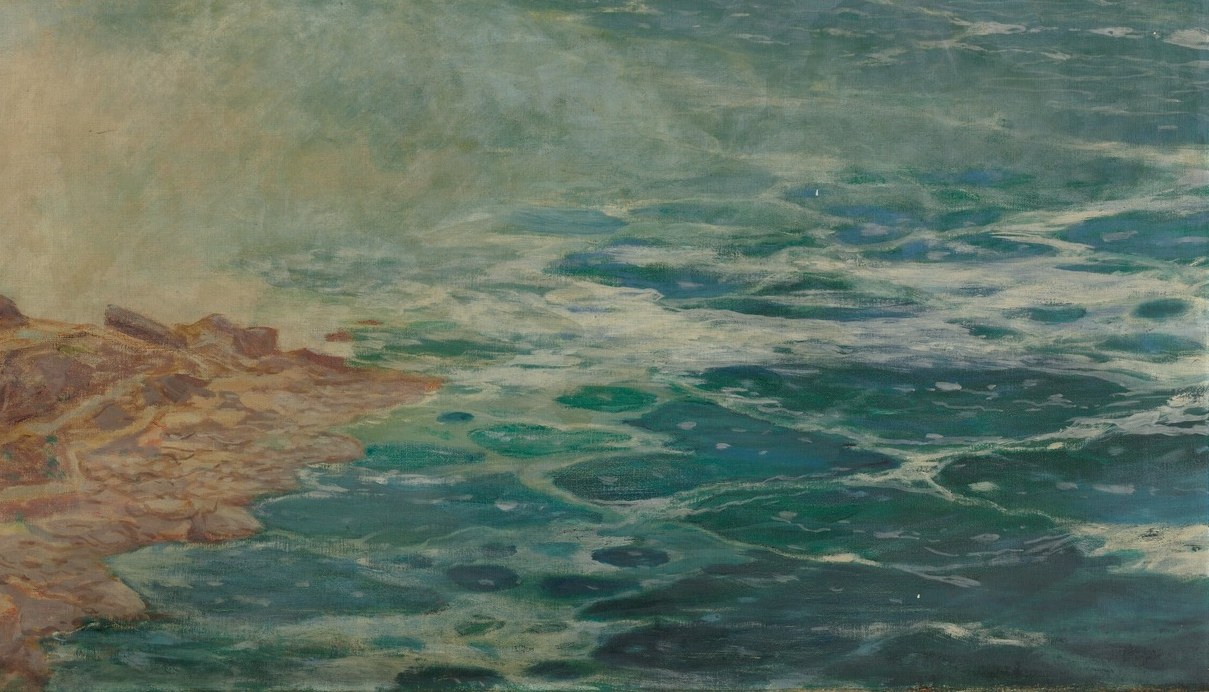
Look closely at the turbulent water where the falls plunge into the river. Satra masterfully used a pronounced impasto technique, applying thick layers of paint to give the water a tactile quality and convey its immense force. The deep green tones in the cascade further enhance the sense of depth and raw power.
The painting balances the tumultuous water with a serene background of distant trees and a soft sky. A small steamship in the foreground serves as a powerful contrast, emphasizing the sheer, overwhelming scale of the falls. Satra's engagement with iconic natural subjects like Niagara Falls solidified his place in early 20th-century American landscape painting.
What do you find most striking about this depiction of Niagara Falls?
Details


Transcript
This painting captures the raw power of Niagara Falls. The artist used thick impasto to create the turbulent water. Notice the deep green tones, suggesting immense depth and power. A tiny steamship highlights the falls' overwhelming scale. The painter, Augustin Satra, died just two years after this work.