Still Life with Apples, Sherry, and Tea Cake by Peale, Raphaelle
Still Life with Apples, Sherry, and Tea Cake, painted by Raphaelle Peale in 1822, is a small oil on wood panel that does one thing with almost obsessive focus: it makes everyday objects feel solid enough to touch.
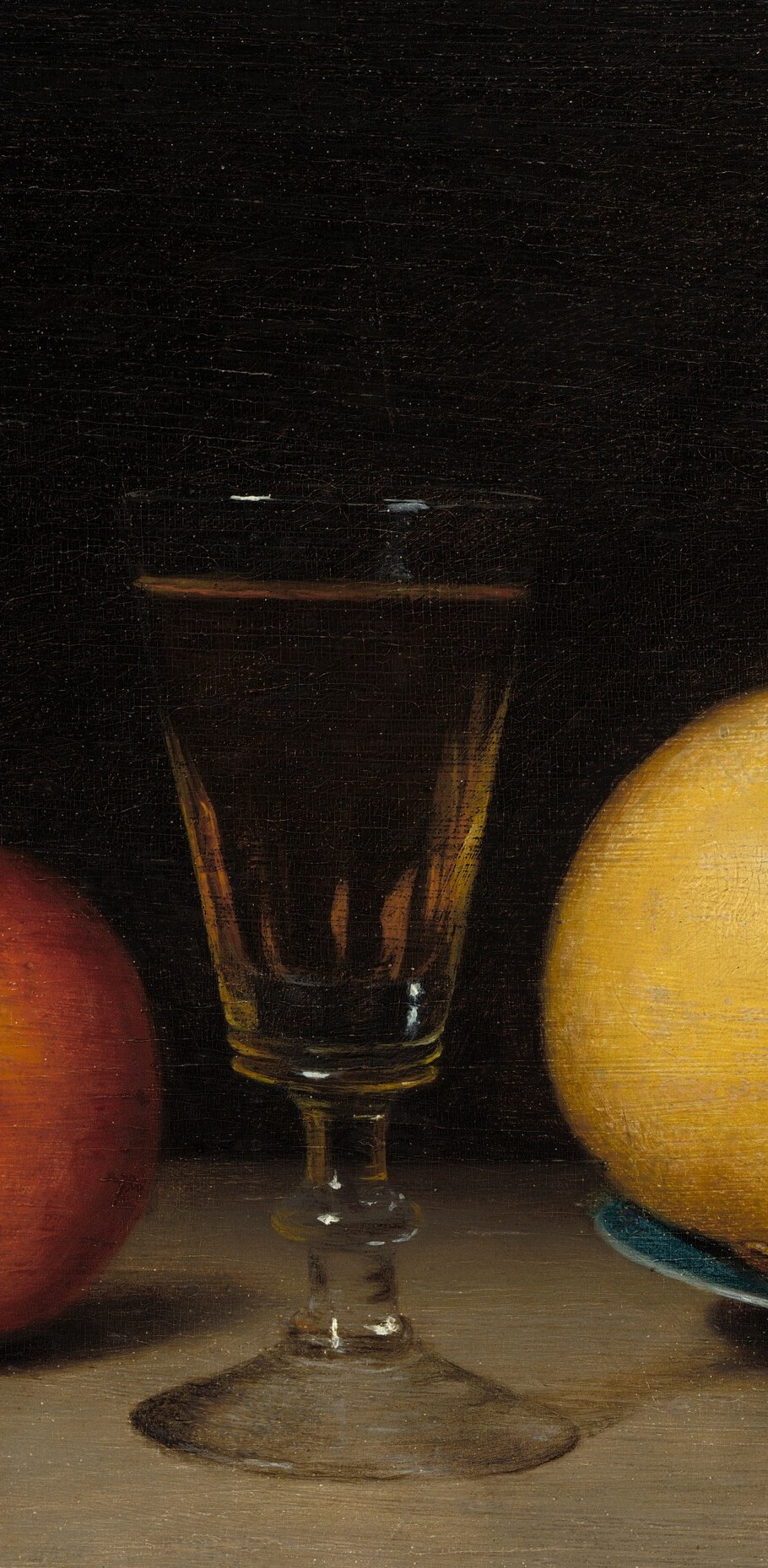
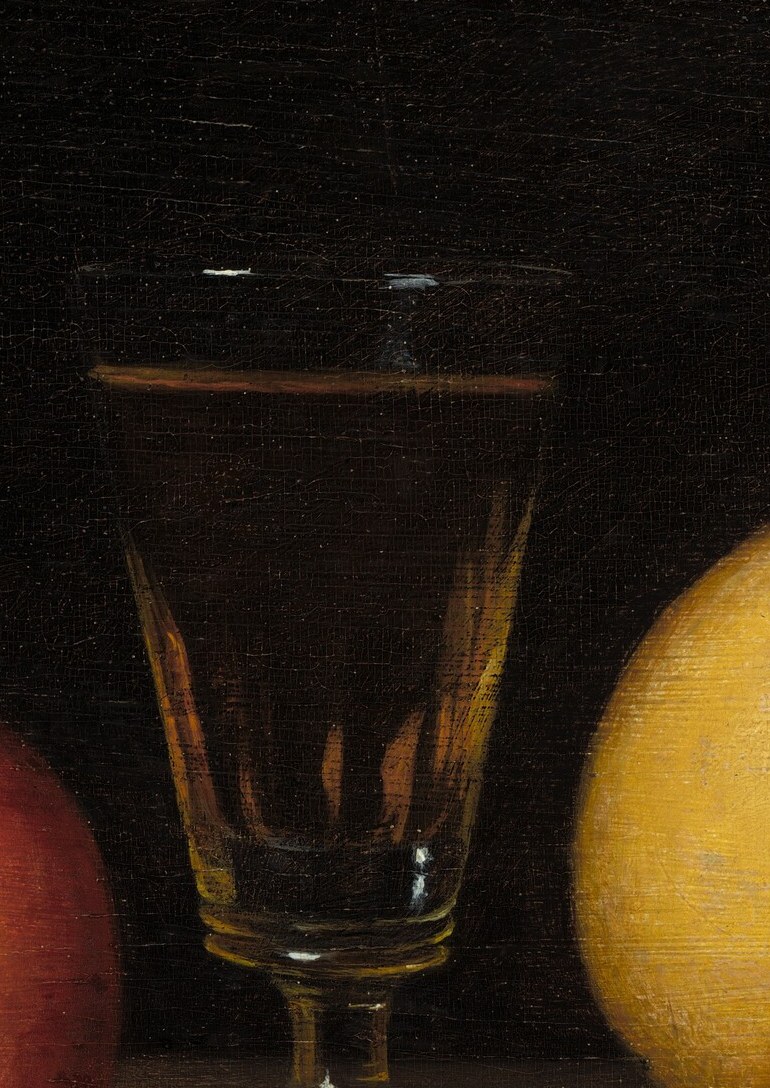
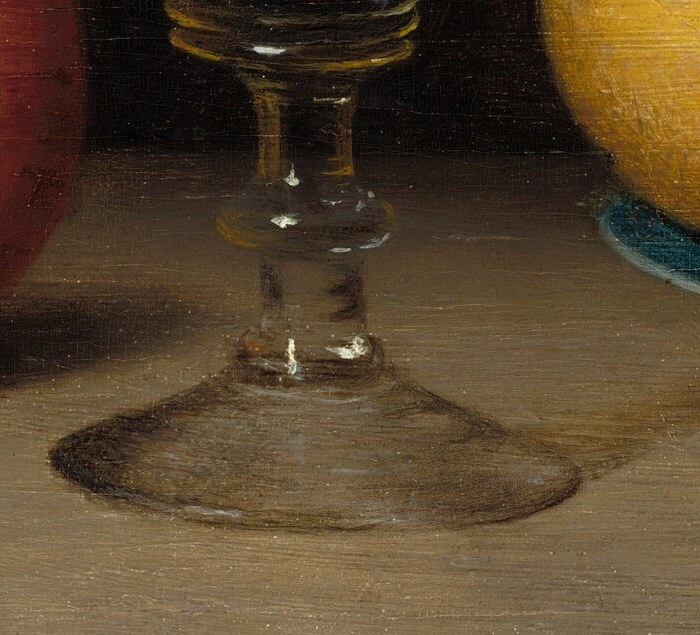
The cut orange at the right and the large pale apple at center are rendered with a quiet, even light. But the real showpiece is the tall glass of sherry. Peale built the amber liquid in thin, translucent layers of oil and glaze, letting the dark background show through so the glass reads as transparent. The faceted stem at the base contains a tiny, perfect reflection of the shelf and the shadowed room, a passage smaller than a thumbprint.
Raphaelle Peale was the son of Charles Willson Peale, the great American portraitist and museum founder, and he spent his career painting modest still lifes when the genre earned very little respect in the early United States. He exhibited this work in Philadelphia and Baltimore, but struggled financially his whole life and died at 51. His paintings were later recognized as the first truly accomplished still lifes in American art.
The narrow shelf is painted flush with the picture plane, a trompe-l'oeil device Peale used repeatedly. The shadow beneath the ledge anchors the whole arrangement, as though the fruit and glass are resting on the same surface as your screen. What detail do you find yourself returning to?
Details


Transcript
It's an apple, some fruit, a glass of wine. Raphaelle Peale painted this in 1822, on a wood panel. The shelf is painted flush with the picture plane. It's a trick. He wants you to think the fruit could fall into your lap. Now look at the glass. Peale built this transparency with layer over layer of thinned oil and glaze. The faceted stem holds a reflection of the shelf and the dark room. Two inches of paint, and it reads as light passing through amber.