Roman pilgrims by Johann Ender
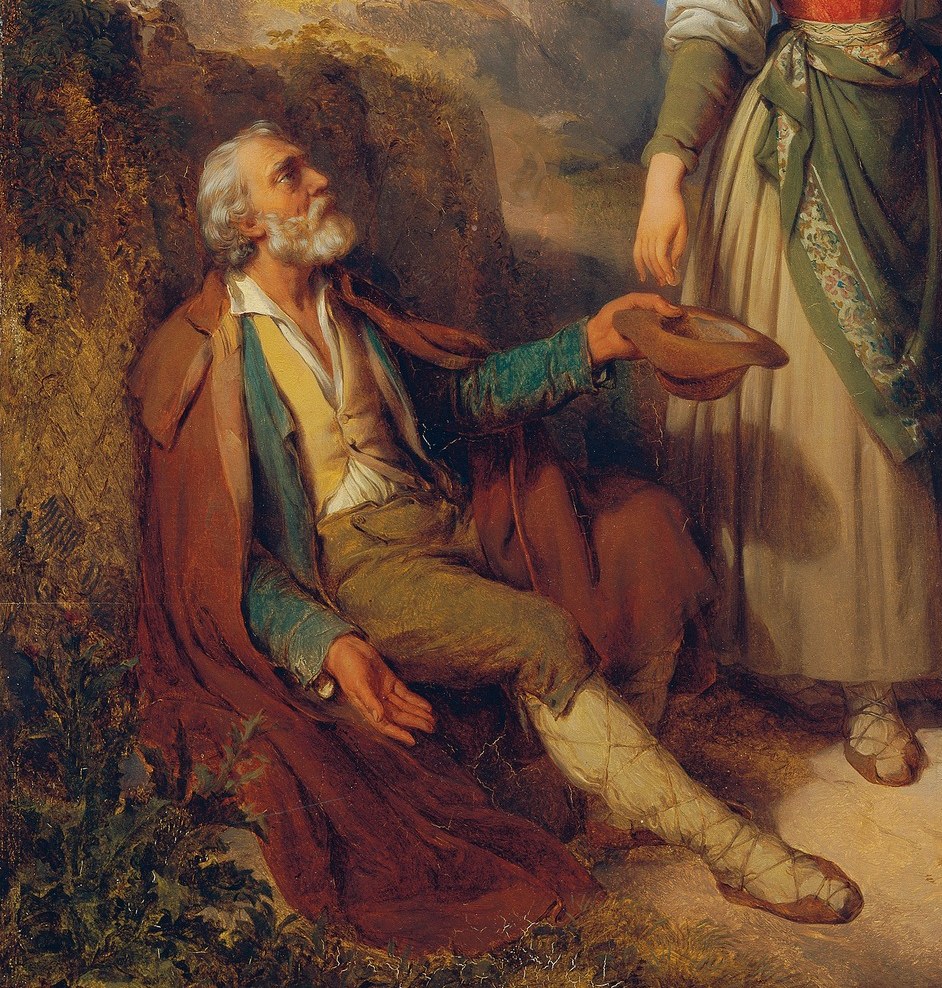
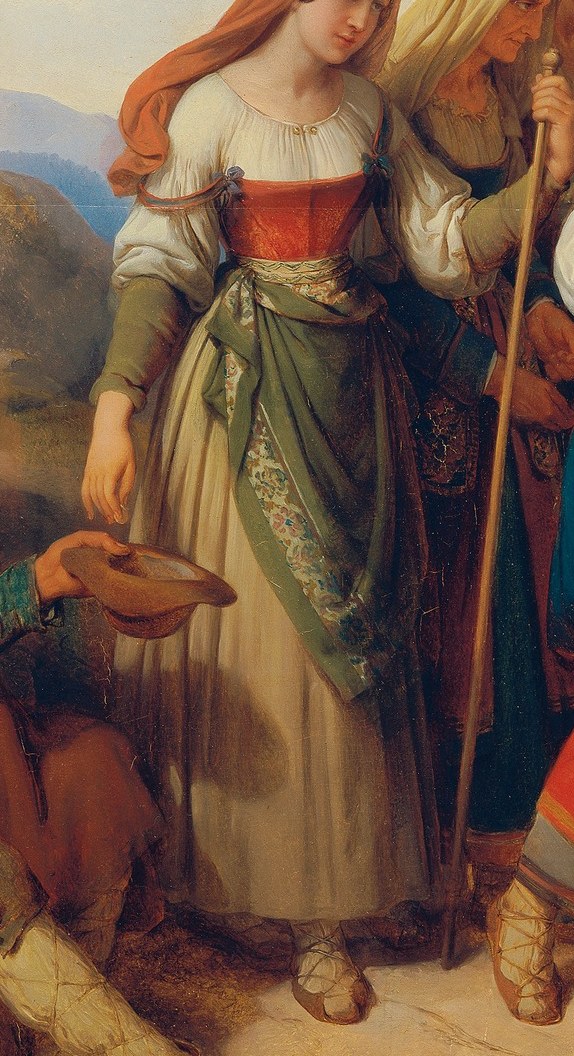
Johann Ender's "Roman Pilgrims," painted in 1843 and held at the Kunsthistorisches Museum, offers a glimpse into 19th-century travel and regional culture. This oil painting captures a group of Ciociari, a rural community from Italy's Lazio region, on their journey.
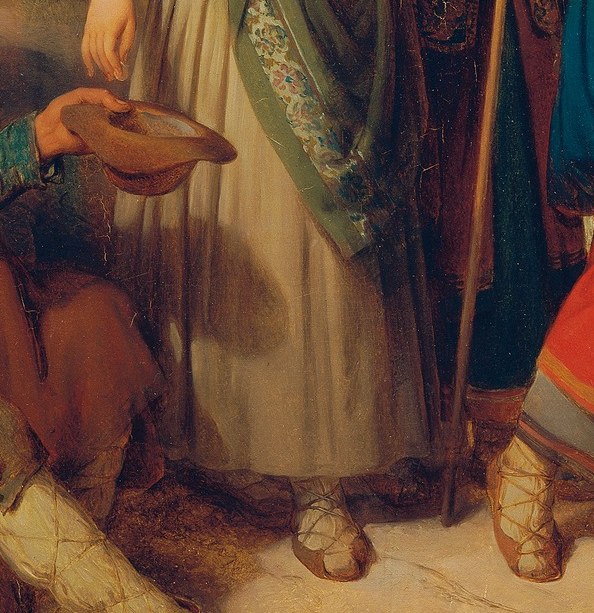
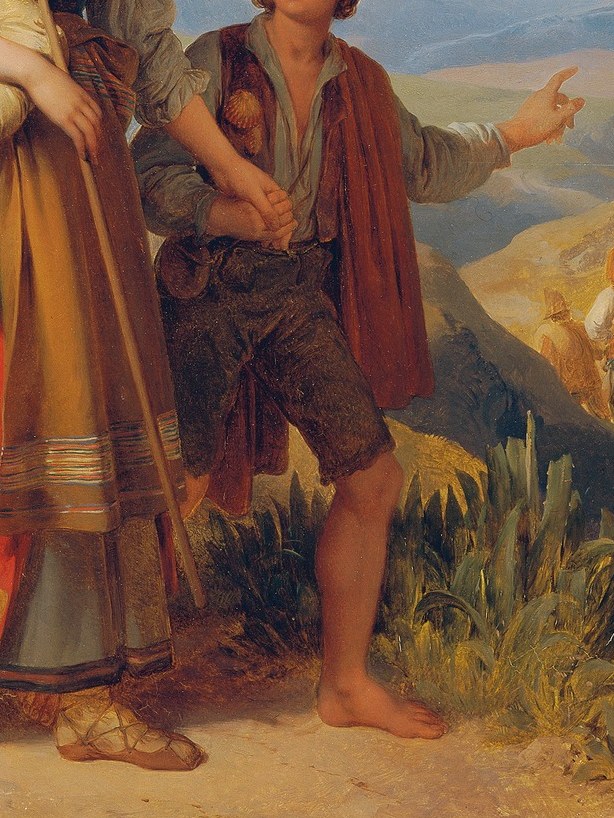
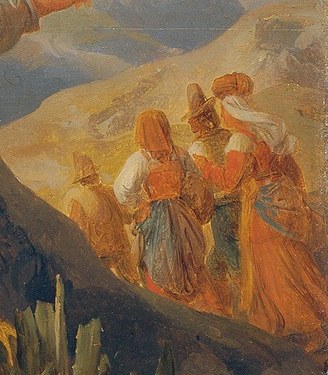
Notice their striking red-and-green striped garments, a key identifier of their traditional Ciociari costume. The young boy's outstretched arm directs our gaze towards their unseen destination, likely a holy site near Rome.
During the mid-19th century, there was a growing European interest in regional folk attire and religious journeys, often tied to Romantic nationalism. Ender's work fits this trend, serving as a visual record of traditional dress and the cultural practice of pilgrimage that connected rural communities to sacred Roman sites.
It is a fascinating snapshot of a specific time and place, preserving cultural details that might otherwise be lost. What details in the painting capture your eye?
Details
Transcript
This painter shows pilgrims on a journey to Rome. They are Ciociari, a rural community from central Italy. Their distinctive striped garments identify them instantly. The young boy points to their distant destination. Paintings like this documented folk attire and religious customs. It reflects 19th-century Romantic interest in local cultures.