Madonna and Child by Ambrogio Bergognone
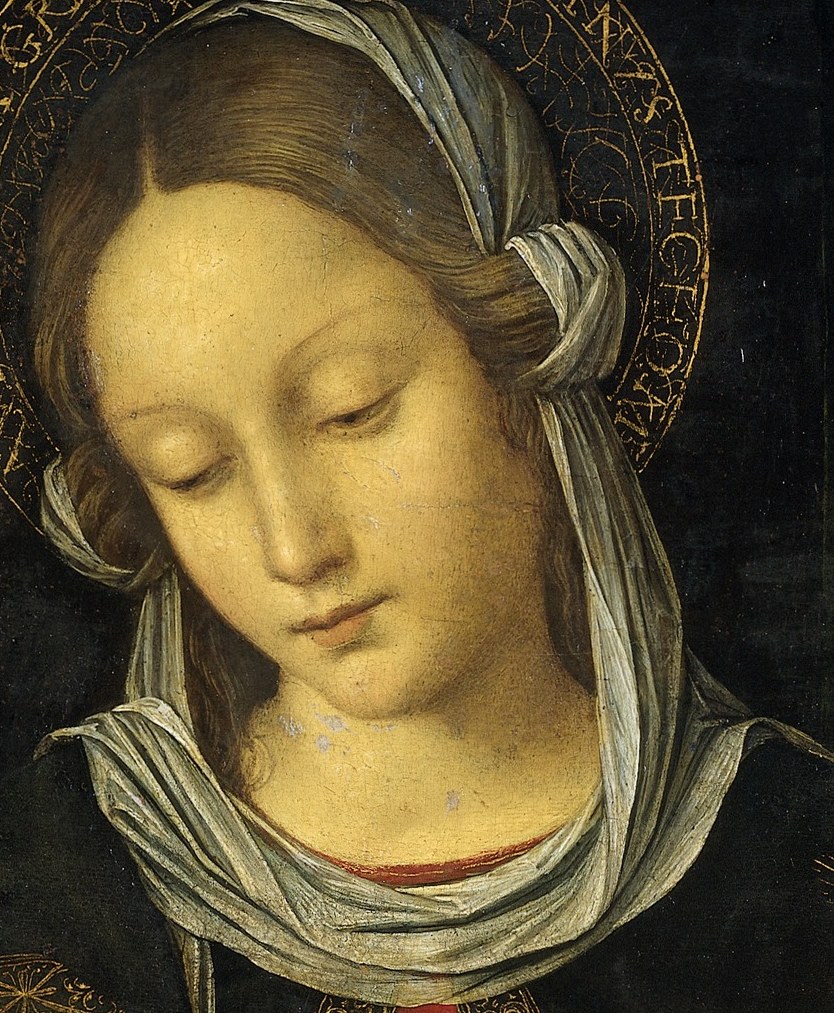
This is Ambrogio Bergognone's Madonna and Child, painted around 1550 and housed at the Rijksmuseum. The painting reflects the elegant, often elongated forms of the Mannerist style, moving away from High Renaissance balance.
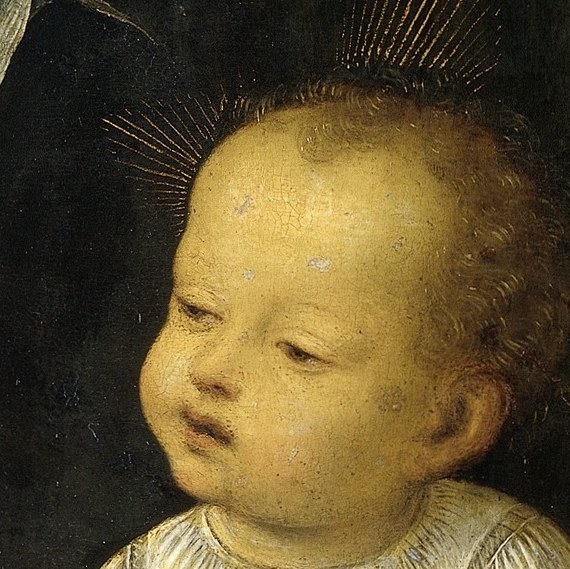
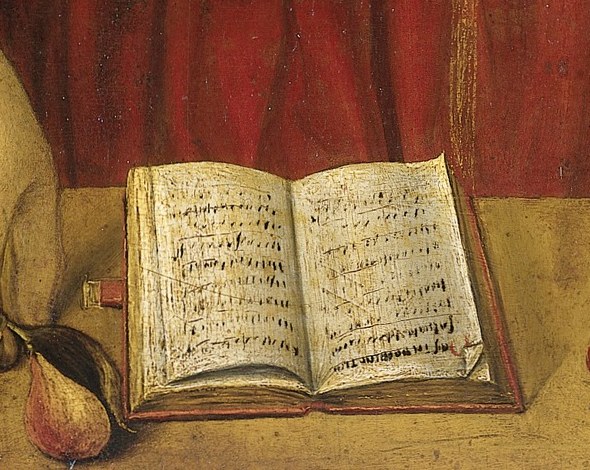
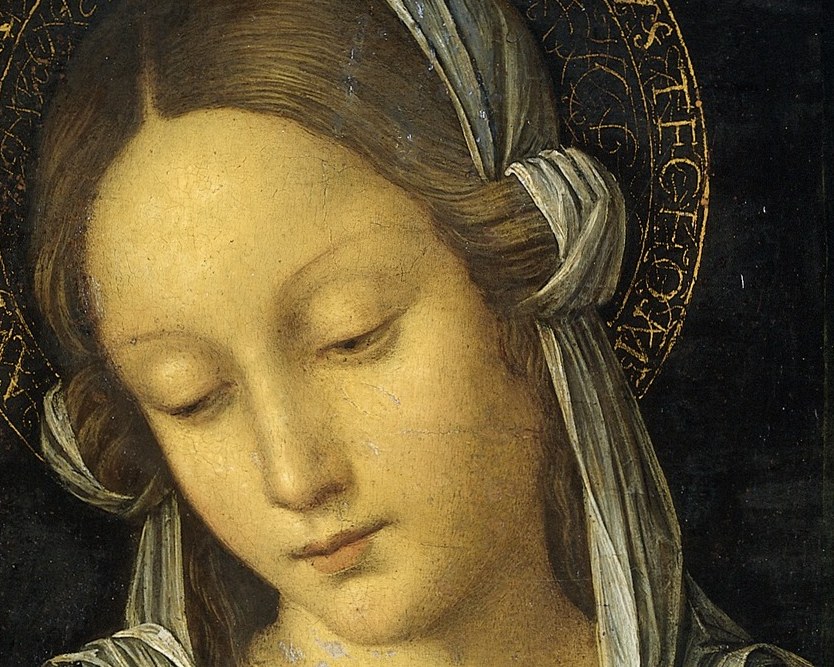
Observe the Madonna's downcast gaze and the Child's slightly bewildered expression. Notice the musical notation in the open book and the two oranges on the table, elements that add naturalism and potential symbolic meaning.
Ambrogio Bergognone was an Italian painter active near Milan. This work exemplifies devotional art common during the Renaissance, a period of significant religious fervor and artistic innovation. The use of oil paint allows for rich color and subtle modeling.
It offers a serene yet grounded depiction of the Virgin Mary and Christ Child.
Details
Transcript
Her gaze suggests deep contemplation. The child looks bewildered, but holds his rosary. Musical notation is visible in the open book. Two oranges rest near the figures. The halos suggest divine status. This was painted around 1550. The Mannerist style emphasizes elegance.