Horses in a Meadow by Degas, Edgar
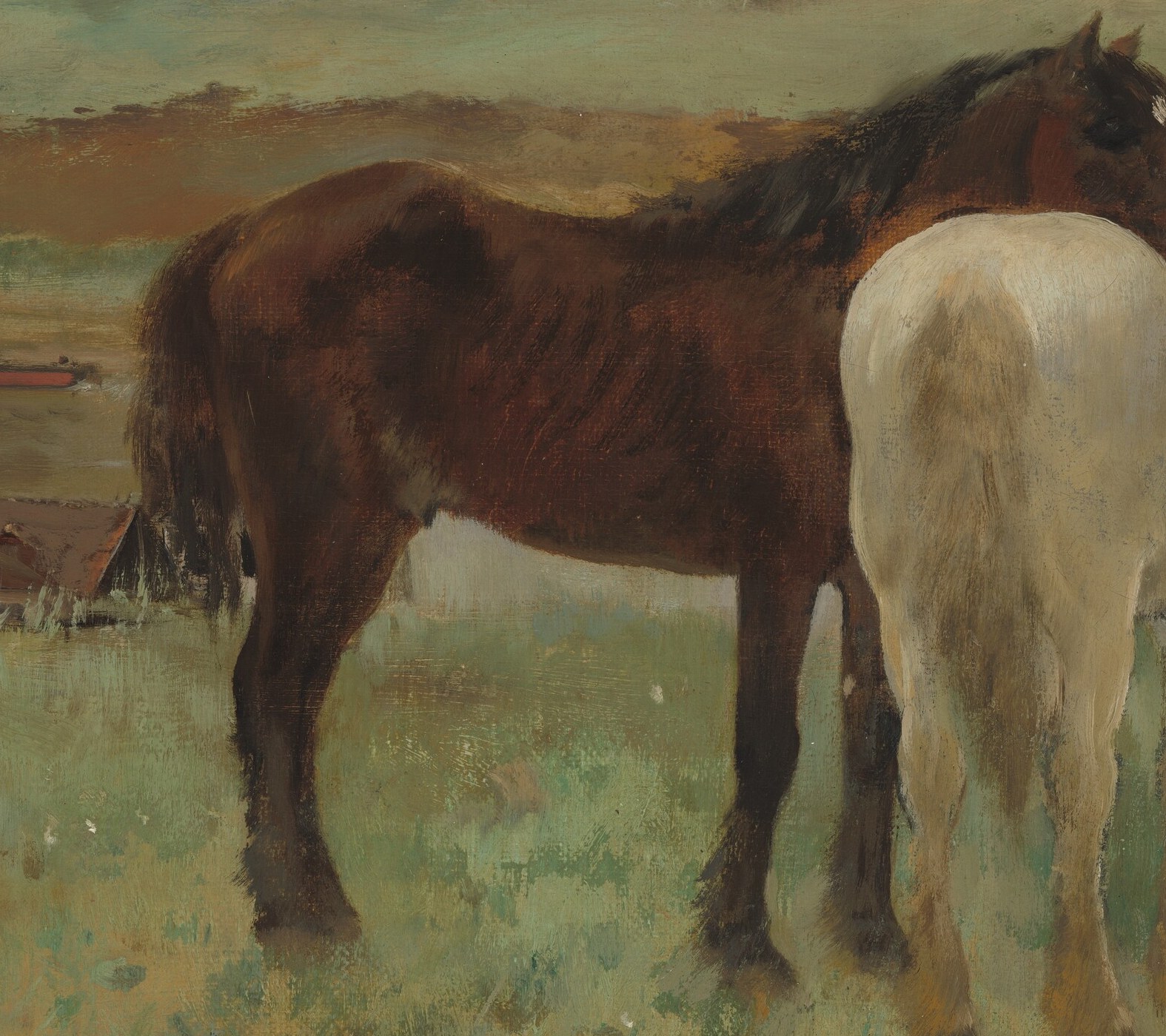
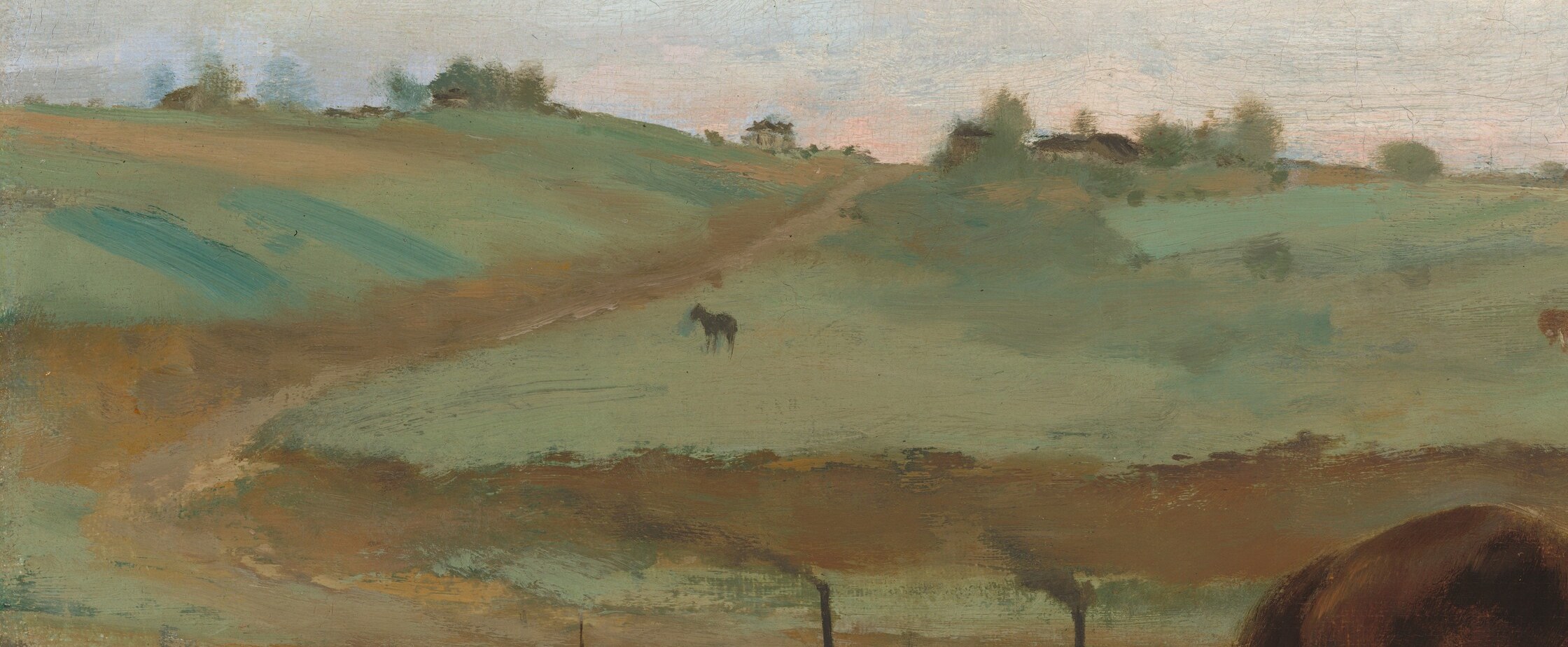
Edgar Degas, though often associated with Impressionism, preferred the term Realist for his work, as seen in "Horses in a Meadow," painted around 1871. This oil on canvas, now in a private collection, beautifully showcases his mastery of light and texture, even in a pastoral scene.
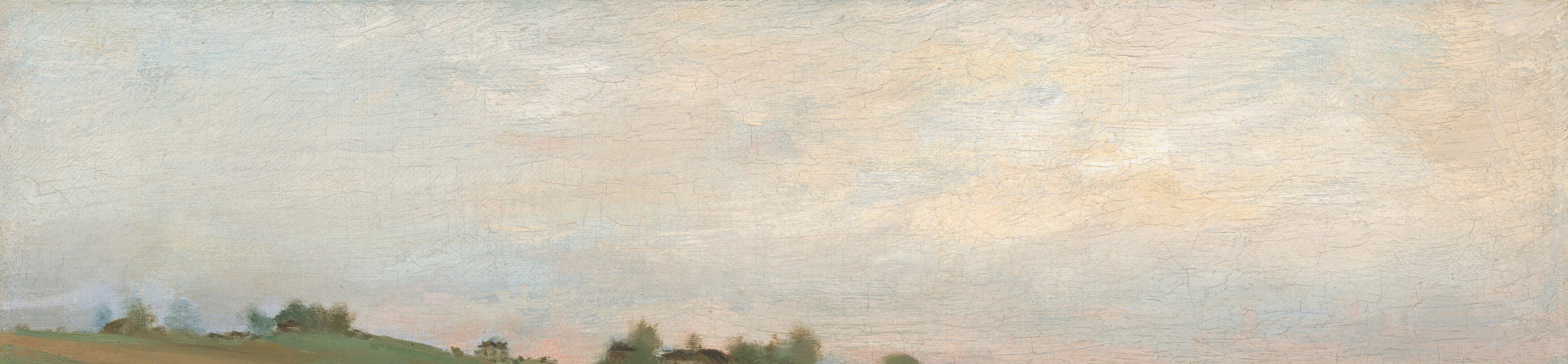
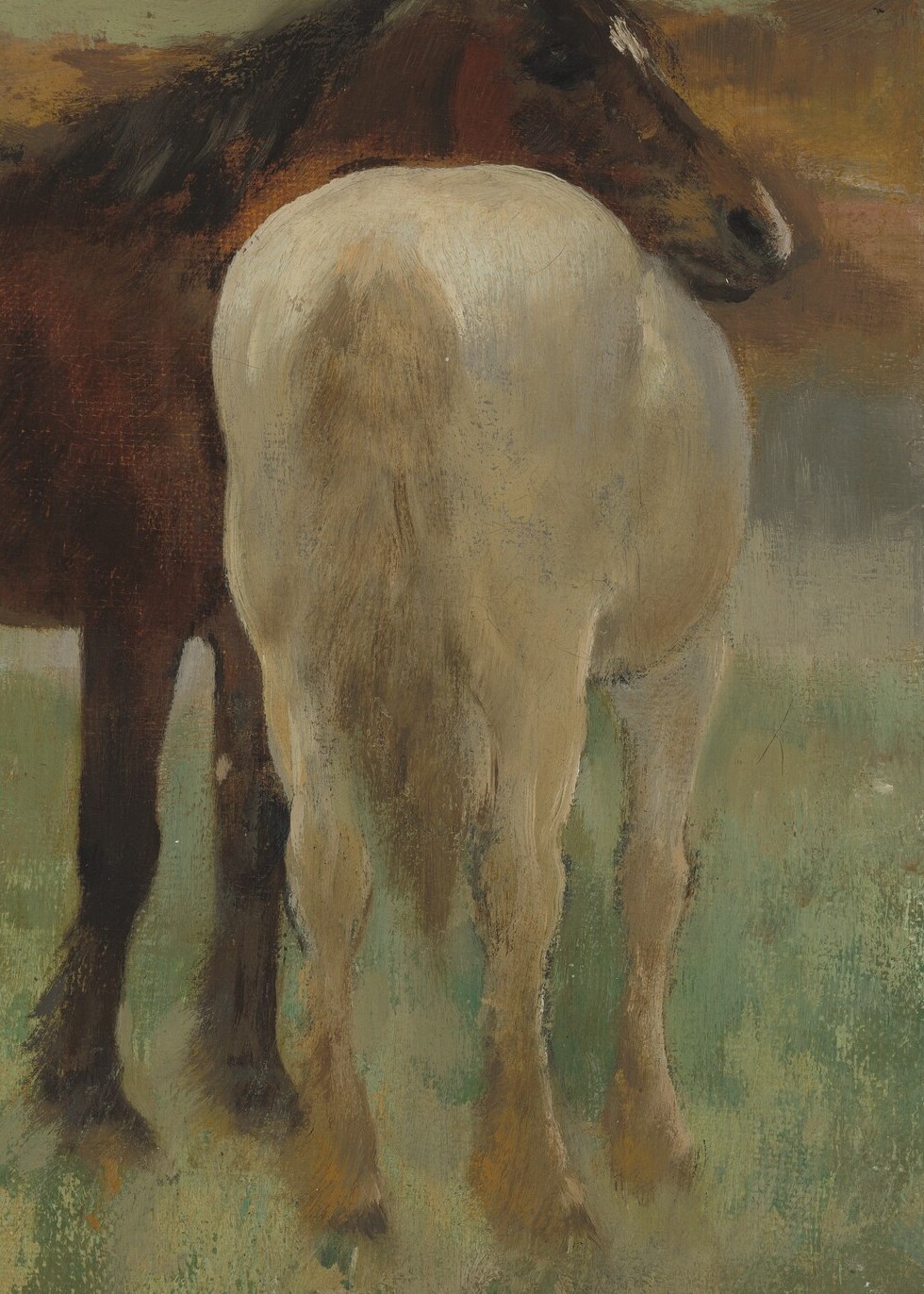
Observe the exquisite detail in the horses' coats and the soft, diffused light of the sky. Degas’s technique of blending colors, especially evident on the white horse's hindquarters, creates a remarkably lifelike texture without hard lines. It’s a testament to his observational skills and his ability to render movement and form with precision.
While famously known for his dancers, Degas also painted racehorses and scenes of contemporary life, reflecting his broader interest in the world around him. This piece captures a serene moment in the French countryside, demonstrating his skill in bringing traditional methods to modern subjects.
What do you notice most about how Degas rendered these animals?
Details
Transcript
This painter was called a Realist, not an Impressionist. But look at the softness of the sky, painted with blended light. He captures the quiet dignity of these animals. Notice how the light touches the white horse's hindquarters. No harsh lines, just subtle variations in texture and color. This delicate blending creates their lifelike appearance.