Matilda Caroline Cruger by American 18th Century
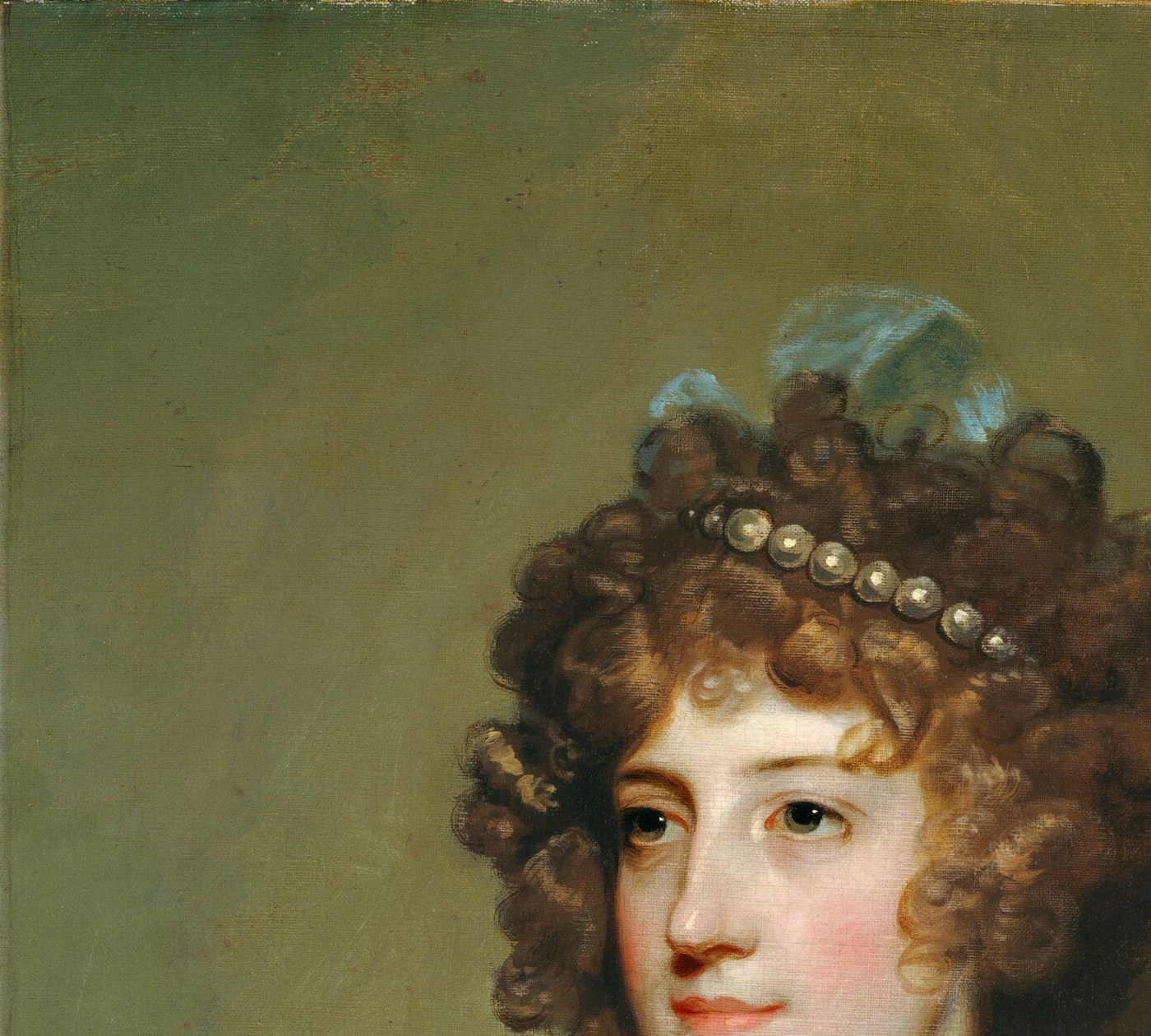
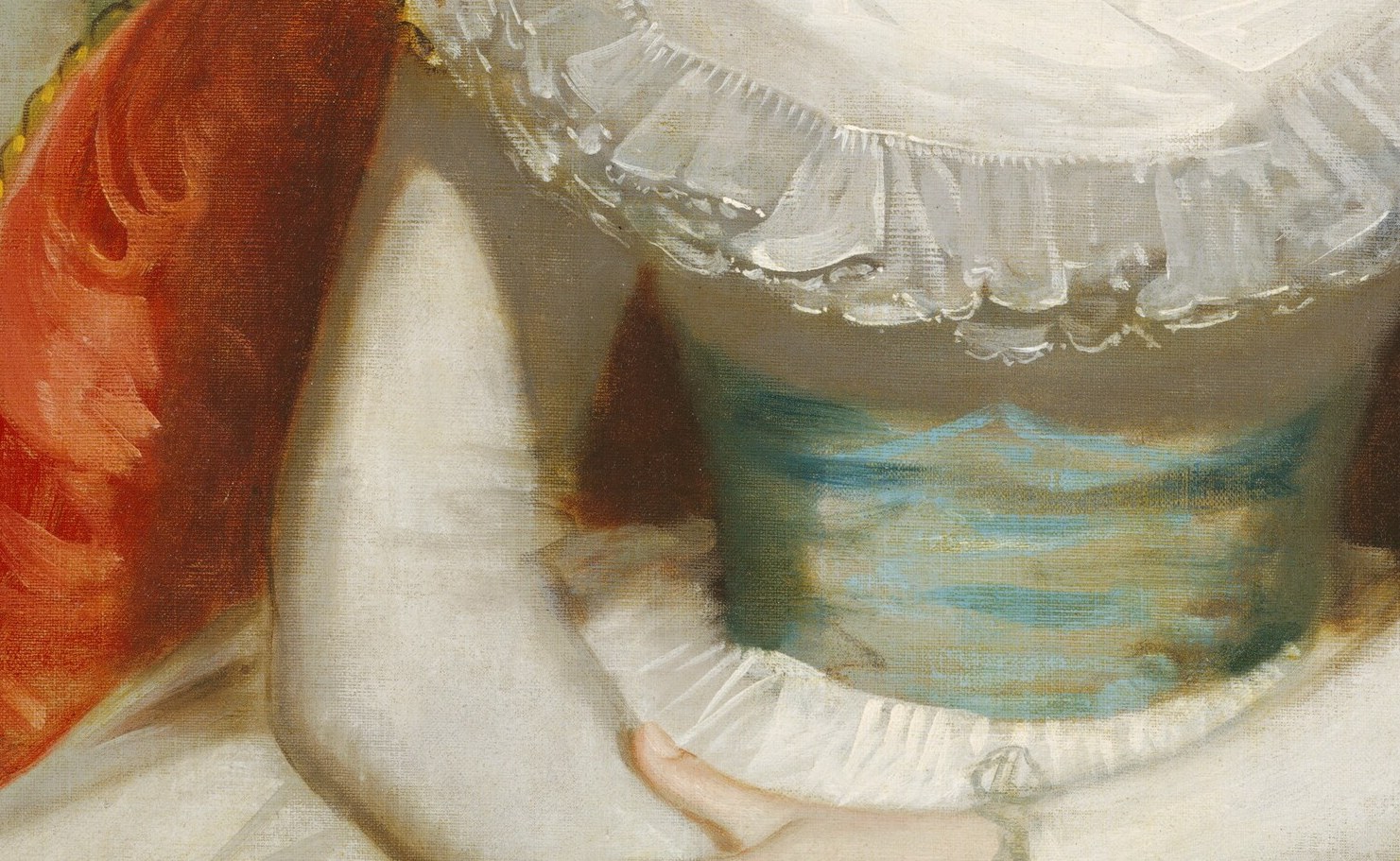
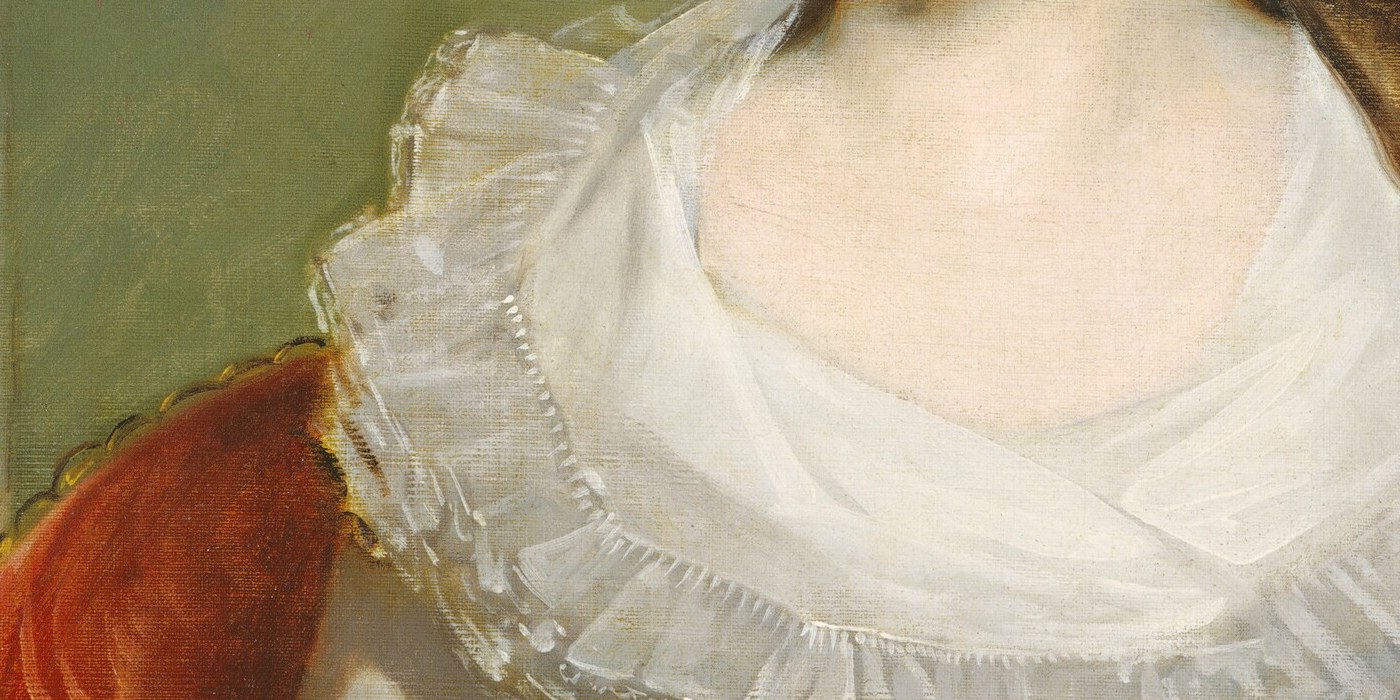
This is Matilda Caroline Cruger, painted around 1795 by an unidentified American artist. The portrait is a quiet encyclopedia of late-18th-century signals. Her pearl hair ornament, the blue Empire-waist sash, the red upholstered chair, the elaborate lace fichu: none of it is accidental. Every element announces rank, taste, and virtue to a viewer who knew the code.
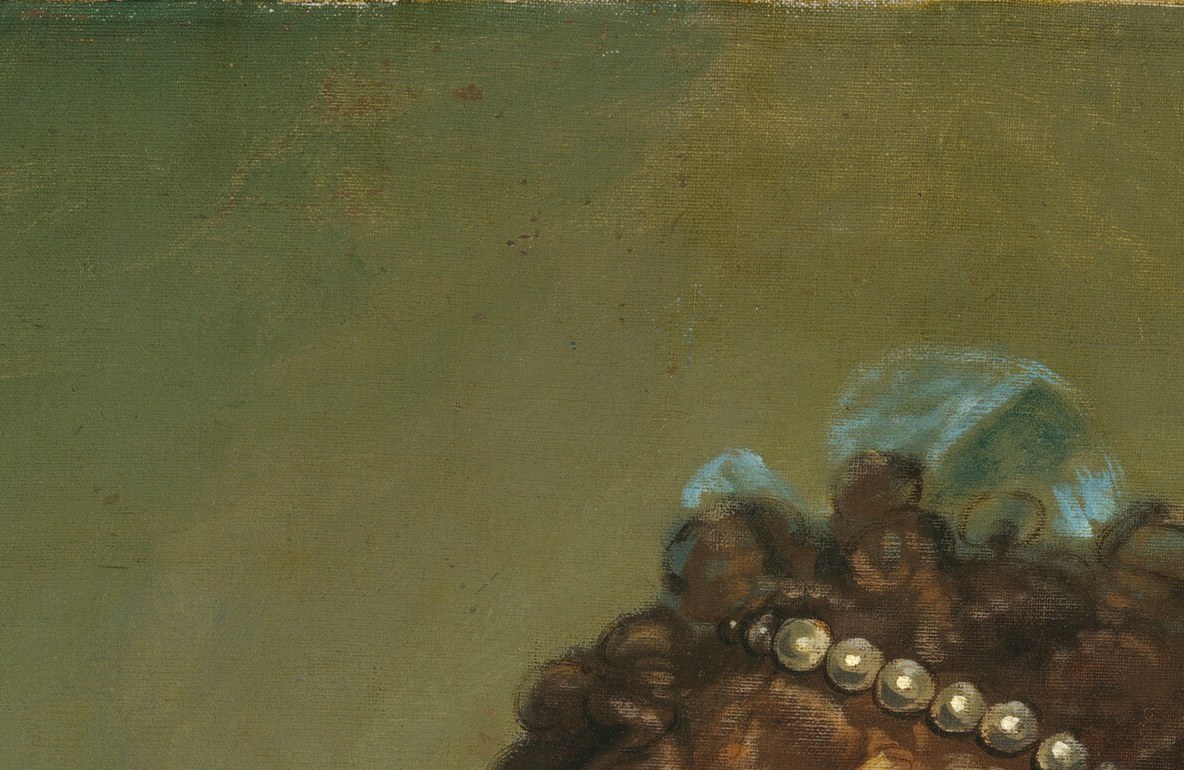
Look first at her hands, clasped loosely in her lap. In Federal-era portraiture, composed hands were a shorthand for self-control and genteel upbringing. Then let your eye climb to the pearl bandeau nestled in her tightly curled hair. Hair ornaments of this kind were fashionable among women who followed the Neoclassical taste of the 1790s, and they cost enough to signal real wealth.
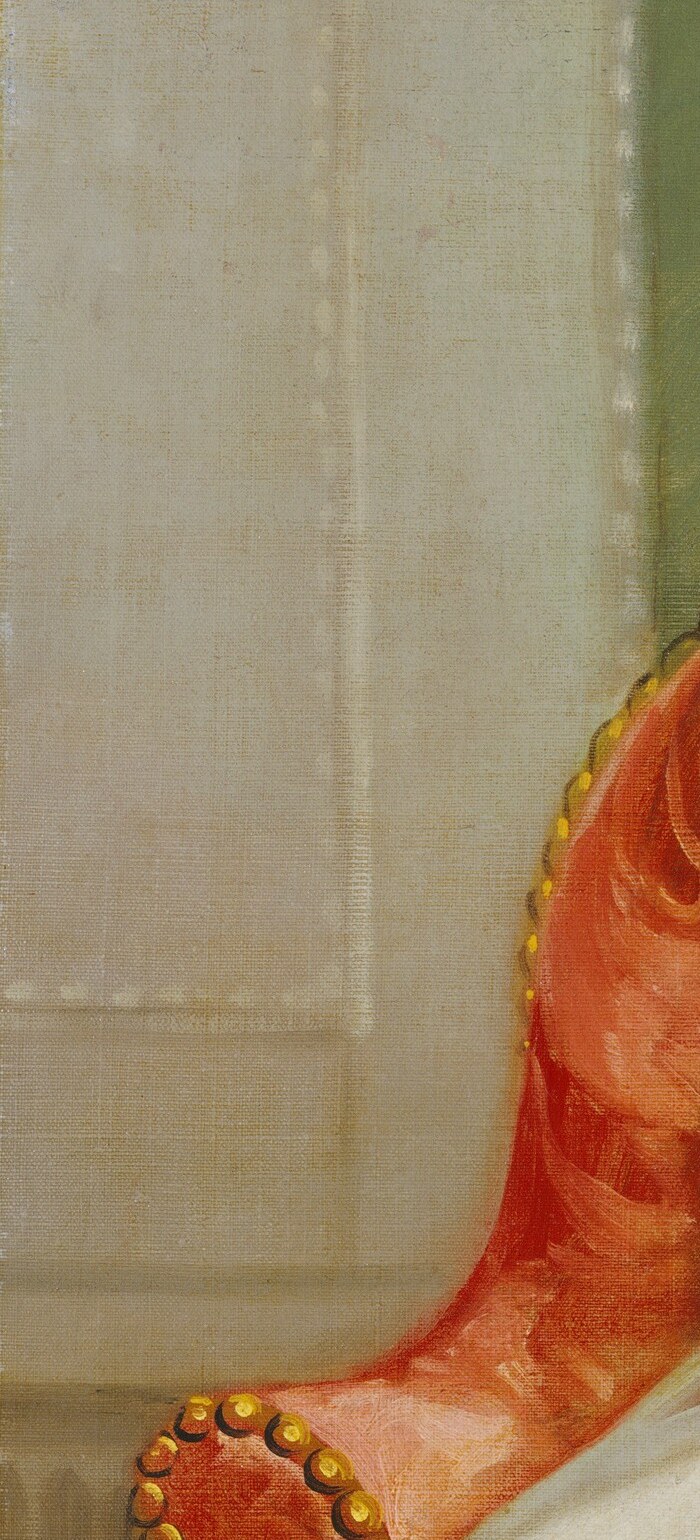
The red velvet chair arms flanking her on both sides balance the composition and confirm the setting as a refined interior. The pale architectural element in the upper left background reinforces the sense of a proper room. Together, these props frame Matilda not as an individual personality but as an ideal of her class.
The artist remains unknown, but the technical care is unmistakable: the translucent white muslin of her dress, the intricate lace edging, the soft modeling of the skin. These passages reward close looking and remind us that even unattributed portraits could carry immense skill and social purpose. What detail in the painting first told you she was someone of consequence?
Details
Transcript
A young woman sits for her portrait. Her name is Matilda. Her hands rest in her lap like a lesson learned. In the 1790s, folded hands signaled modesty and good breeding. The pearl band across her forehead declares social rank. A blue sash cinched just below the bust marks the Empire silhouette. And the red velvet chair makes the claim complete: she lives among fine things. Every coded object adds up to the same message: here is a woman of virtue and means.