The Small Crucifixion by Grünewald, Matthias
This is The Small Crucifixion, painted by Matthias Grünewald around 1516. It was not made for a palace or a cathedral, it was made for the hospital chapel of the monastery at Isenheim, where monks of the Antonite order treated patients suffering from ergotism, a horrific disease known as St. Anthony's Fire that caused convulsions, gangrene, and the slow decay of living flesh.
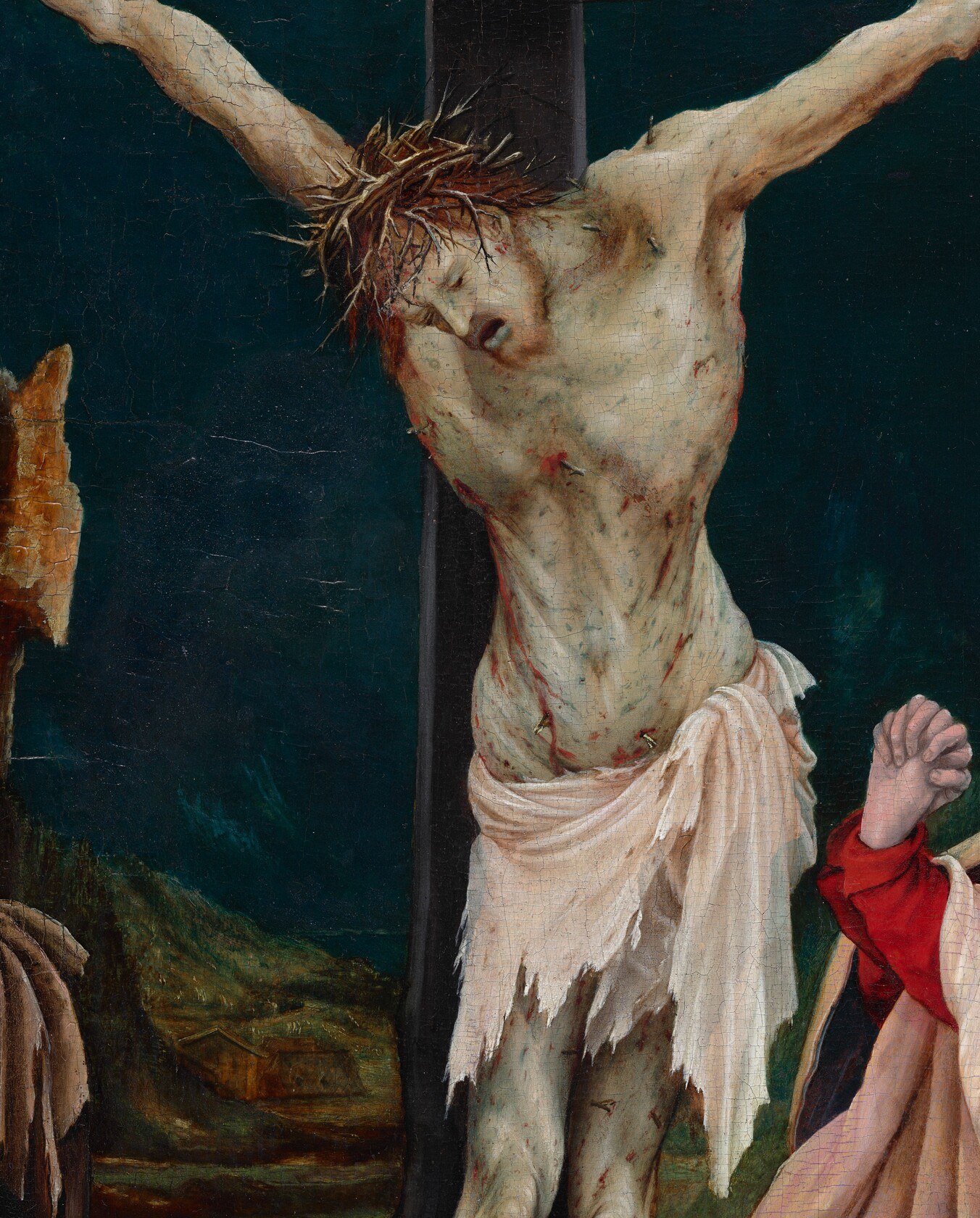
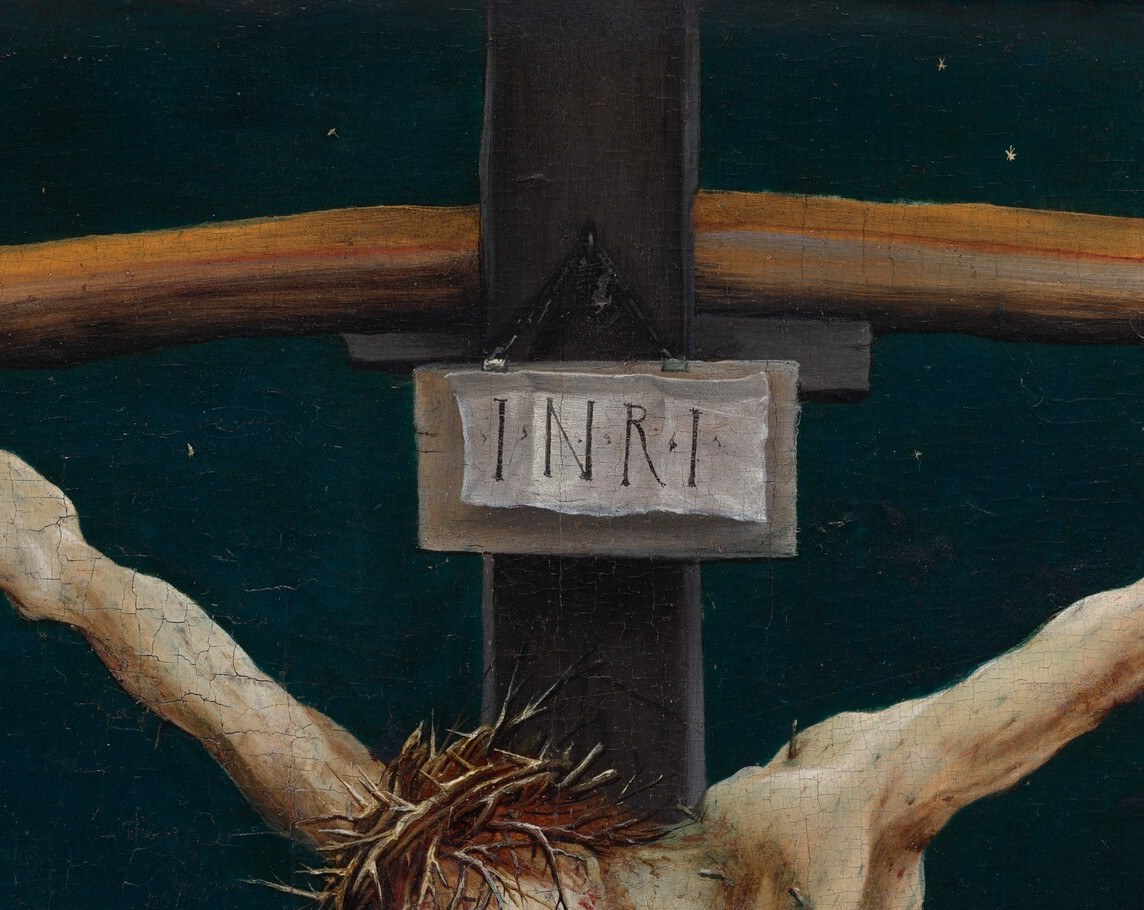
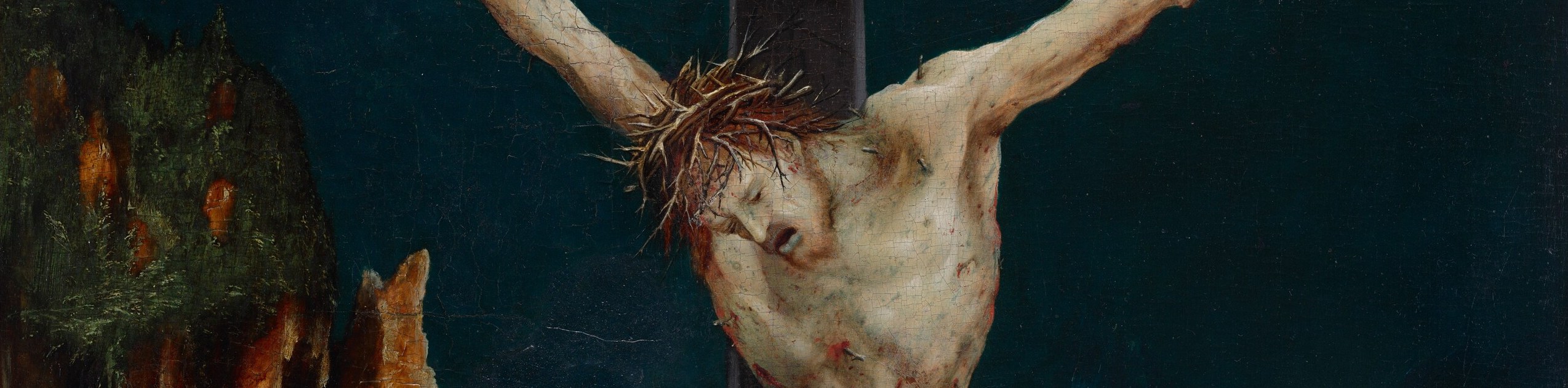
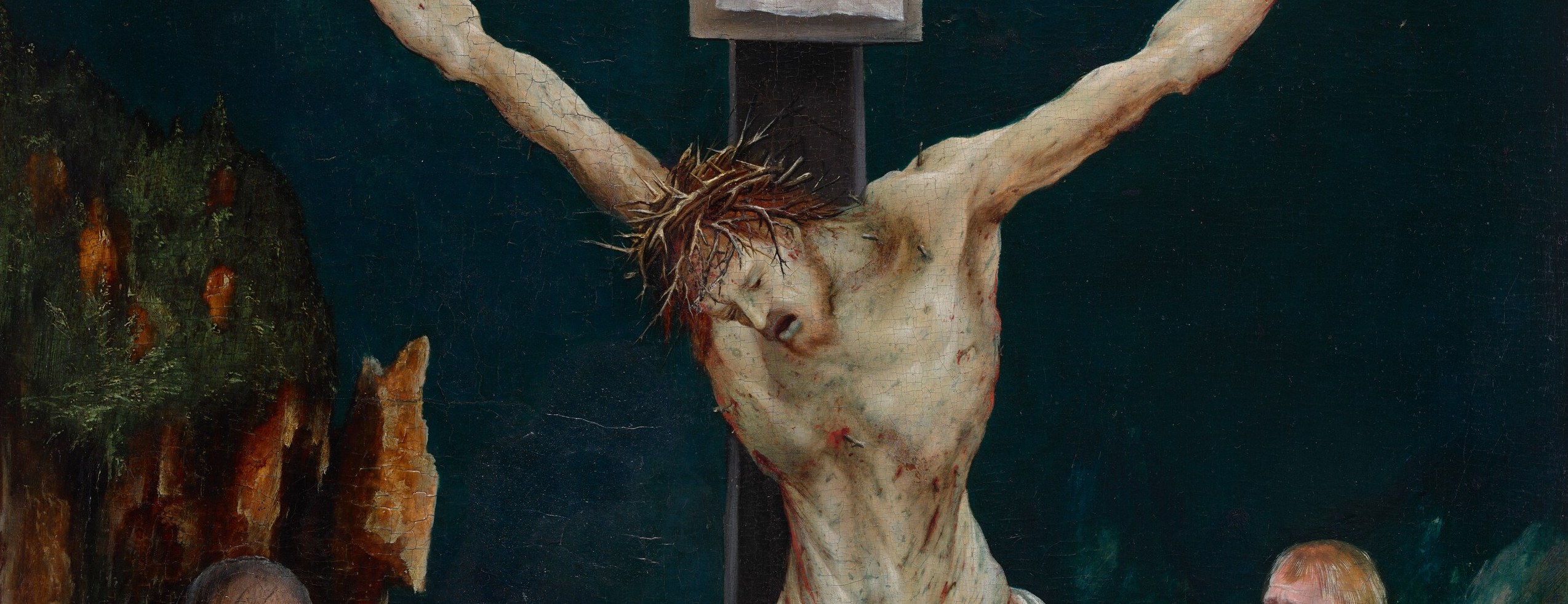
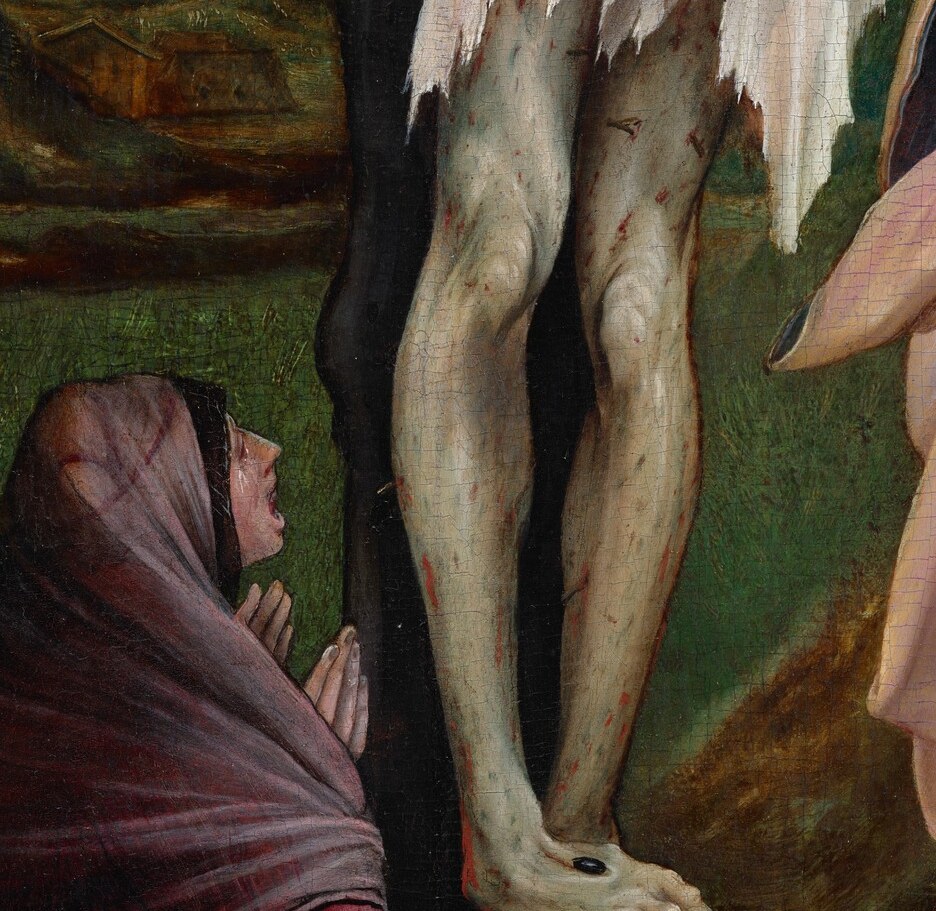
Look at the body. The skin is greenish-grey, studded with puncture wounds and streaked with dried blood, not the clean, pale Christ of Italian Renaissance painting. The fingers are curled and clawed in a final spasm around the nails. The crossbeam bows visibly under his weight, a detail unique to Grünewald. This is an execution, not an allegory.
For the patients who lay before this panel, Christ's body was not remote theology. It was their own body, mirrored back with terrible precision. The painting said: God knows what it feels like to rot. Grünewald was virtually unknown in his lifetime, fewer than fifteen works survive, and many of his paintings were later misattributed to Dürer, now seen as his stylistic opposite.
There is no resurrection in this frame, no hint of morning. Just a mother collapsing in grief, a friend holding her steady, and a body that has stopped being a symbol. That is what makes it a work of profound care.
Details
Transcript
Around 1516, a strange painting was hung in a hospital church. It was made for victims of ergotism, a disease that rots the skin. The monks treated patients in front of this image. His greenish flesh and puncture wounds mirrored their own bodies. The crossbeam literally bends under his dead weight. Grünewald gave the dying a god who looked like them.