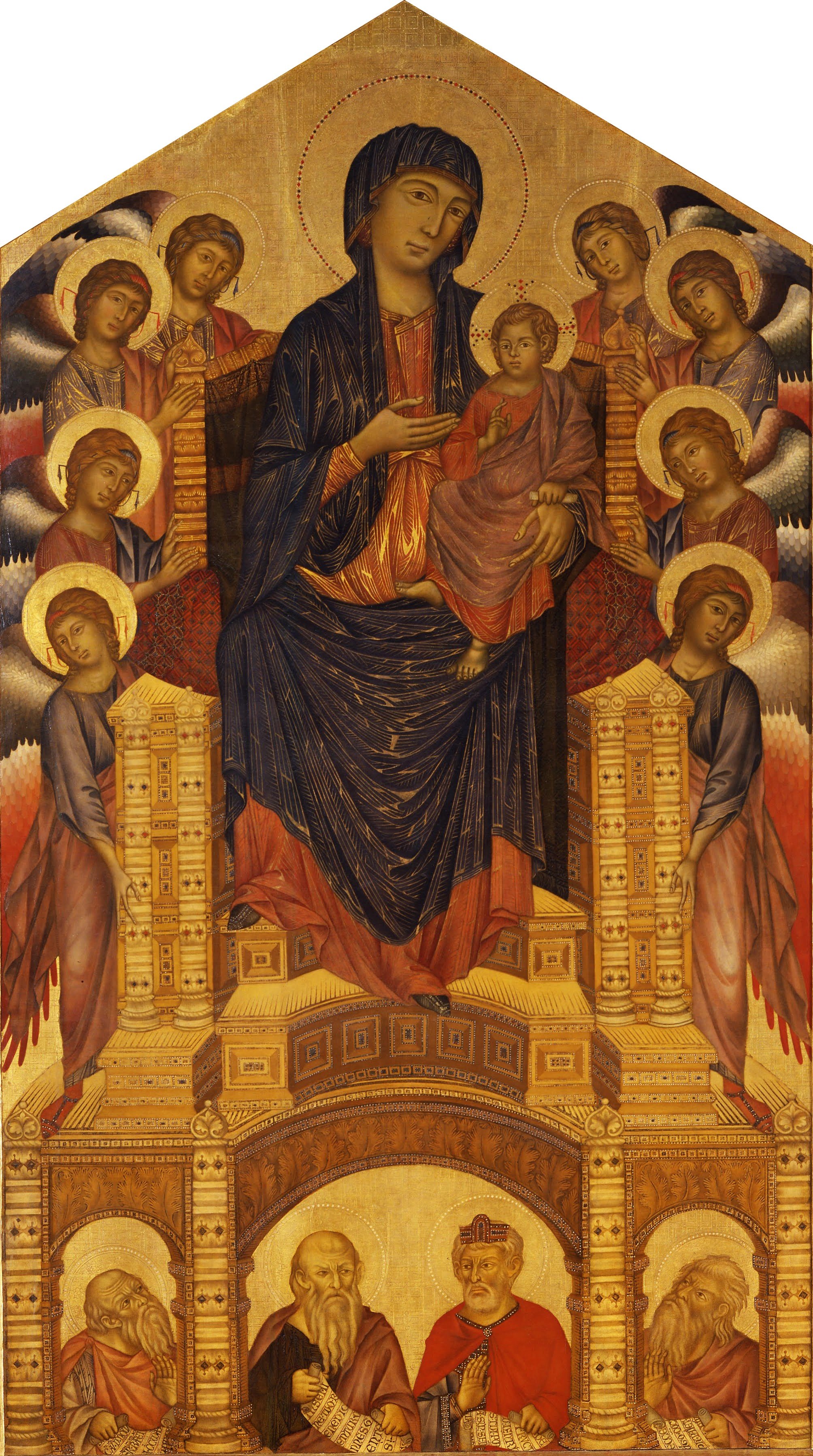
Madonna and Child Enthroned with Angels and Prophets. ˋSanta Trinità Maestà´ by Cimabue
Cimabue's *Santa Trinità Maestà*, painted around 1290 and now in the Uffizi Gallery, is a monumental altarpiece that marked a pivotal shift in art history. It captures a new human tenderness in religious painting, moving away from rigid Byzantine traditions.
Observe the shimmering gold background, symbolizing the divine realm, and then focus on the figures. Notice the Madonna's gentle gaze and the protective way her hand cradles the Christ Child. The Child himself looks out with an infant's authority, a common, yet striking, iconographic choice for the era.
This masterpiece was created for the church of Santa Trinita in Florence, where it served as a central object of devotion for nearly two centuries before finding its permanent home in the Uffizi. Cimabue, credited as a teacher of Giotto, began infusing his figures with more naturalistic proportions and subtle shading, hinting at the burgeoning Renaissance.
It is this emerging humanism, a warmer interaction between sacred figures, that makes the Maestà so compelling centuries later. What other religious icons from this period convey such a sense of intimate connection?
Details
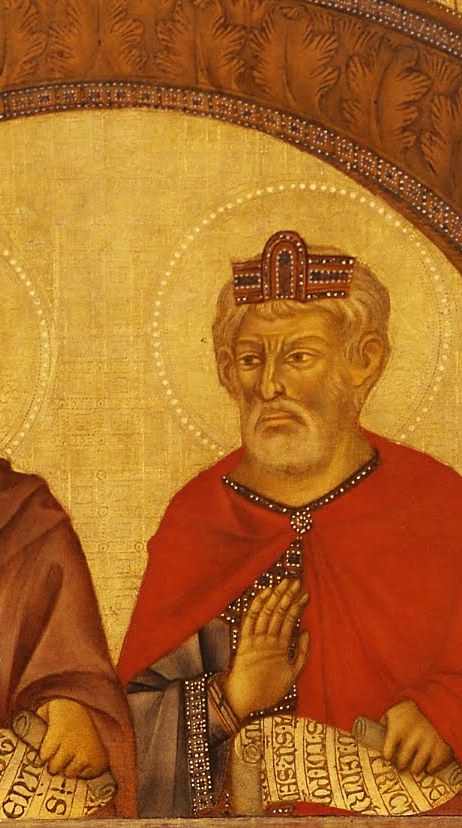
Transcript
This was the most important painting in the church. Look at the gold background. The gold evokes a divine, timeless atmosphere. Madonna's face shows maternal tenderness. Her hand cradles the child gently. The Christ Child looks out with authority. Cimabue broke from Byzantine style for more life. A new tenderness in this holy scene.