Battle Scene by Johannes Lingelbach
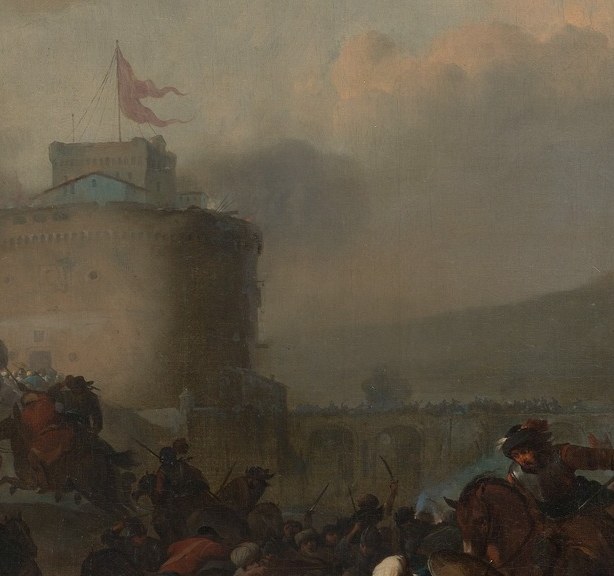
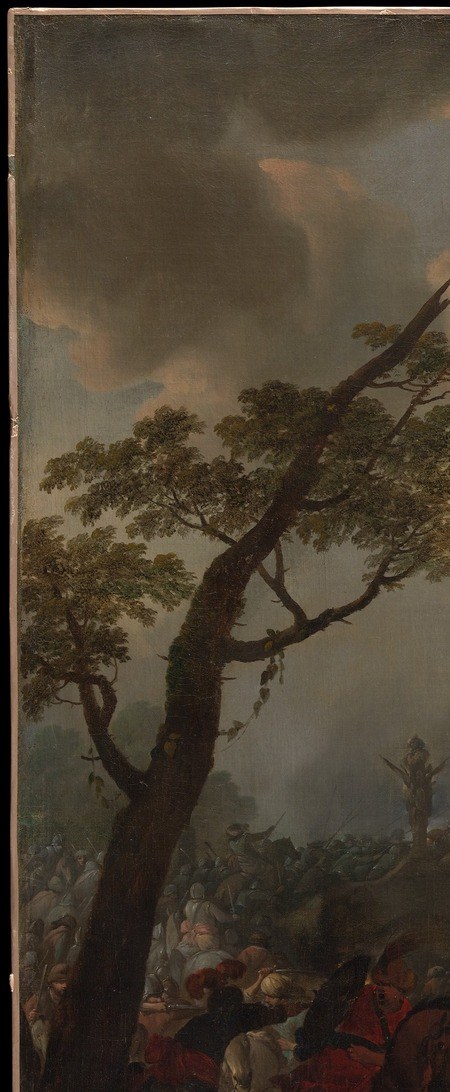
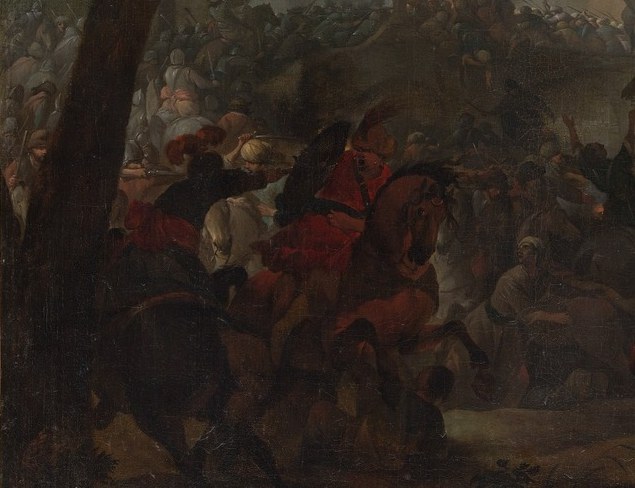
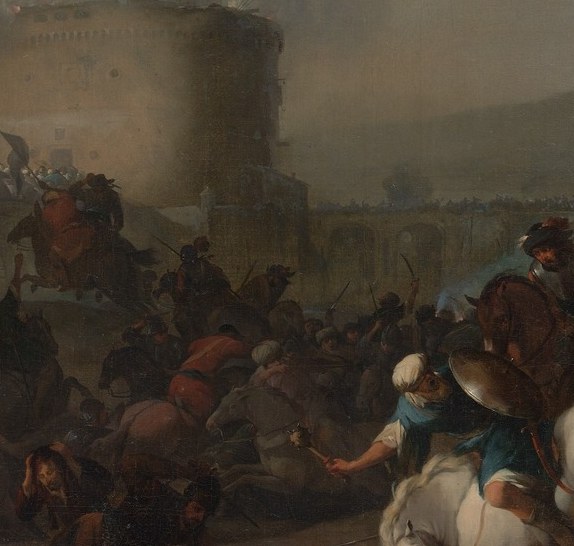
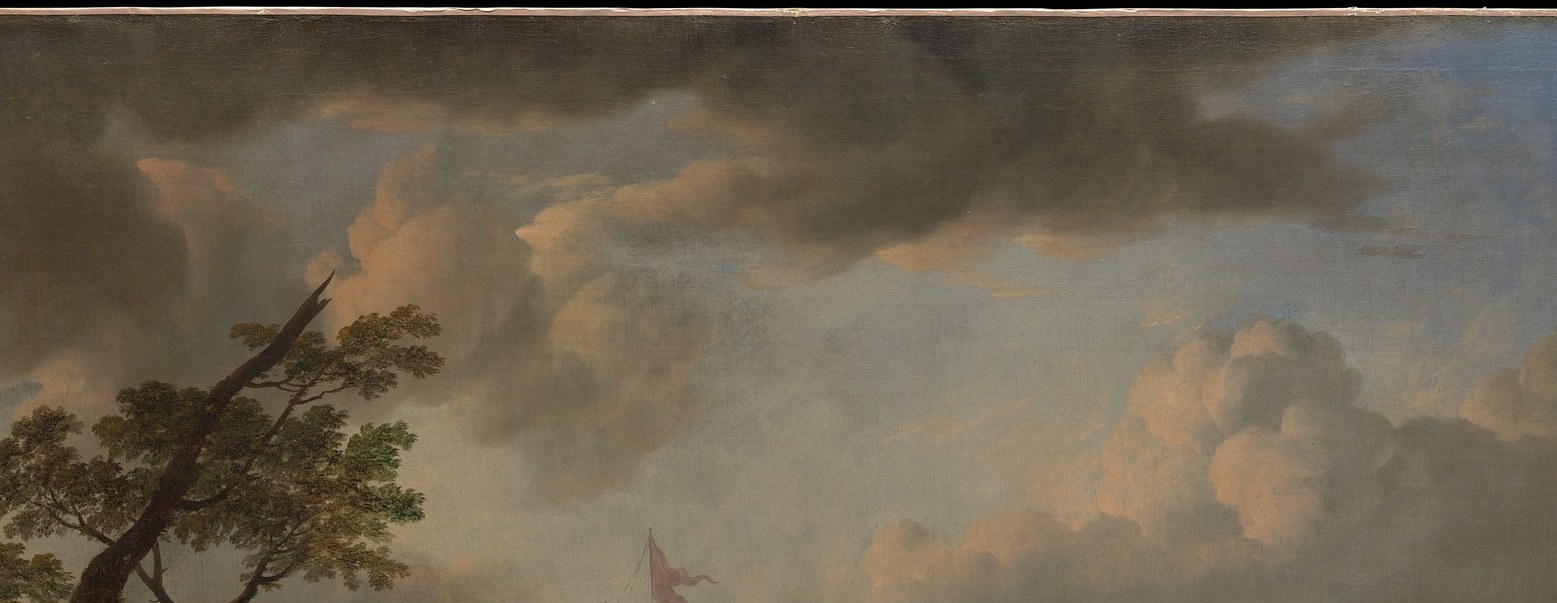
Johannes Lingelbach’s *Battle Scene* (1671) pulls you in with a rearing white horse, but the painting’s weight lives in a group of small, shadowed figures at the base of a bare tree on the left.
While the commander gestures and the foreground melee churns, these wounded or sheltering men sit nearly hidden at the scene’s margin. Lingelbach spent his early career in Rome among the Bamboccianti, artists who insisted on painting what life actually looked like, not just its heroic surface.
The battle is alive with smoke, flags, and chaos, but follow the tree down and you find the cost that the official story often leaves out.
Next time you stand before a busy painting, try looking at its quietest corner. What did the artist hope you would not miss?
Details
Transcript
The first thing you see is the commander, rallying his men. And then the chaos that surrounds him. But a battle painting is also about what happens at the edges. Follow the left edge down, past the bare tree. At its base, almost in shadow: a cluster of small figures. Lingelbach painted this in 1671, after years in Rome. He knew war was not only the clash of swords, but the quiet of the wounded.