The Prophet Elijah and the Widow of Zarephath by Poelenburch, Cornelis van
The Prophet Elijah and the Widow of Zarephath, painted by Cornelis van Poelenburch around 1630, tells a story of near-total loss with almost no drama at all. The Bible recounts how the prophet Elijah, fleeing famine, meets a widow gathering sticks. He asks for water and bread. She tells him she has only a handful of flour and a little oil, enough for one last meal for herself and her son before they die of starvation. Elijah promises that if she feeds him first, her supplies will not run out, and the miracle is that they never do.
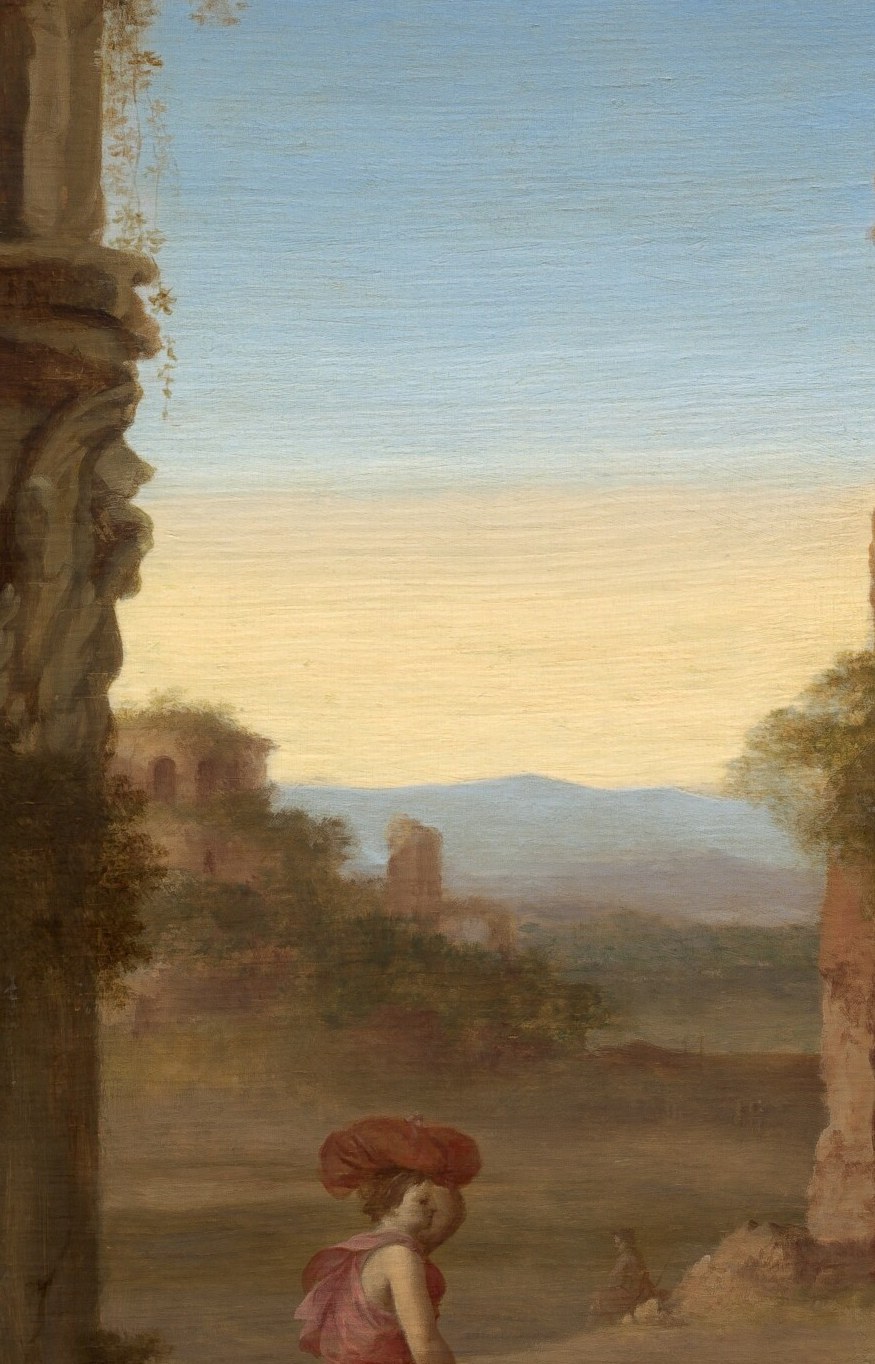
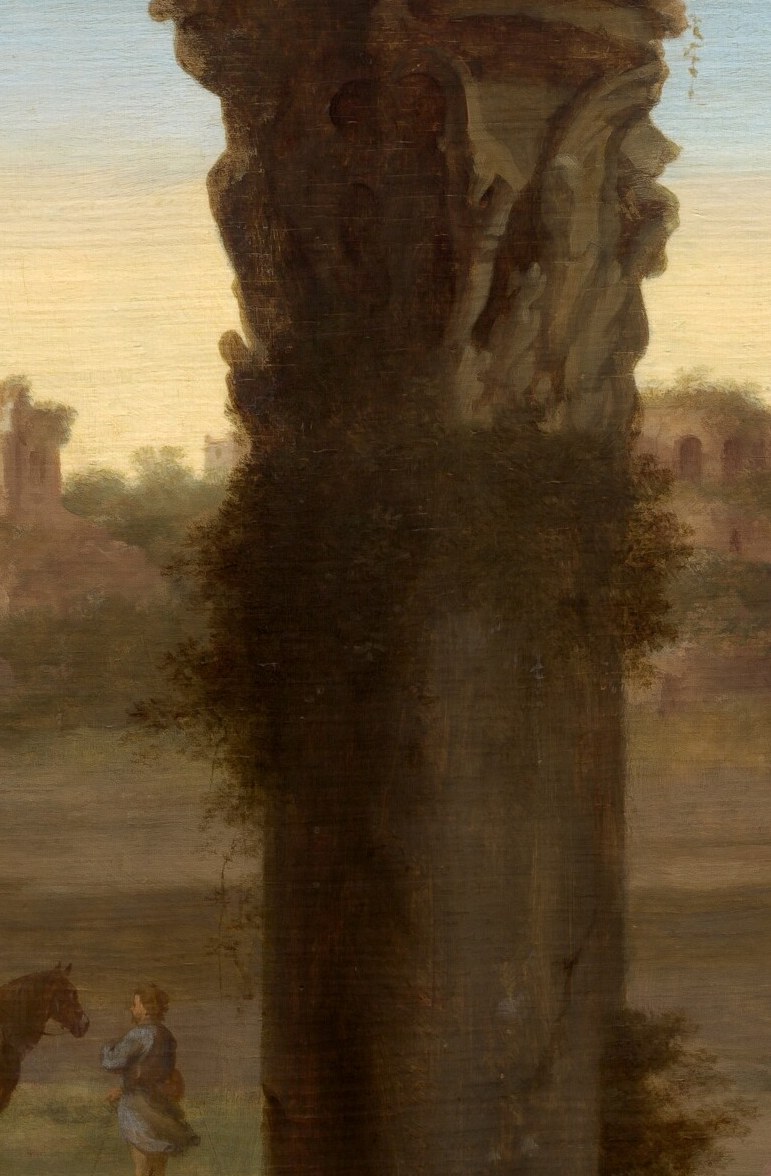
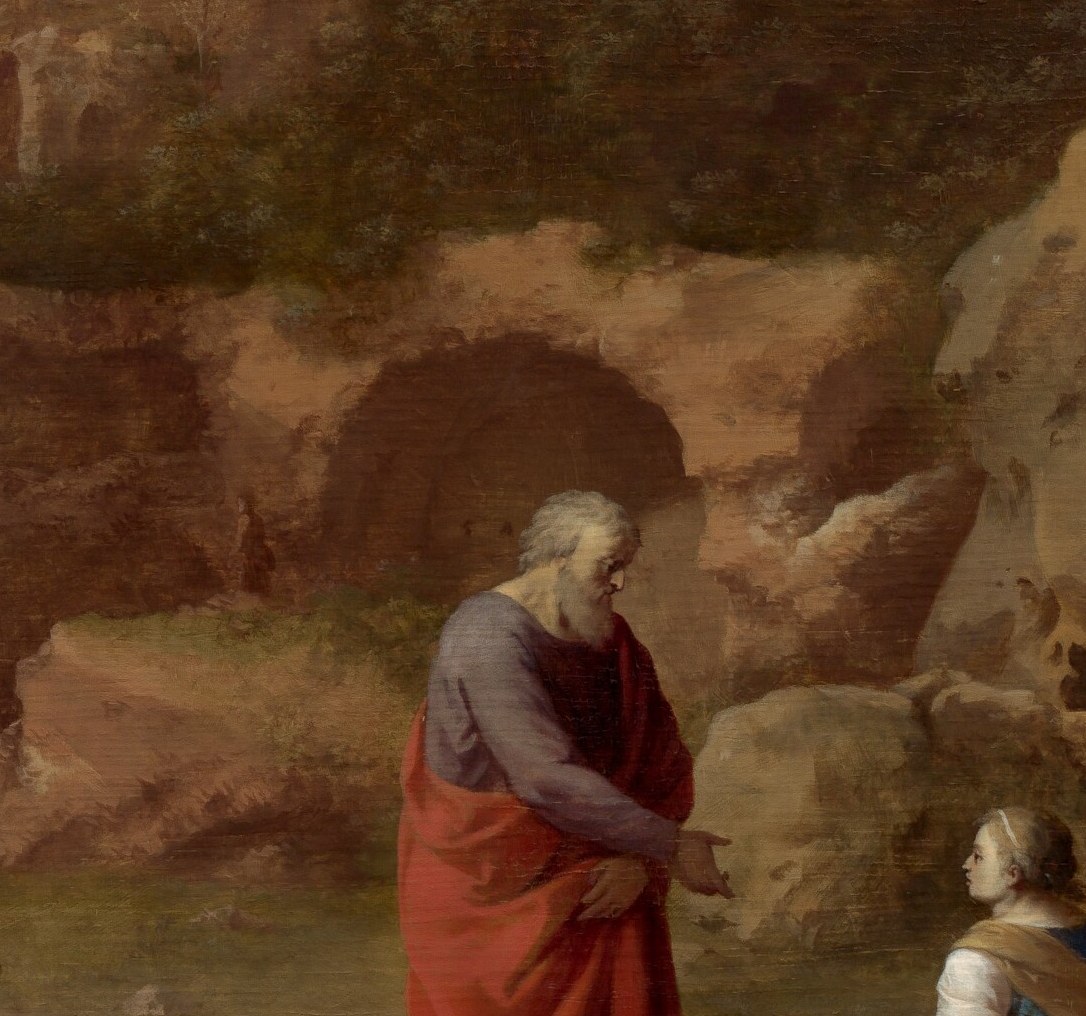
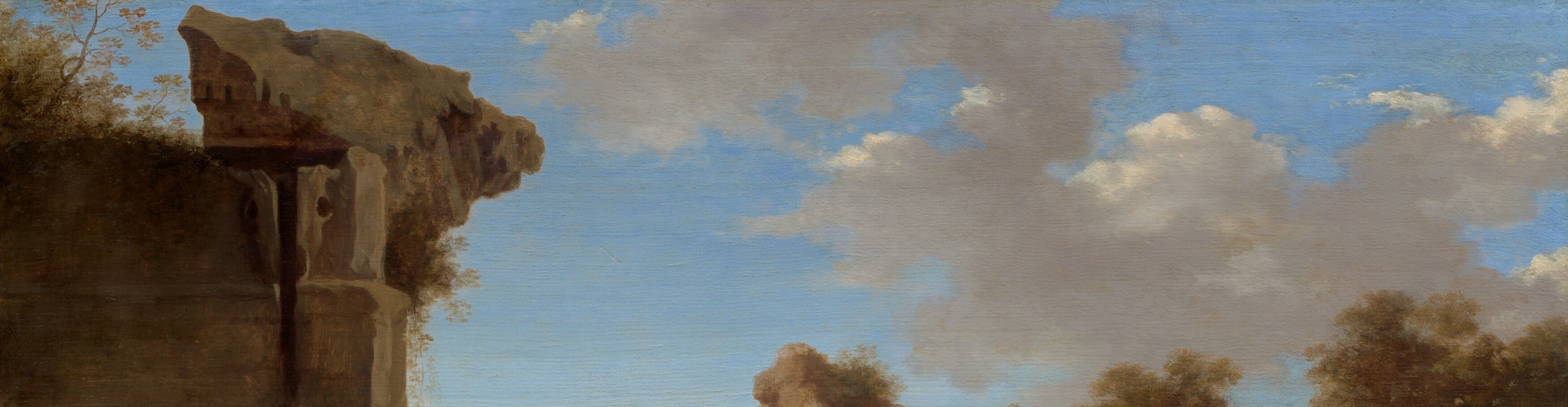
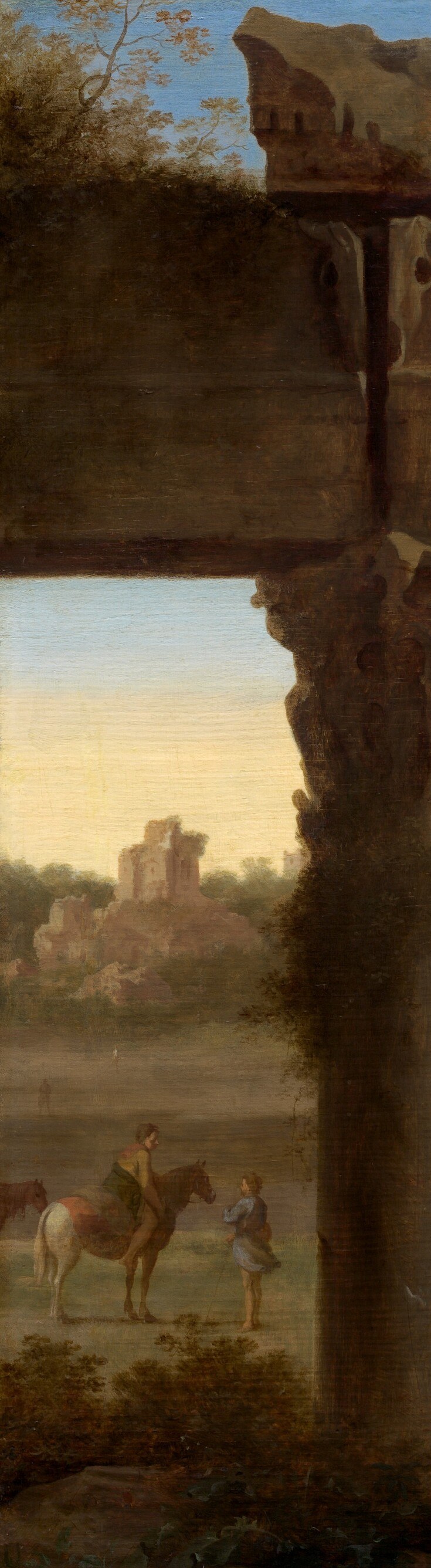
The painting holds this moment in suspension. Elijah stands in vivid orange-red, upright, speaking. The widow, smaller and in blue, is slightly hunched, caught mid-turn. Around them, the ruins are massive but crumbling, a classical column, a broken archway, stone authority reduced to landscape. And above it all, a luminous sky glows warm. That light is the only hint that anything here is holy.
Cornelis van Poelenburch was a Dutch painter who spent years in Rome absorbing the Italian landscape tradition, and it shows in the aerial perspective here: warm browns in the foreground grading through greens into cool blue distance. He often placed small biblical or mythological scenes inside vast, ruined classical settings, which let him paint both intimate human encounters and the slow work of nature reclaiming stone. This panel is a quiet example of that signature restraint, a moment of profound trust rendered on a small oil panel.
What holds you is how still the scene is. No angels, no dramatic sky, no crowd. Just two figures, a ruined world, and a promise the artist leaves almost invisible. If you had not read the story, would you recognize a miracle here?
Details
Transcript
It looks like two travelers paused in old ruins. The man in red is the prophet Elijah. He has just asked a starving widow for her last bread. Her son was about to die. And she gave it to him. Look at the sky above them. That warm glow is the only signal of divine care.