In the Dining Room by Morisot, Berthe
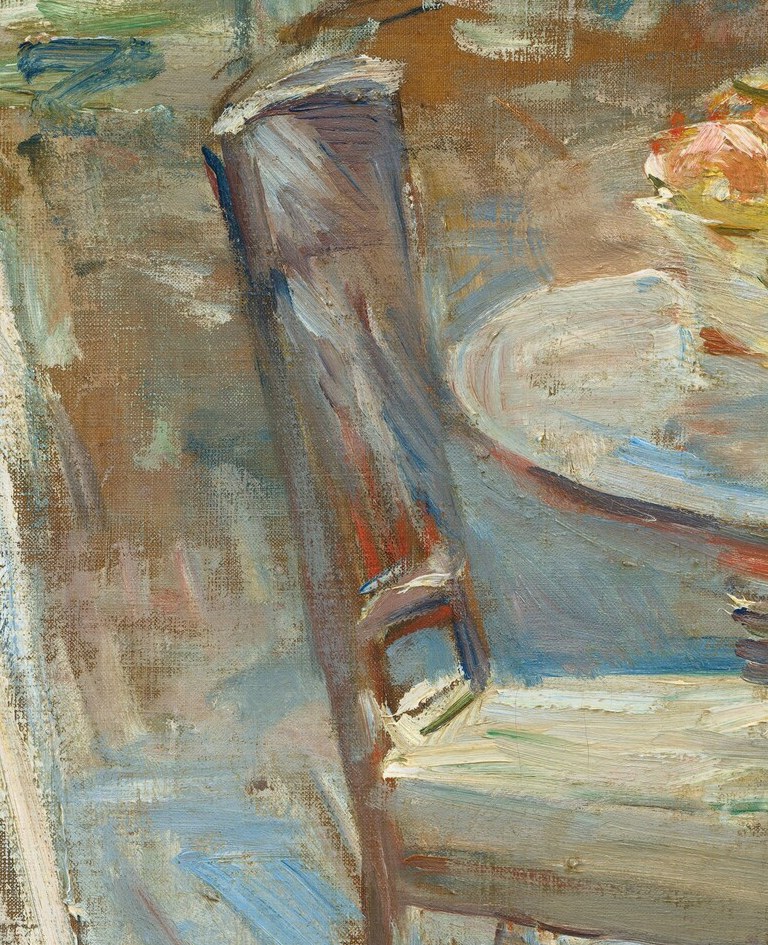
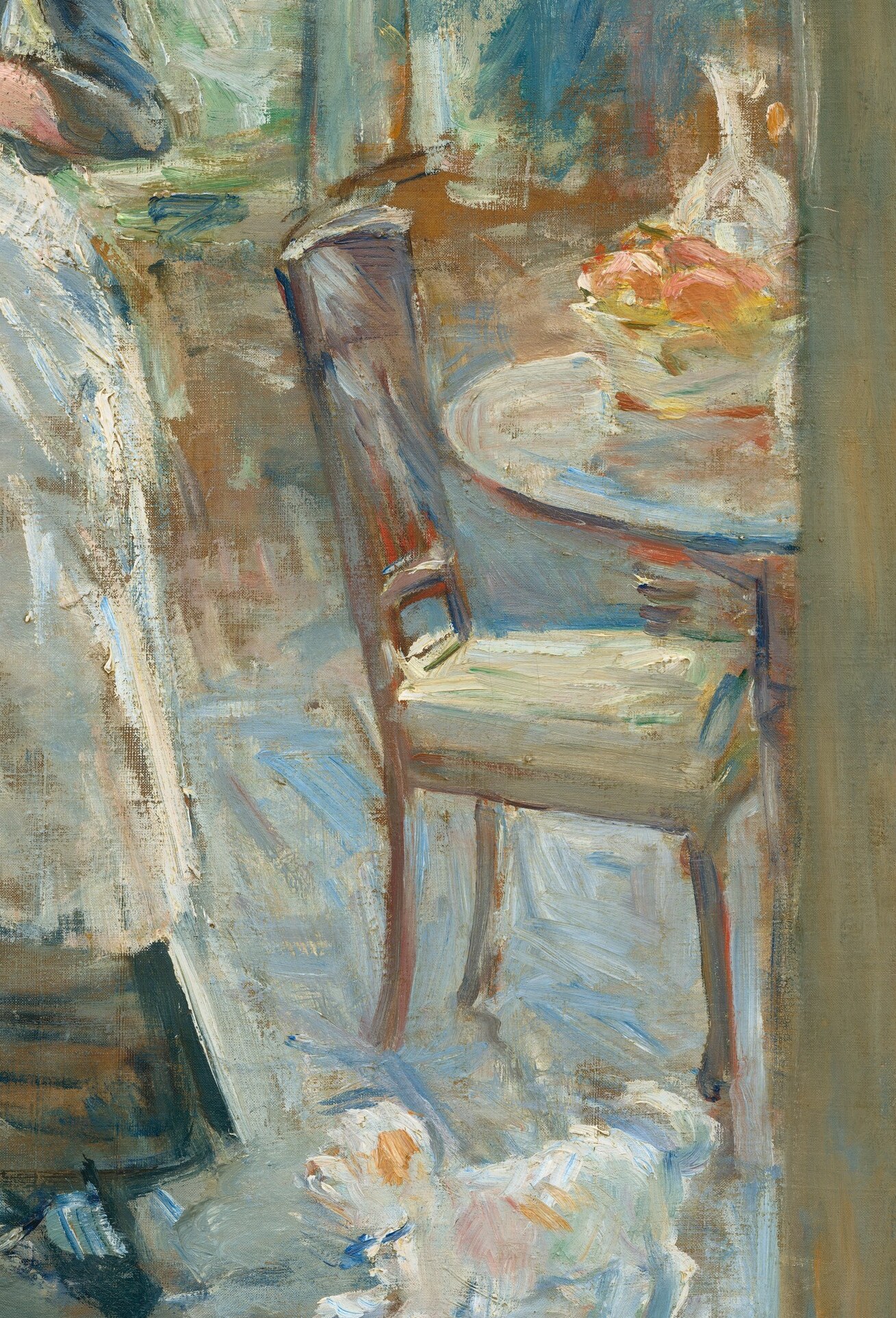
Berthe Morisot's "In the Dining Room," painted in 1886, offers an intimate glimpse into domestic life in late 19th-century France. This oil on canvas, housed at the National Gallery of Art in Washington, D.C., is a beautiful example of her Impressionist style.
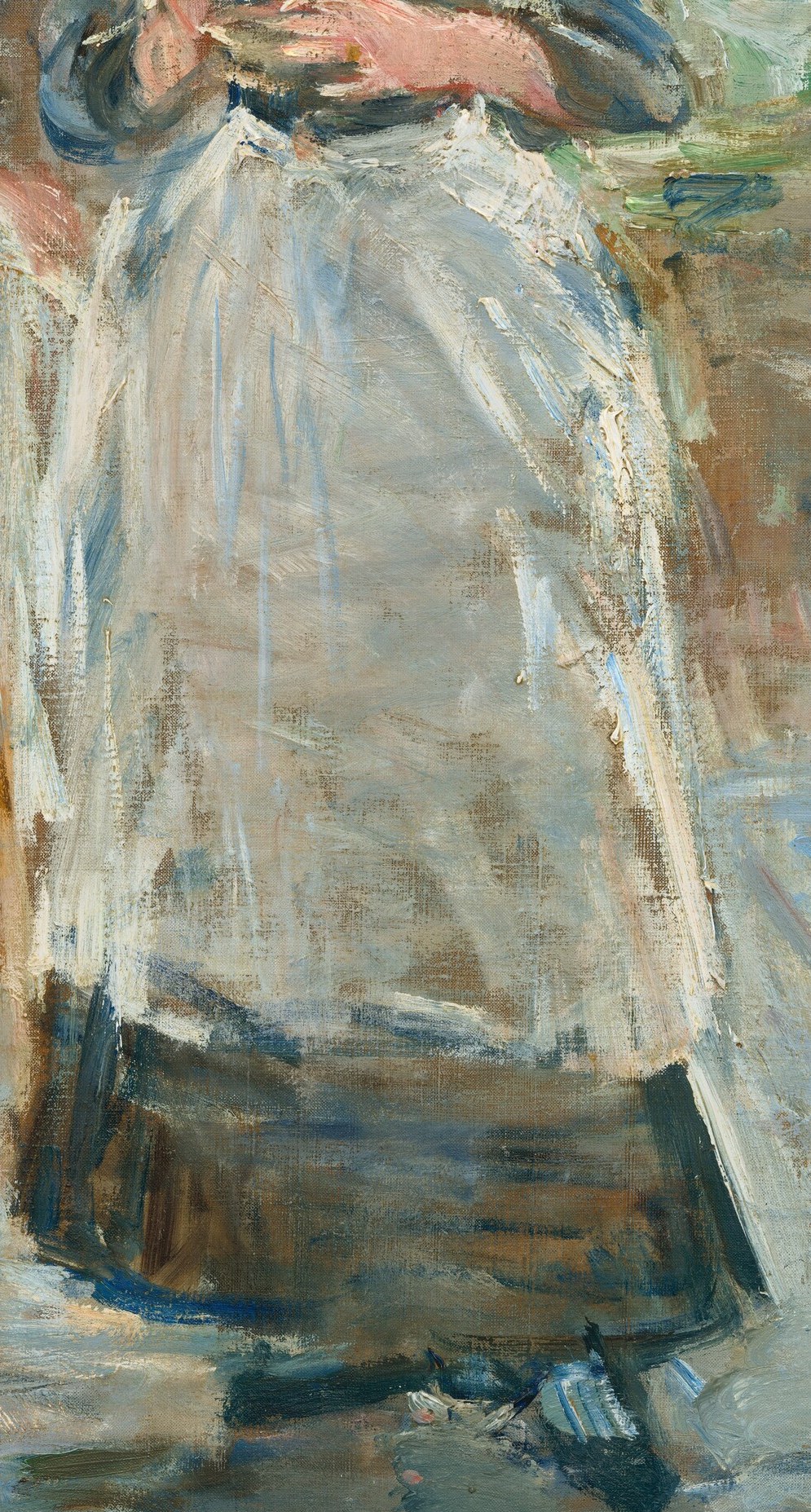
The painting centers on a young woman with a striking white apron, holding a small object in her hands. Her direct gaze draws the viewer into the scene, creating a personal connection. Notice the warm, natural light that fills the room, a hallmark of Morisot's technique.
As one of the prominent figures among the French Impressionists, Morisot was known for capturing everyday life, particularly the private worlds of women. She was even dubbed one of "Les trois grandes dames" of the movement. Her loose, expressive brushstrokes bring a dynamic energy to this quiet moment.
Morisot exhibited alongside other Impressionist giants like Monet and Degas. What do you notice most about this quiet scene?
Details
Transcript
Step into a quiet dining room, France, 1886. This woman lives a domestic life, but works outside it. Notice her hands, holding a small, delicate object. She looks directly at us, inviting us into her world. This painter was one of the 'three great ladies' of Impressionism. She often painted women in their private, everyday moments.