Woman with a Rake by Jean François Millet
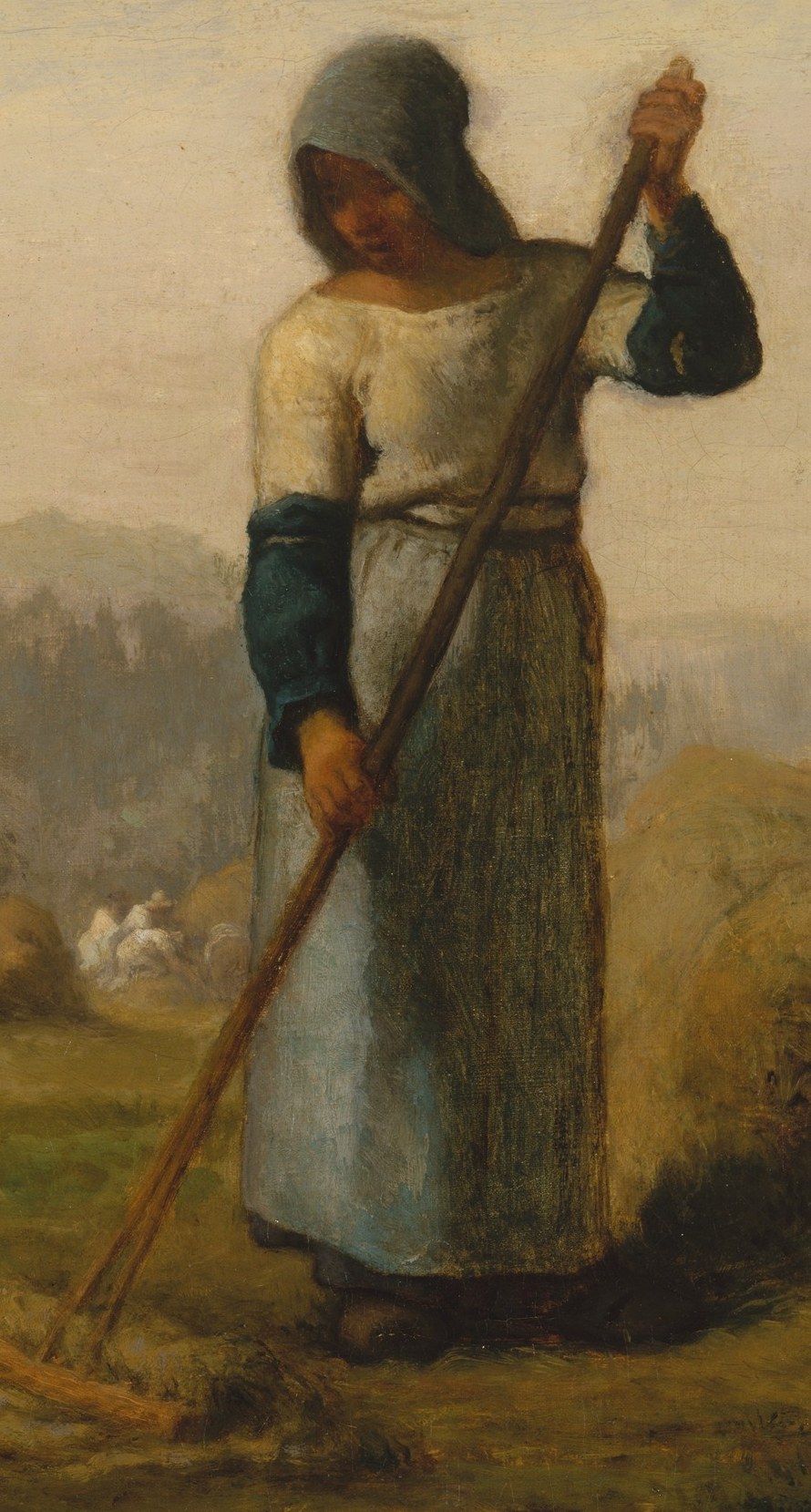
This is Jean-François Millet's Woman with a Rake, painted in 1856 and now in the Metropolitan Museum of Art. Millet was one of the founders of the Barbizon school, a group of French painters who left Paris to work directly from rural life. He was also, for most of his career, deeply poor.
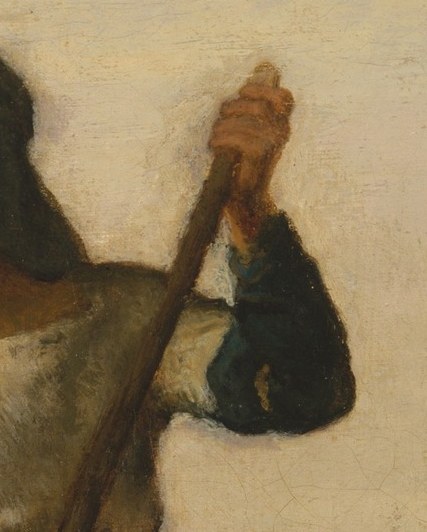
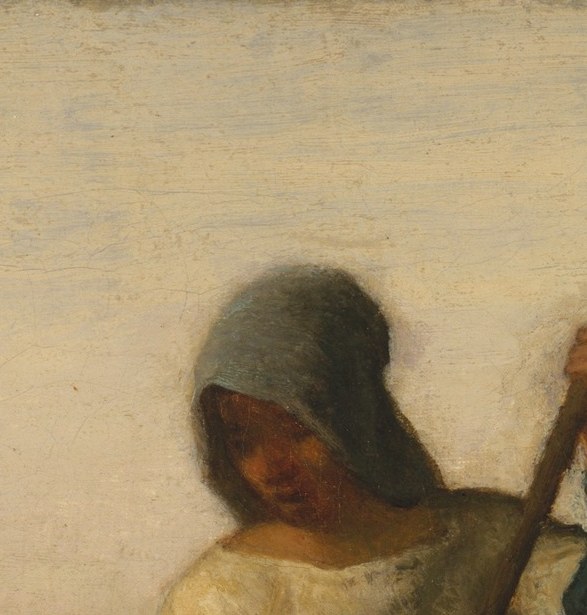
The painting itself is built on a single strong diagonal: the rake handle that cuts across the figure. Millet gives the worker a quiet dignity, using the white of her blouse to anchor your eye. But look for the one real burst of color, the teal-blue sleeve on her visible arm. It is a surprisingly vivid note in a palette of earth tones, and it is about as close as this woman gets to ornament.
Millet sent this canvas to a dealer to keep his family fed. Critics of the time found his peasants ugly and accused him of making socialist statements, simply by painting rural labor on a scale usually reserved for history paintings. He kept painting them anyway. When he died in 1875, his widow was left with the work. Fourteen years later, taste had shifted. She sold Woman with a Rake at auction for 60,000 francs, a sum that would have been unimaginable during the artist's lifetime.
The real price of this painting was paid twice: once by Millet, who lived poor to make it, and once by the collector who finally understood its worth.
Details


Transcript
Millet painted this in 1856. He was broke. He sent it to a dealer who paid just enough to feed his family. Now look at the color on her sleeve. A flash of teal. Almost a luxury in all this ochre and brown. Critics called his painting ugly. Socialist. Millet died in 1875. His widow sold this painting fourteen years later. It went for 60,000 francs. A fortune.