Entrance to the Grand Canal from the Molo, Venice by Canaletto
View the artwork: Entrance to the Grand Canal from the Molo, Venice →
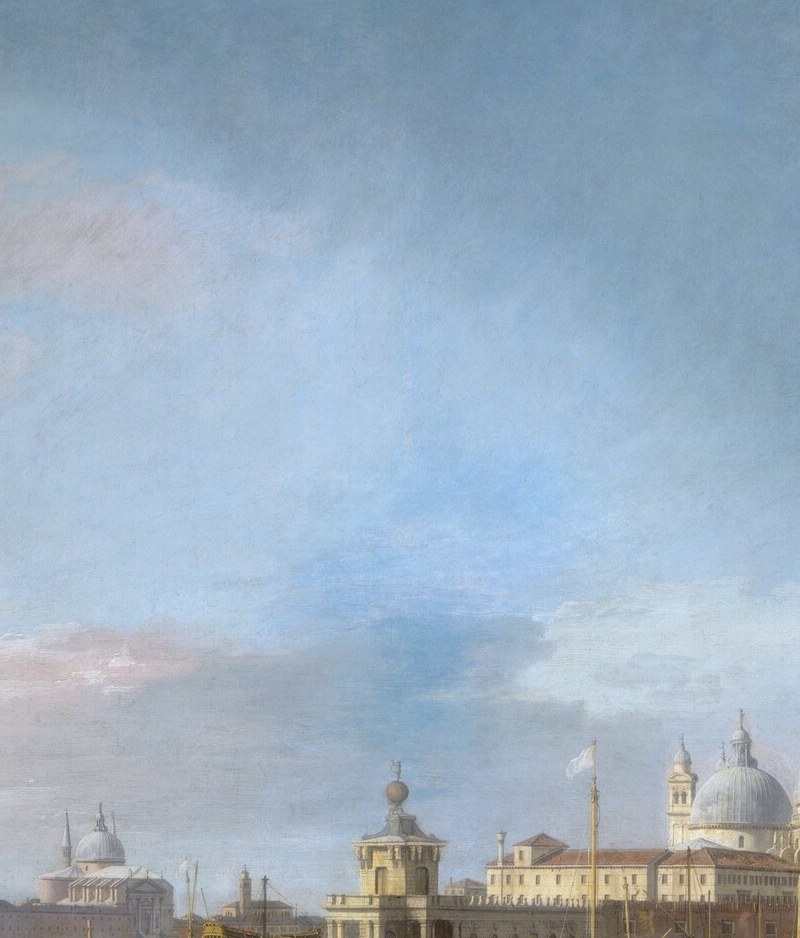
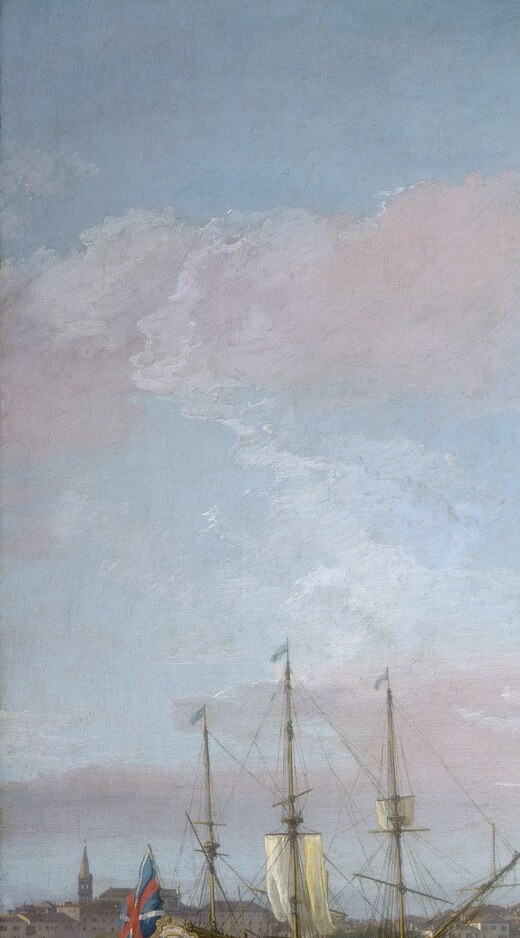
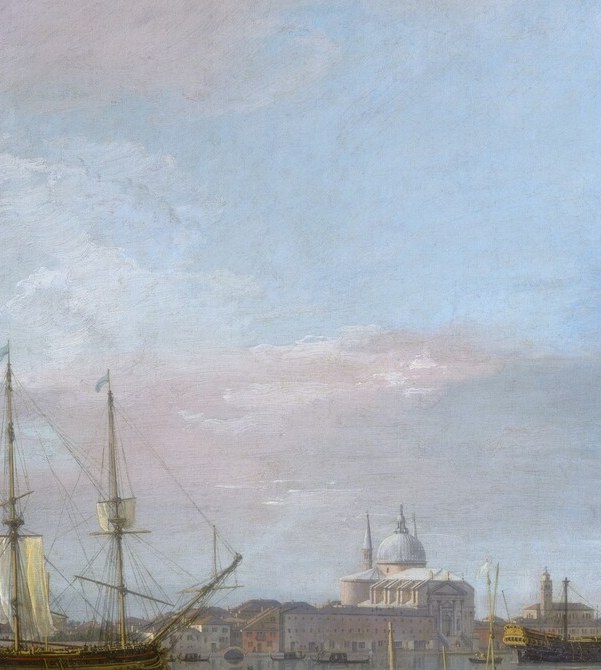
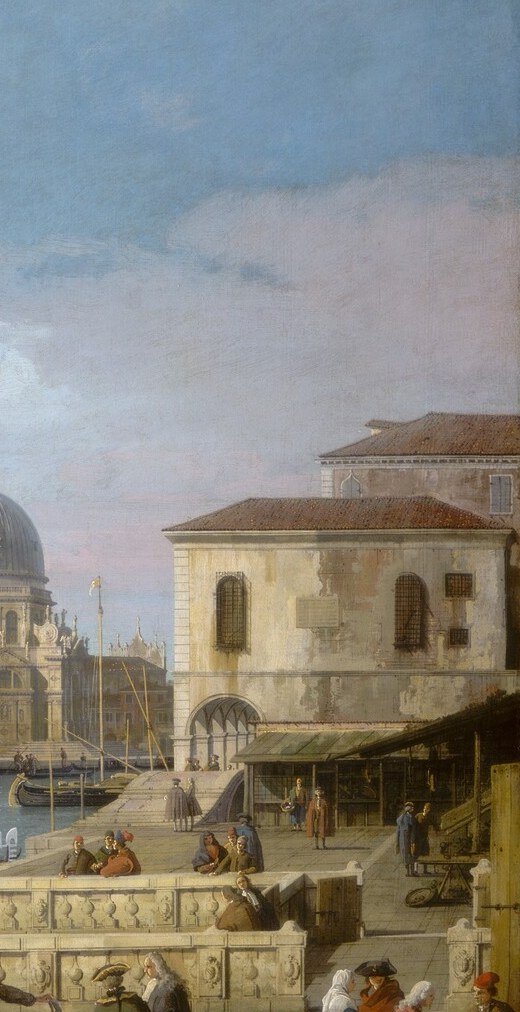
This is Canaletto's "Entrance to the Grand Canal from the Molo, Venice," painted around 1742 to 1744 and now in the National Gallery of Art in Washington, D.C. It's a view every eighteenth-century English aristocrat wanted to bring home from the Grand Tour, and Canaletto was the man who supplied it.
Look first at the gilded figure of Fortune spinning atop the Punta della Dogana. She's tiny, easy to miss, but she symbolized the idea that Venice, and Venice alone, controlled the gateway to global maritime trade. Then let your eye drop to the stone parapet in the lower left corner. On it you'll find a painted scrap of paper bearing the initials A.C.F. It's so small you could stand in front of the canvas and overlook it entirely.
The initials stand for Antonio Canal Fecit, Antonio Canal made this. The detail matters because Canaletto almost never signed his paintings before the 1740s. Finding the cartellino here helps scholars firmly date the work to the early 1740s, the precise moment when he was tightening his perspective technique and expanding his clientele beyond his longtime patron Joseph Smith to the wider British nobility.
This painting stayed at Castle Howard in Yorkshire for two centuries, documented in estate records and seen by visitors as early as 1745. It later passed through a few private hands before Barbara Hutton gave it to the National Gallery in 1945. Next time you see a Canaletto, look for the slip of paper. It might be the only clue to when the picture was actually painted.
#arthistory #canaletto #venice
Details
Transcript
A postcard view of Venice, painted for English tourists. The whole city pivots around this one church. That gilded weathervane meant Venice controlled global trade. But move your eye to the lower left, to the stone. A painted slip of parchment. Three letters. Antonio Canal made this. He signed it only after 1740. Before that, none of his paintings bore his initials.