Still Life: Peaches and Grapes by John A. Woodside
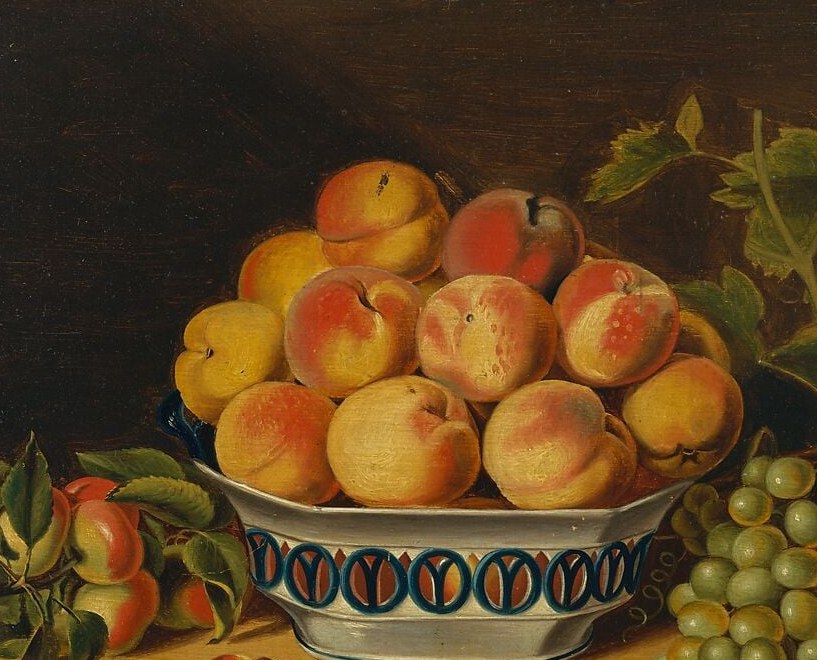
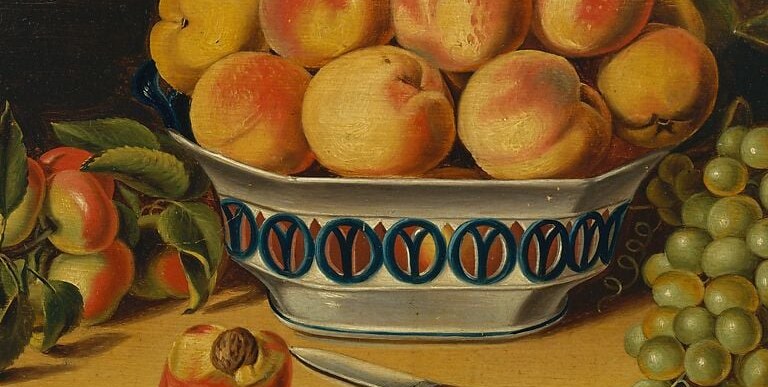
A peach, a grape, and a porcelain bowl. Three surfaces that feel completely different to the touch, and John A. Woodside painted all three on a single small wood panel around 1825. The painting is called Still Life: Peaches and Grapes, and it hangs in The American Wing at the Met.
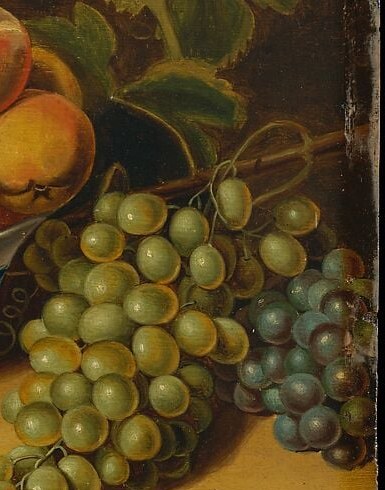
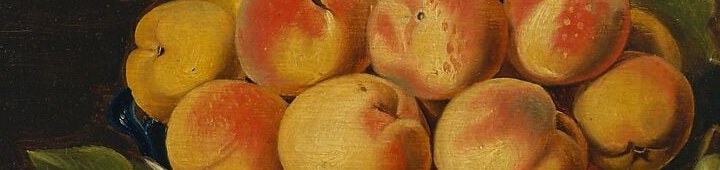
Watch how the light behaves differently on each object. The grapes are painted with thin, translucent layers so they glow from within. The peaches, by contrast, have a matte, almost dusty surface, Woodside achieved that soft blur by working with thicker, drier paint that scatters light instead of reflecting it. And then the bowl rim catches a precise, brittle highlight in bright white impasto. In a span of a few inches, he switches technique three times.
Woodside was born in Philadelphia in 1781 and worked through the early decades of the American republic, a period when still life painting was becoming a serious genre here. Artists used these quiet arrangements of fruit and domestic objects to study light, texture, and the physical behavior of oil paint itself. The knife resting on the ledge and the single cut peach are traditional vanitas reminders of time passing, but for a painter, they were also a chance to show off.
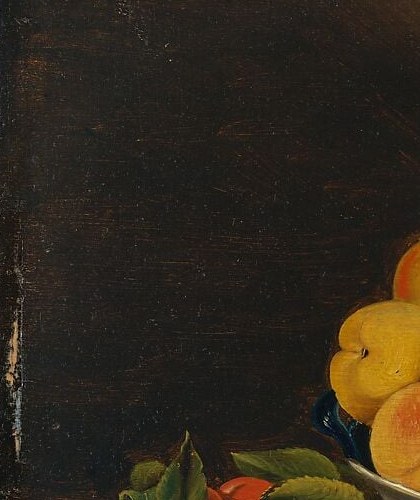
Next time you see a still life, look at the edges. Fuzzy or crisp? Thin paint or thick? The artist made a deliberate choice at every boundary.
Details
Transcript
Three different surfaces. Each demands its own kind of paint. The grapes are translucent. Light passes through green skin. The peaches are its opposite. A dry, dusty fuzz that softens every edge. And then the bowl. Glazed ceramic, slick and hard, catching a sharp white gleam. Oil paint can be thick and chalky, or thinned till it flows like water. This painter knew exactly when to switch.