Ville-d'Avray by Jean Baptiste Camille Corot
This is Jean-Baptiste-Camille Corot's Ville-d'Avray, painted in 1870 and now in the collection of The Metropolitan Museum of Art. Corot is the most forged artist in French history, during his own lifetime, an estimated 2,000 fake Corots were produced, and he reportedly signed some of them himself just to be kind. Collectors wanted the silvery dream so badly that Paris had a joke: Corot painted 3,000 pictures, and 10,000 are in America.
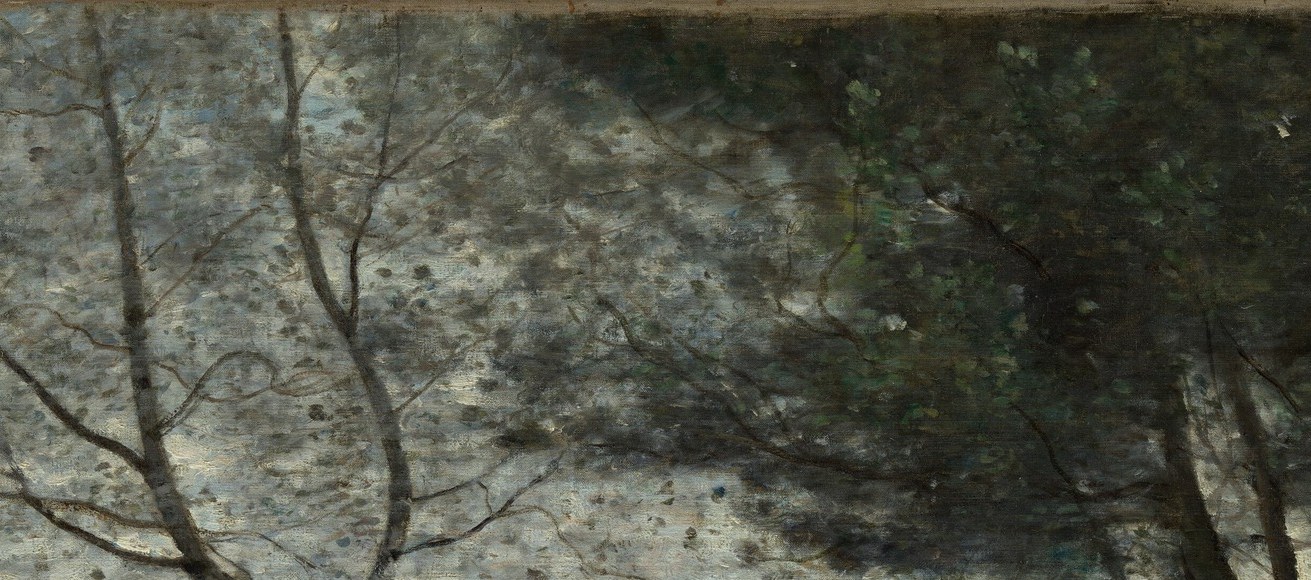
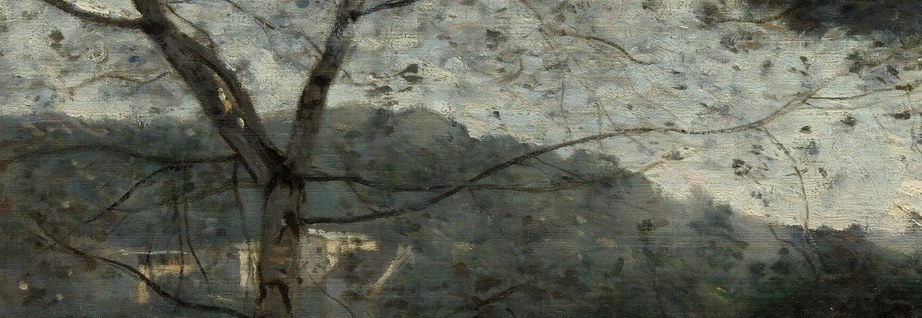
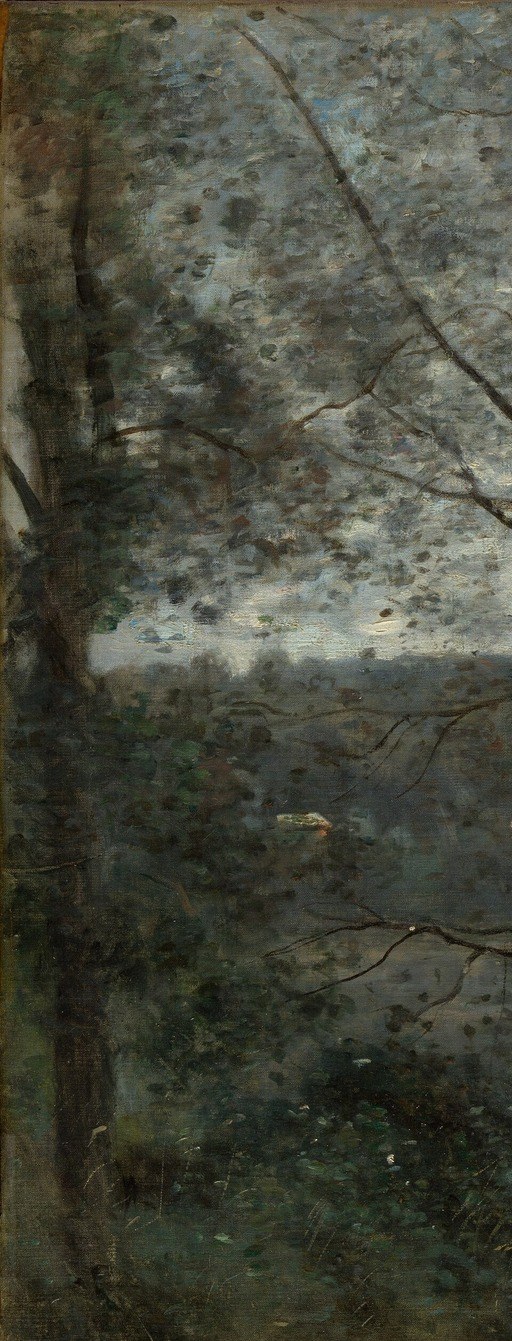
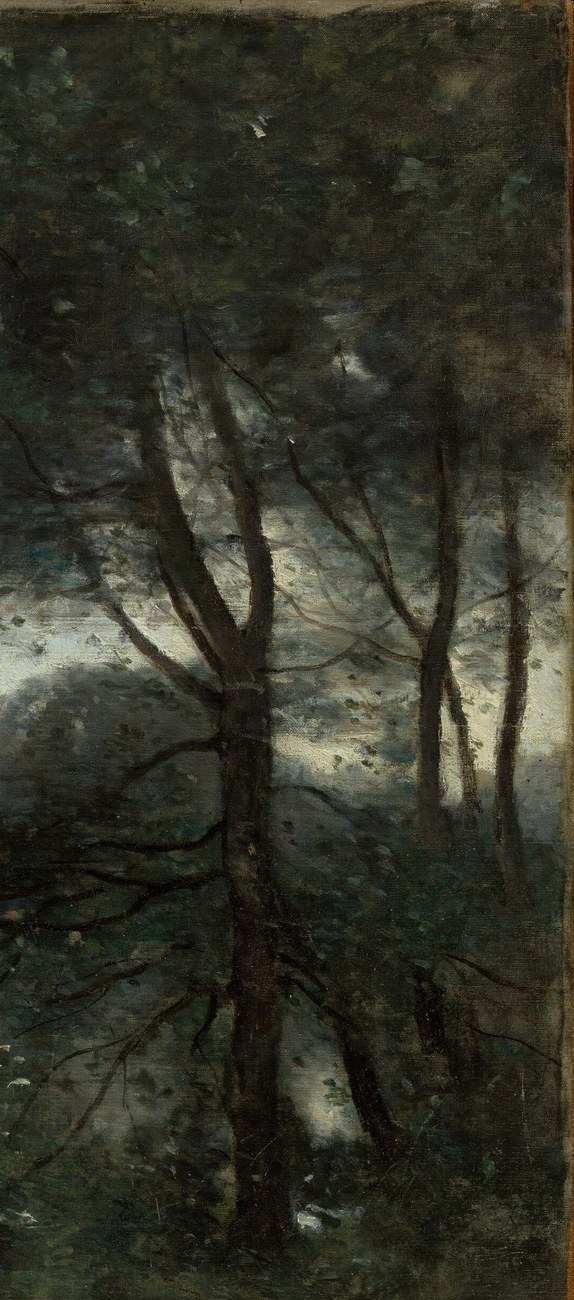
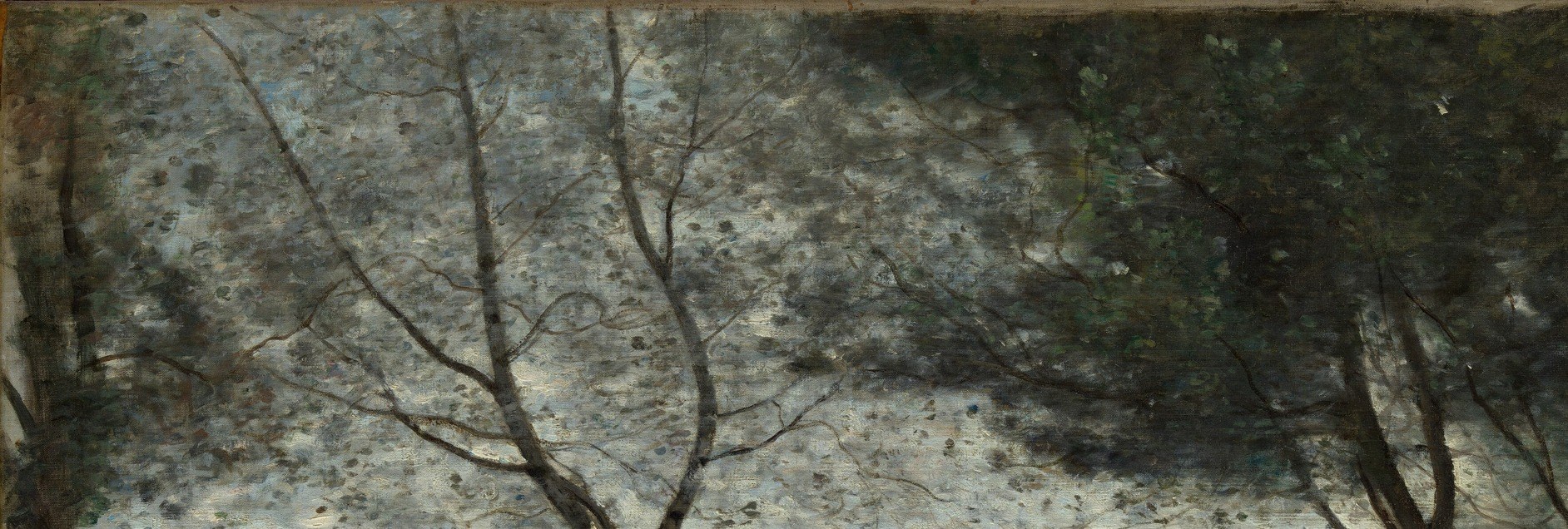
What makes an authentic Corot hard to replicate is here in this painting. Direct your eye to the middle ground, where the still pond meets the overcast sky. Corot eliminated the horizon line almost entirely, water and sky dissolve into a single continuous zone of pearly grey light. He achieved this with a sfumato-influenced edge treatment that became central to Impressionist water painting a generation later. That seamless transition resisted imitation.
The painting depicts a wooded pond at Ville-d'Avray, a village west of Paris where Corot kept a family property. The lone woman in blue kneels at the foreground, her yellow hat is the only warm-hued accent in an otherwise silver-grey-green palette. Look also for the barely-resolved second figure near the water's edge, slightly right of center. Corot left that presence ambiguous enough to read as either a person or a reflection, changing the scene from pure solitude to a quiet, unspoken encounter.
Corot was 74 when he painted this, a bridge figure between the classical landscape tradition and the plein-air innovations that would become Impressionism. His silver tonality was so influential it spawned a cottage industry of imitators across Europe, and a century and a half of questions about which paintings are truly his.
Details
Transcript
The most forged painter in French history? Jean-Baptiste-Camille Corot. He painted this in 1870, at age 74. During his lifetime alone, forgers produced over 2,000 fake Corots. The silver-grey light was the thing everyone tried to copy. But look at the water and sky, where is the horizon exactly? He dissolved the line between reflection and reality. That edge was nearly impossible to fake.