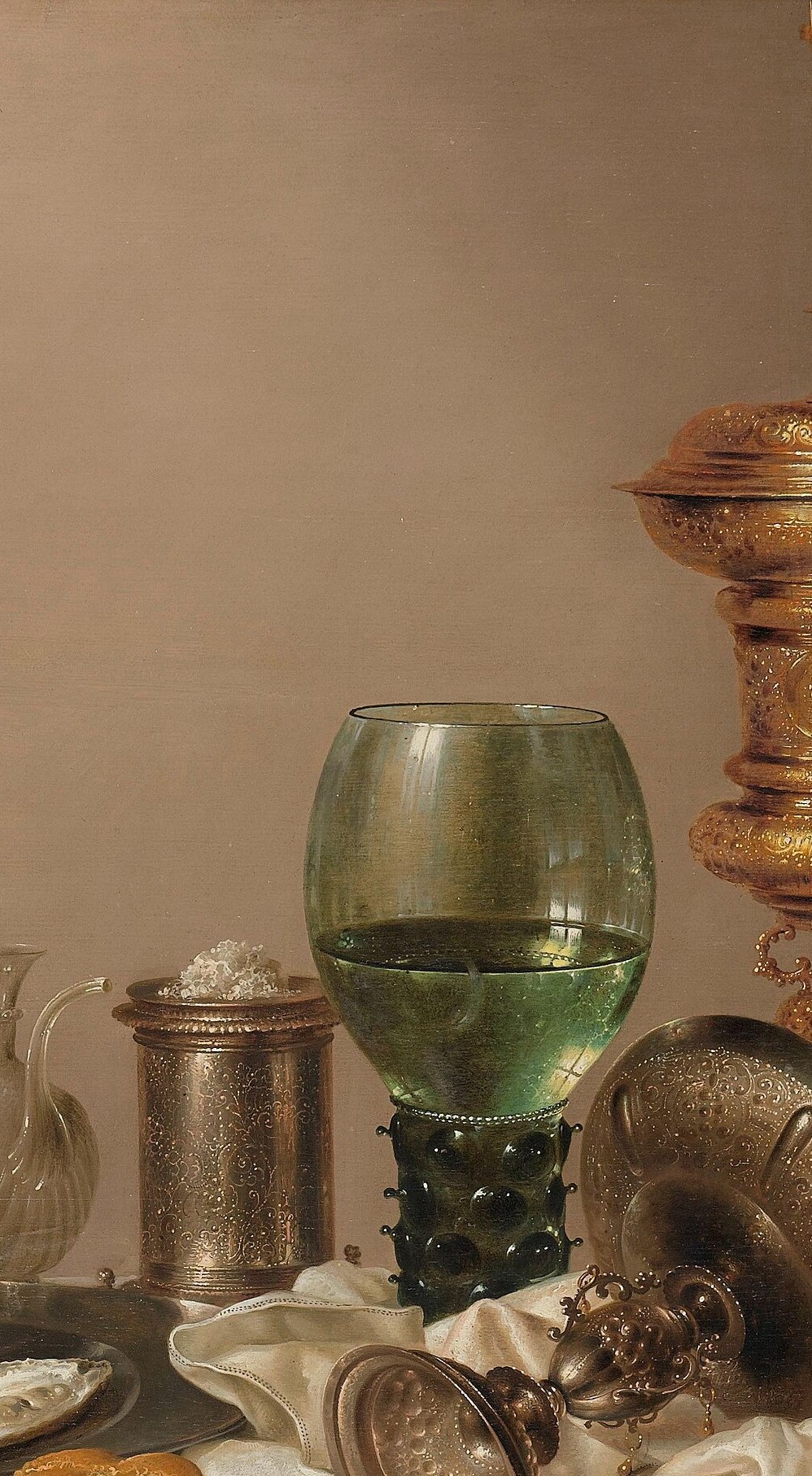
Still Life with a Gilt Cup by Willem Claesz Heda
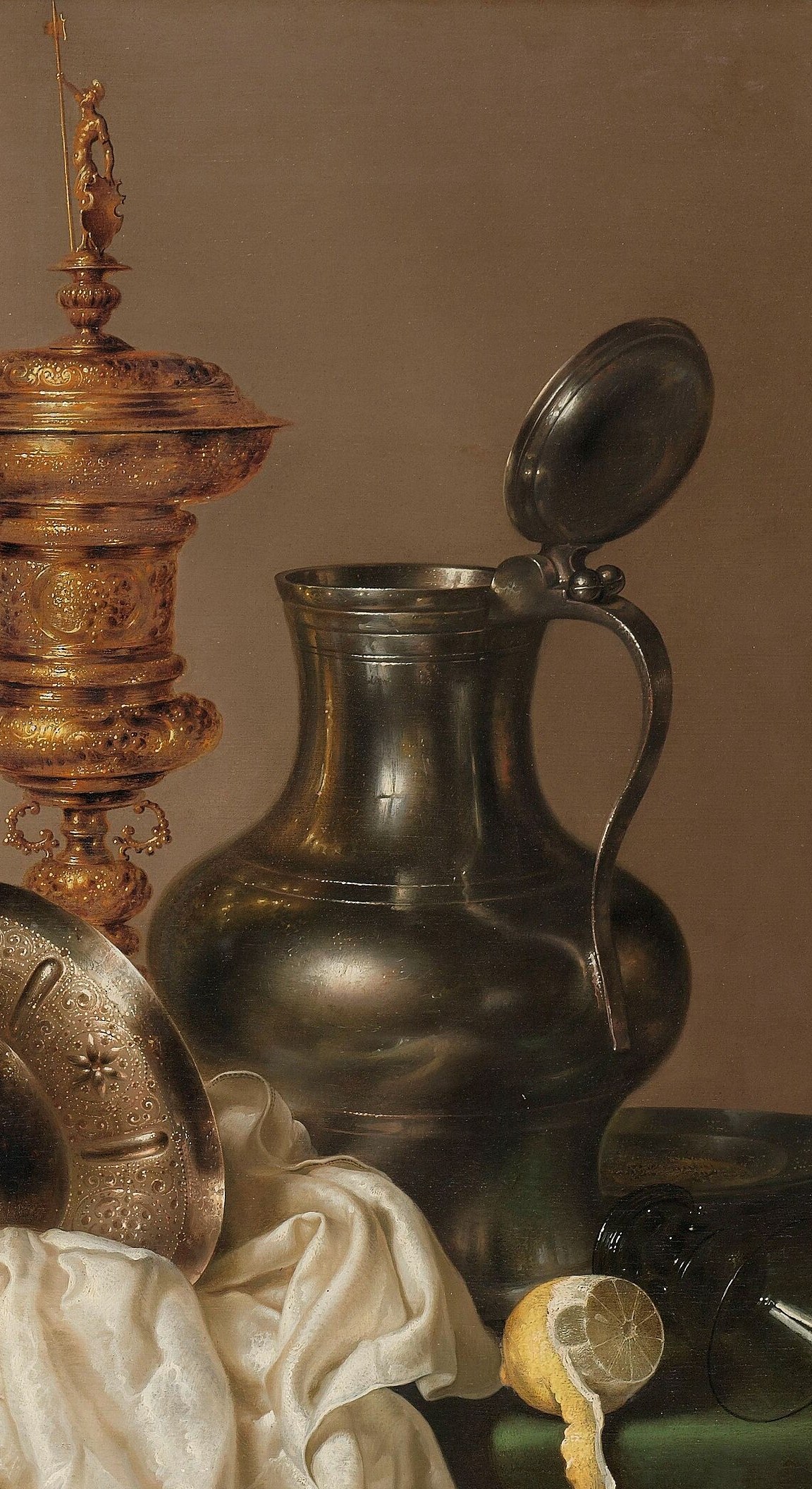
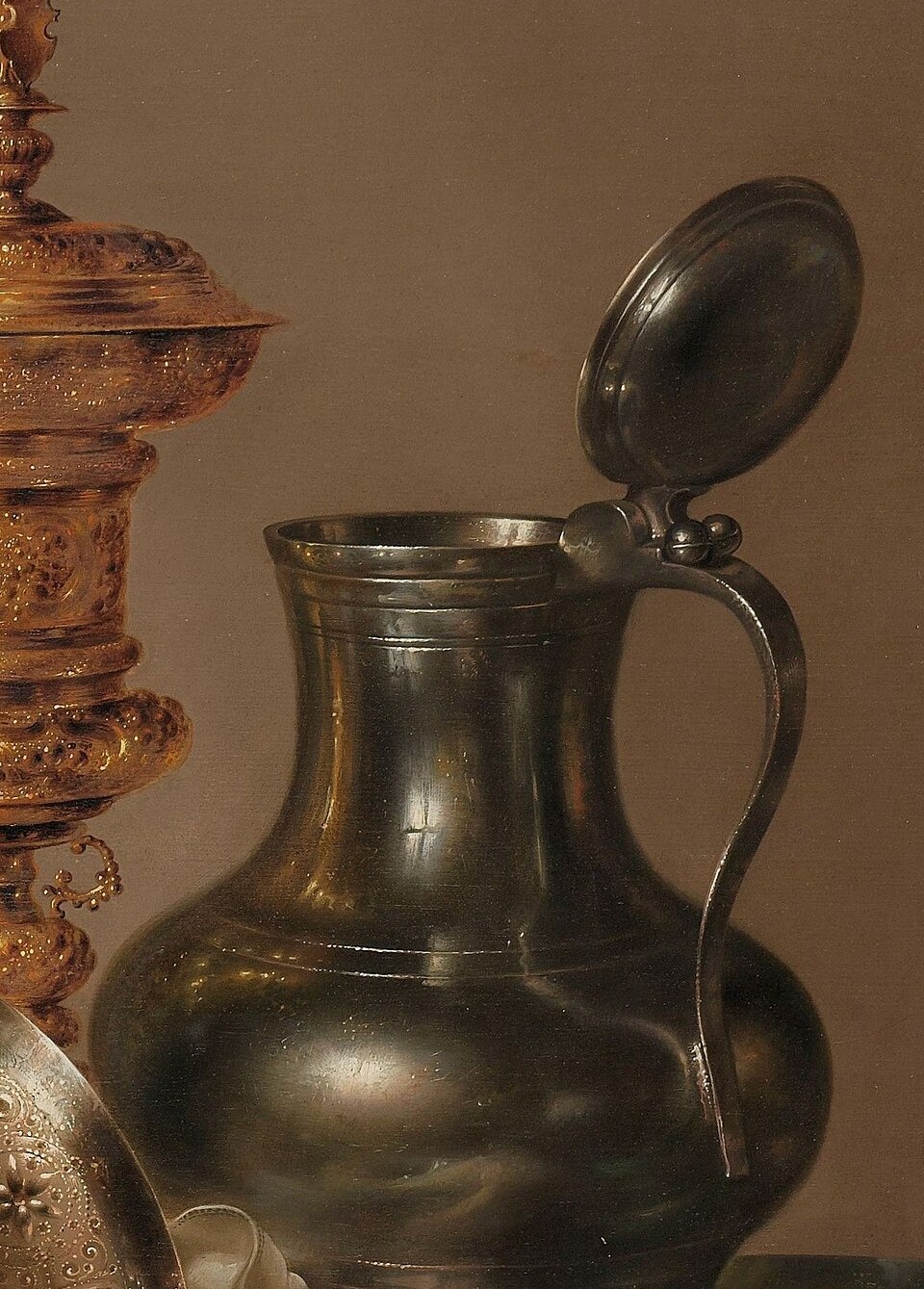
A pewter jug sits on a quiet table. Its polished belly holds a secret most people scroll past: the distorted reflection of a window, the room, and perhaps the painter himself. That hidden studio is the real subject of Willem Claesz Heda's Still Life with a Gilt Cup, painted in 1635 and now in the Rijksmuseum.
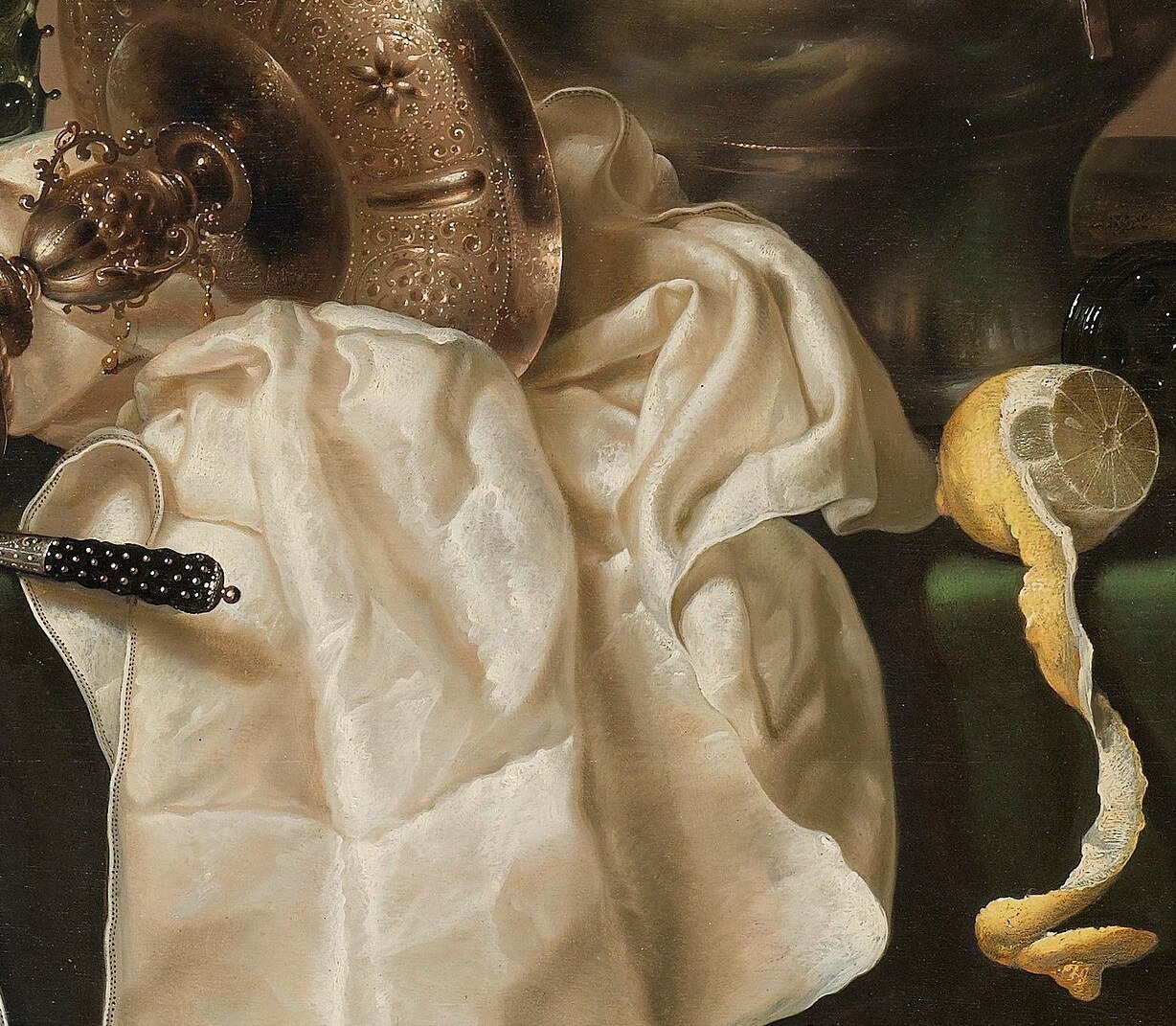
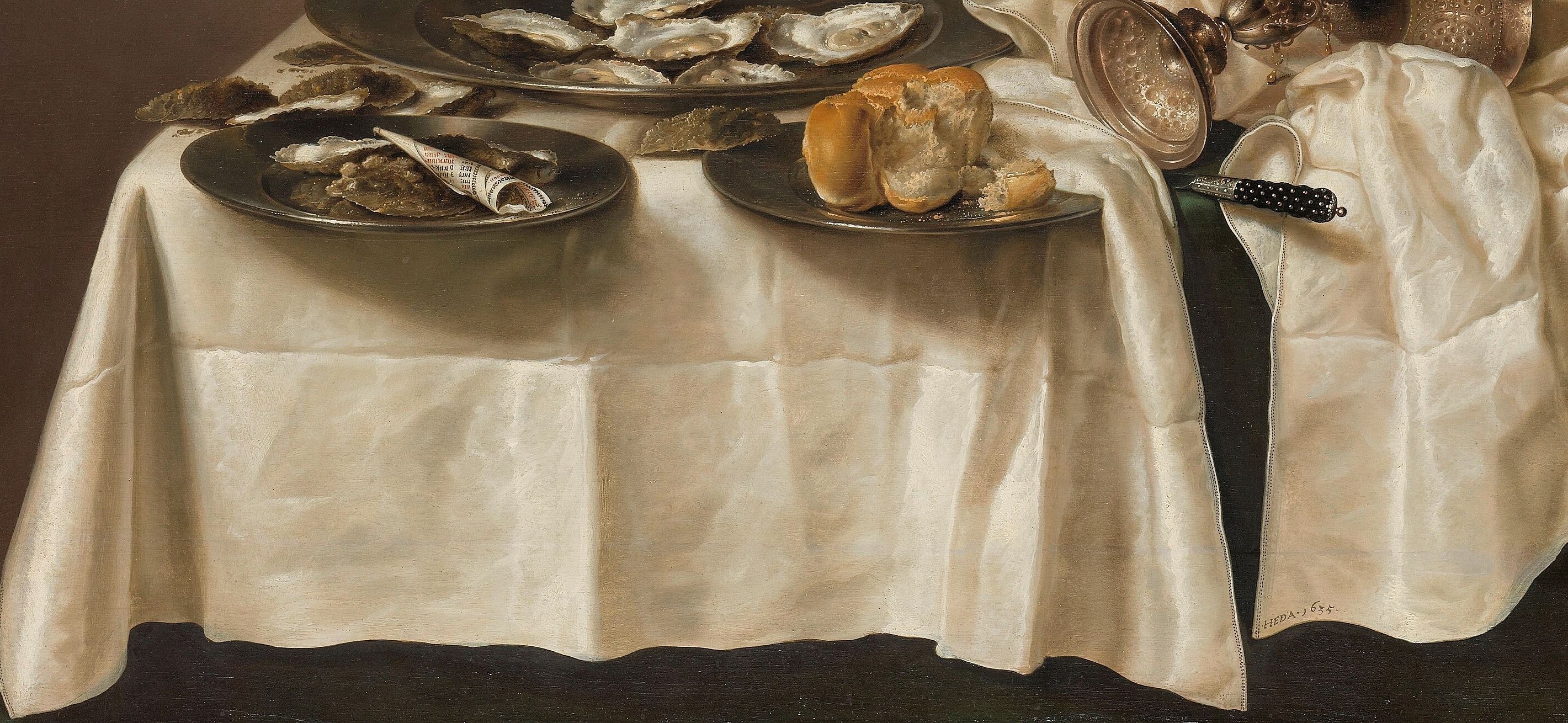
Heda worked in Haarlem and devoted his entire career to still life. He specialized in what the Dutch called ontbijtjes, "late breakfast" scenes. The objects here are carefully chosen: a half-peeled lemon dangling its rind over the table's edge, open oyster shells catching micro-highlights, a torn bread roll, a fish beside the luxury. Every surface gets a different kind of attention.
The lemon is the classic vanitas emblem: golden outside, sour within, beauty that unravels. The oysters signified bodily pleasure and transience. But Heda's true showpiece is the white tablecloth, built almost entirely from gray shadow tones, almost no white paint at all.
What makes this painting live, though, is that reflection. Dutch still-life painters loved proving they could paint more than the eye first sees. Heda gave the pewter jug a curved mirror that encodes the light source and the space beyond the frame. The studio enters the picture, quietly, through polished metal.
Next time you see a Dutch still life, check every shiny surface. The room is often watching back.
Details
Transcript
A quiet table after a meal. Nothing moves. The Dutch called this a 'late breakfast', a moment to study what remains. A lemon, half-peeled. Its rind spirals off the table's edge. Heda painted this in 1635, in Haarlem. He never painted anything but still life. Now look inside the pewter jug's polished belly. A curved reflection: a window, a room, the painter's own light source. He hid the studio inside the silence.