River and Mountains on a Clear Autumn Day by Dong Qichang
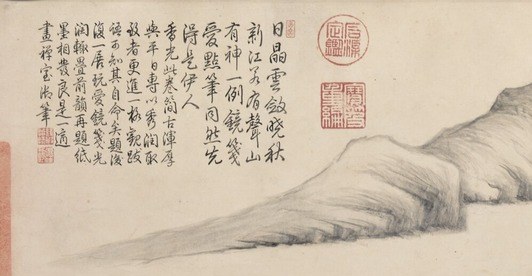
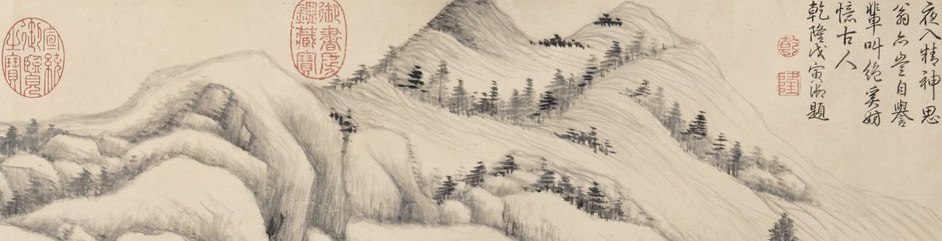
This is Dong Qichang's River and Mountains on a Clear Autumn Day, painted in 1625. Dong was not just a painter, he was the most influential art theorist of the late Ming dynasty, a calligrapher, and a high-ranking government official. His writings shaped Chinese art criticism for the next three centuries, and this scroll is his theory made visible.
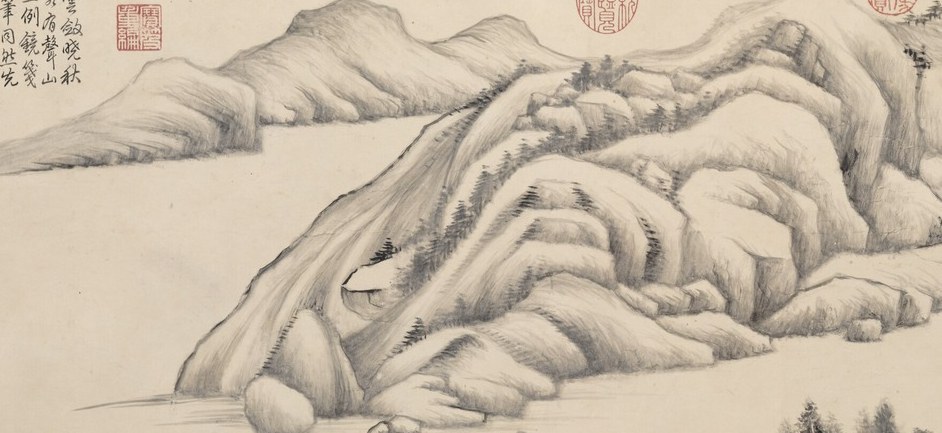
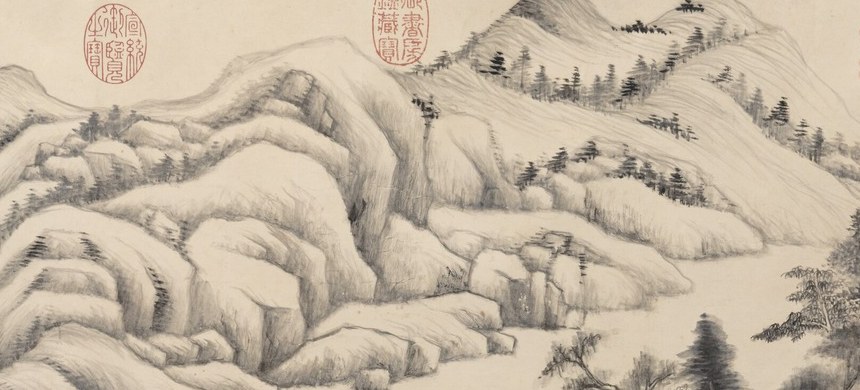
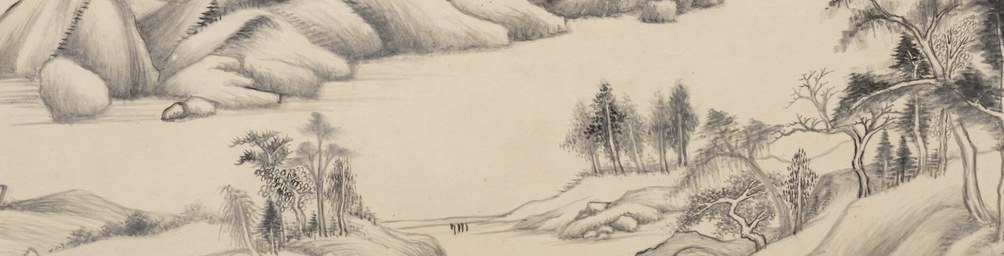
What looks like a quiet landscape is actually a manifesto. Dong rejected the careful realism of professional court painters. Instead, he stacked the mountains in flat, rhythmic layers, a compositional method he championed as a return to the literati spirit. The dry brush dragged over a soft ink wash on the left mountain mass is pure calligraphic gesture. The river is unpainted silk. The distant peaks barely exist. For Dong, emptiness was an active compositional element, not a lack.
This painting is housed today in the collection of the Cleveland Museum of Art. The red seals at its margins trace its journey through centuries of collectors, including likely imperial interest. Each seal is a timestamp of reverence, proof that the scroll was touched, unrolled, and studied by hands across nearly four hundred years.
Stand in front of it long enough, and the mountains begin to feel like handwriting.
Details
Transcript
An autumn landscape. But look closely. Dong Qichang was the most powerful art theorist of his time. He said painting should be like calligraphy, a rhythm of the wrist. Watch the mountain take shape: a dry brush dragged over a wet gray wash. He stacks the peaks vertically, refusing Western perspective. The unpainted silk is the river. He called this 'leaving void.' And high in the distance, the farthest peaks dissolve to nothing.