Madame René de Gas by Degas, Edgar
Edgar Degas, often associated with Impressionism, actually preferred to be known as a realist. His 1872 oil on canvas, *Madame René de Gas*, currently held in a private collection, beautifully demonstrates this preference.
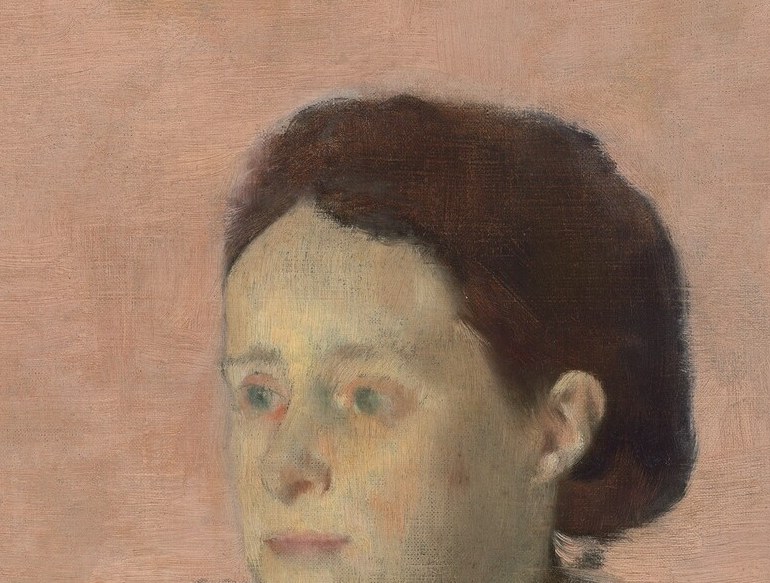
In this portrait, notice the precise rendering of Madame de Gas’s face and the intricate details of her ruffled collar. Her direct gaze and folded hands convey a sense of calm introspection, a signature of Degas's ability to capture the psychological complexity of his subjects.
While Degas is most famous for his depictions of dancers, his portraits like this one show his mastery of drawing and his deep interest in portraying human presence and dignity. He eschewed painting outdoors, a common practice among his Impressionist contemporaries, preferring the control of his studio.
What do you see in her expression that hints at her inner world?
Details
Transcript
This is Madame René de Gas, painted by Edgar Degas. Degas preferred to be called a realist, not an Impressionist. Look closely at her direct, unassuming gaze. He captures a quiet presence, focused on her dignity. His precise brushwork defines the fabric of her dress and collar. This portrait highlights his skill in capturing human isolation.