A Genoese Noblewoman and Her Son by Dyck, Anthony van, Sir
This striking portrait, "A Genoese Noblewoman and Her Son" by Anthony van Dyck, painted around 1626, offers a remarkable glimpse into the aristocratic fashion of 17th-century Genoa. Van Dyck, then in his formative years in Italy, became the preeminent painter of European nobility, renowned for his ability to convey both dignity and psychological depth.
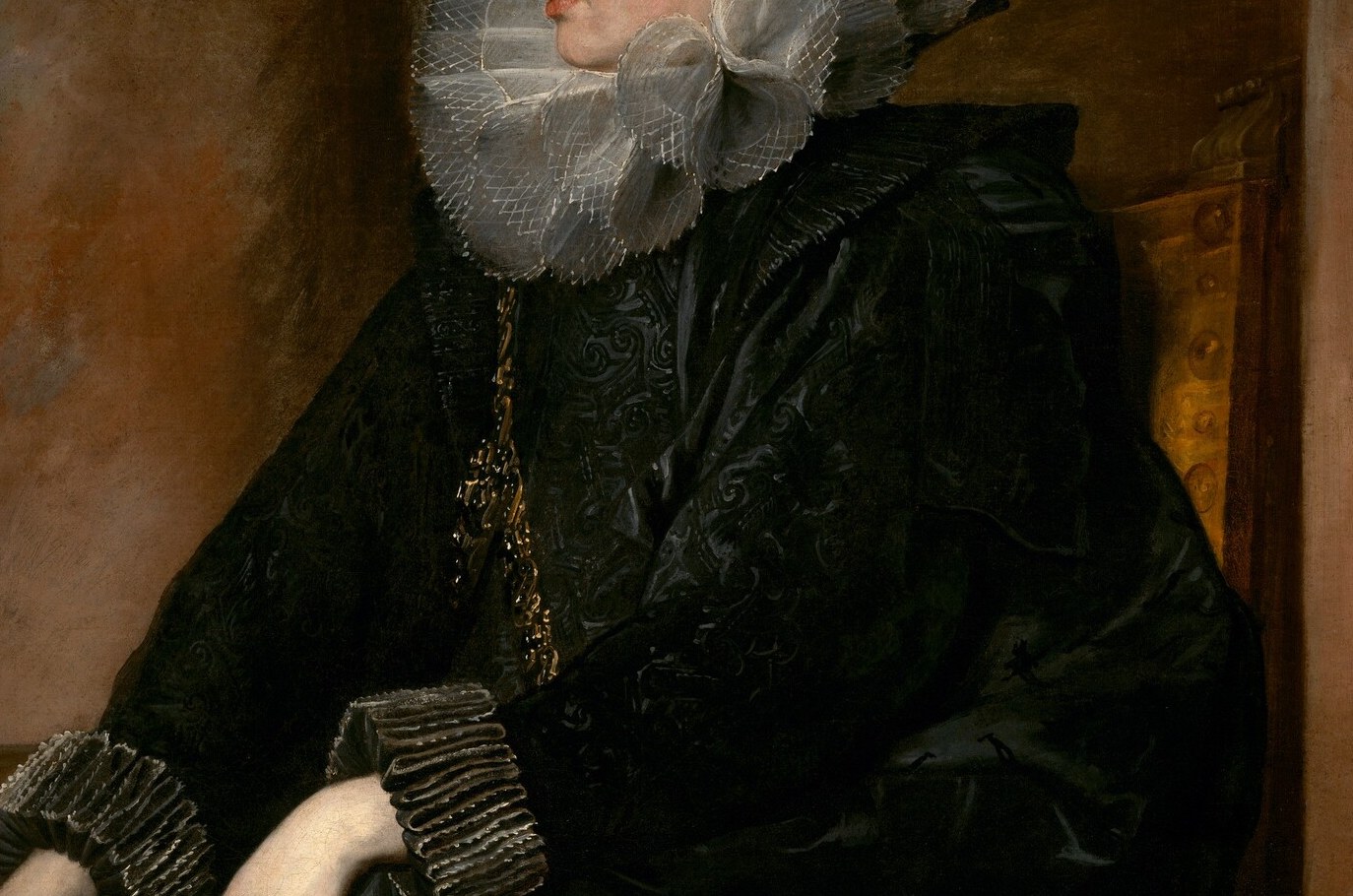
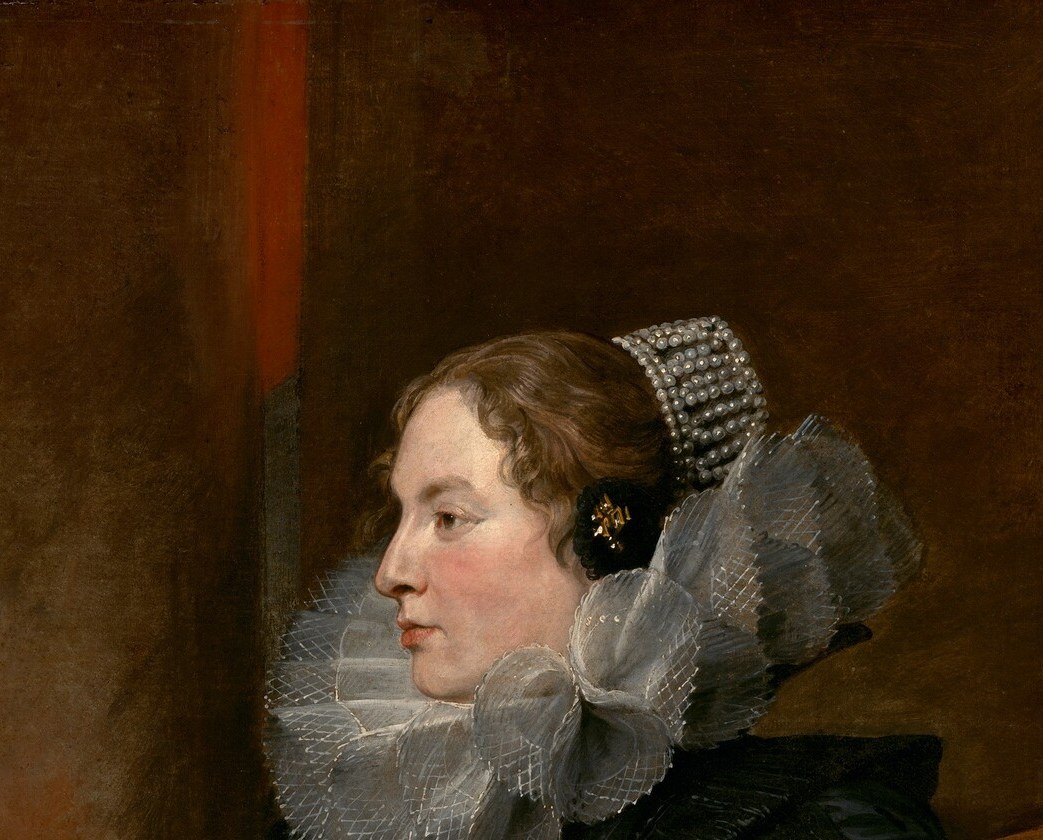
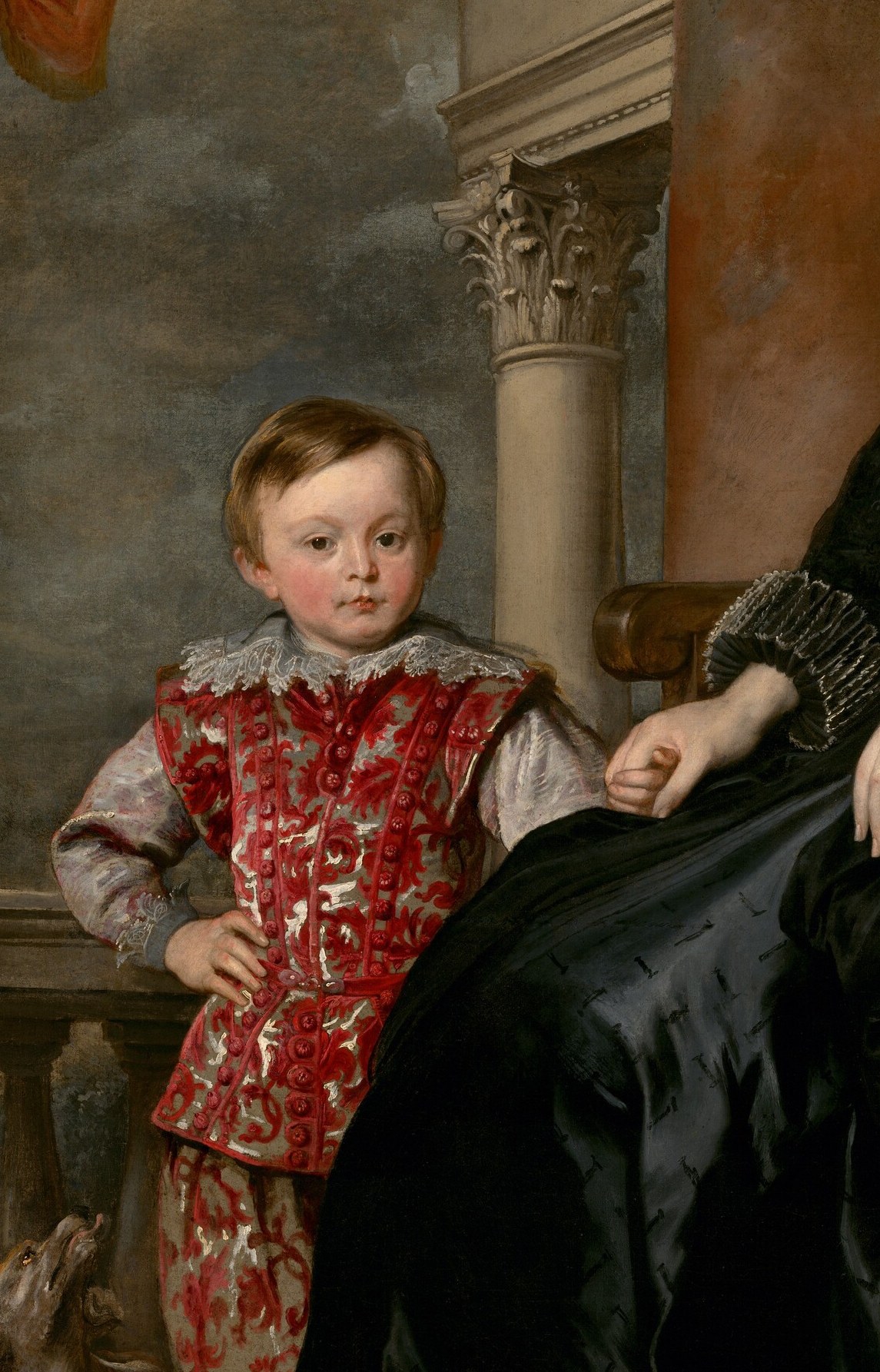
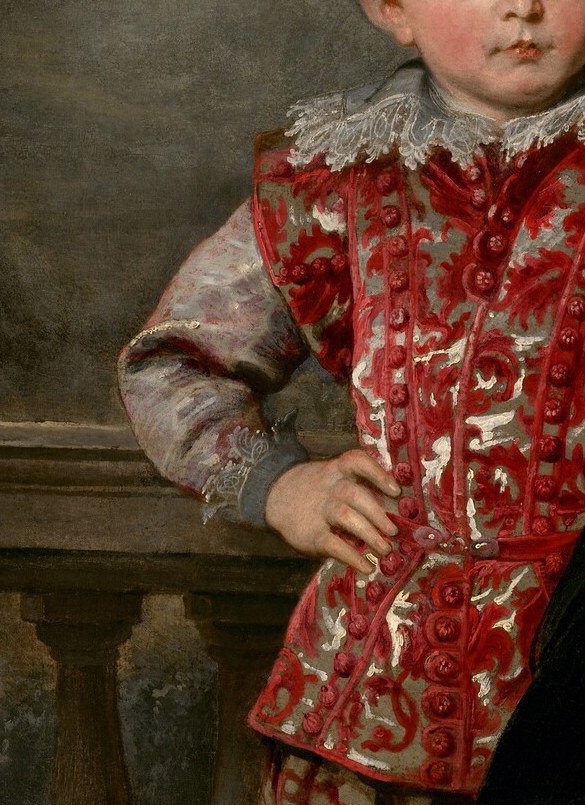
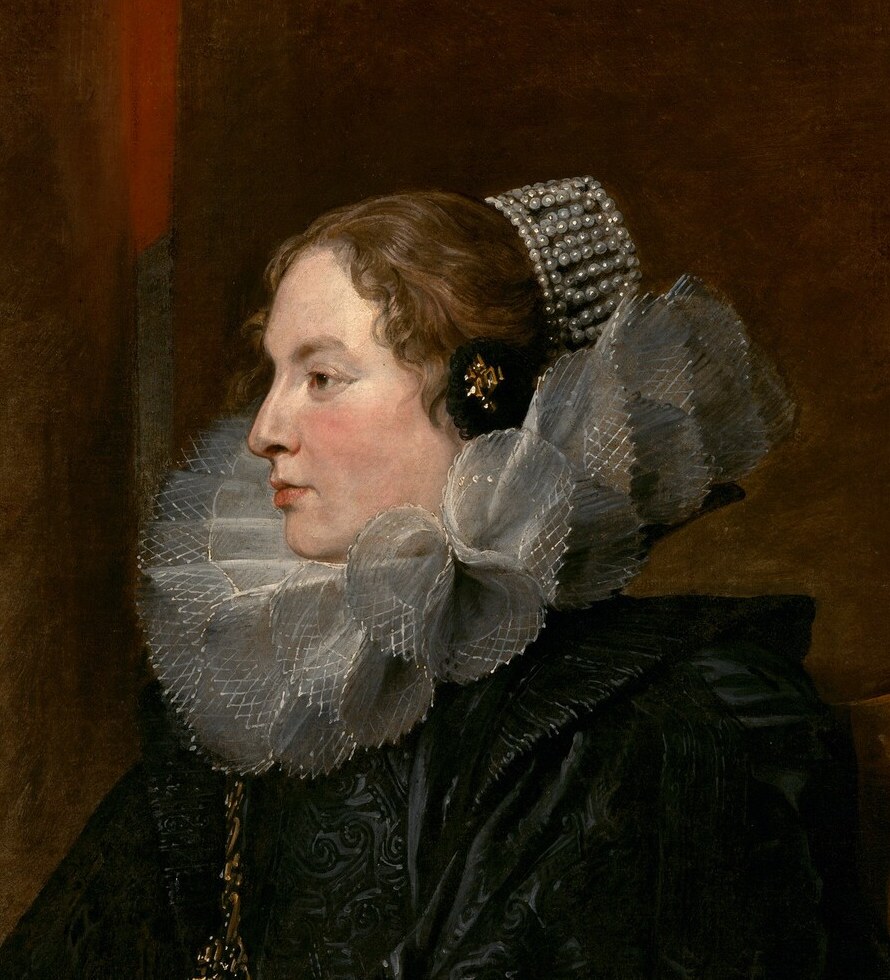
Look closely at the elaborate details that define the sitters' status. The noblewoman's "millstone" ruff, for instance, is a precise sartorial marker of the 1620s, a testament to the period's style. Her delicate lace cap and prominent hair bow further emphasize her high social standing. The young boy, likely her son, is also dressed in the vibrant, fashionable attire of the time, with his hand assertively placed on his hip, signaling his role as an heir.
Van Dyck spent six crucial years in Italy, primarily in Genoa, where he absorbed Titian's vibrant colorism, which transformed his portraiture. This work is a testament to his refined technique, capturing the luxurious textures of silk, lace, and ruff with remarkable skill. The painting now resides in a distinguished collection, a silent witness to a bygone era of wealth and elegance.
What other subtle details do you notice in their attire that speak of their world?
Details
Transcript
This Genoese noblewoman, painted around 1626, stands in black. But look at her starched white ruff. Its size precisely dates this portrait. And her intricate lace cap and prominent hair bow, a sign of high status. Her young son also wears the height of fashion, in vivid red and white. Even his assertive hand on his hip shows how he is presented: an heir. Van Dyck captured the proud elegance of Genoa's elite, stitch by stitch.