George IV (1762–1830), When Prince of Wales by William Beechey
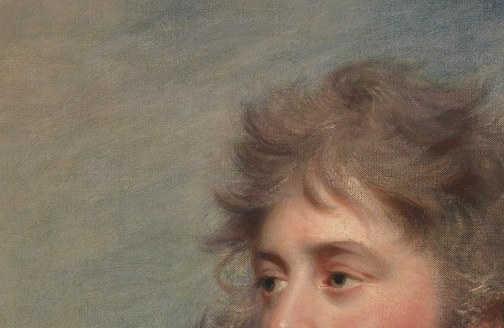
This is William Beechey's 1806 portrait of George IV, painted when he was still Prince of Wales and kept today at the Metropolitan Museum of Art. Beechey was a leading British portraitist during what is called the golden age of British painting, and he painted this future king in full military dress, dark jacket, scarlet sash, sword in hand, projecting all the martial authority a prince was supposed to carry.
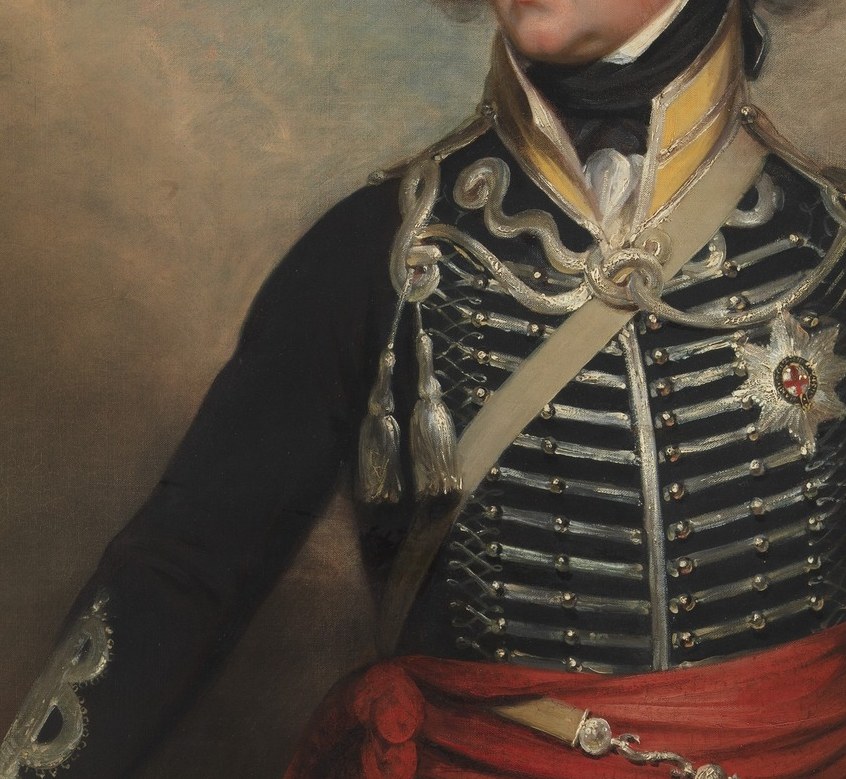
The thing to look at is the gold frogging across the chest. From a step back it reads as a dense, regal display of braided loops and barrel buttons in credible three-dimensional space. Step closer, and you can see the trick: each loop is really a single loaded stroke, a confident flick of the brush that the eye assembles into braid. Beechey knew he would not get endless hours from a prince, so he built the uniform from painter's shorthand.
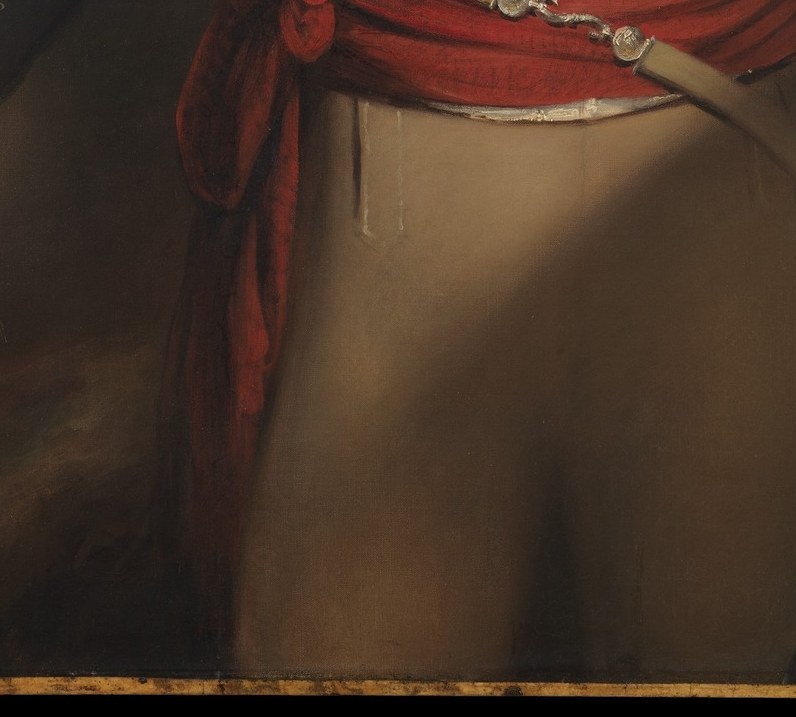
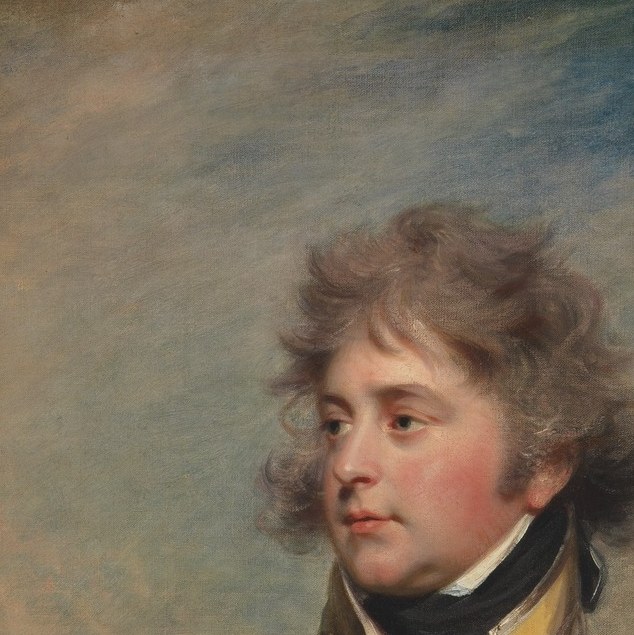
Now look at the breeches. They are painted far more loosely, broad strokes, less finish. Beechey ran a deliberate hierarchy of attention. The face and the gold got the labor; the lower body simply had to balance the composition. The portrait was an exercise in knowing exactly where the viewer's eye would travel and putting the work there.
Royal portraiture in this period was a kind of performance, and Beechey performed it with a practical, almost economical brilliance. Next time you see a heavily embroidered uniform in an old portrait, ask yourself: how much of this is real thread, and how much is just a very good brushstroke?
Details
Transcript
You are looking at a future king of England. But the painter's real subject is gold. Each braided loop is a single loaded stroke. Beechey knew a prince would not sit long. So he built the uniform from shorthand. Compare the gold to the breeches. The gold is crisp and exact. The breeches are a loose gesture. He put the work where the eye would land.