A General and His Aide-de-camp by Jean Louis Ernest Meissonier
View the artwork: A General and His Aide-de-camp →
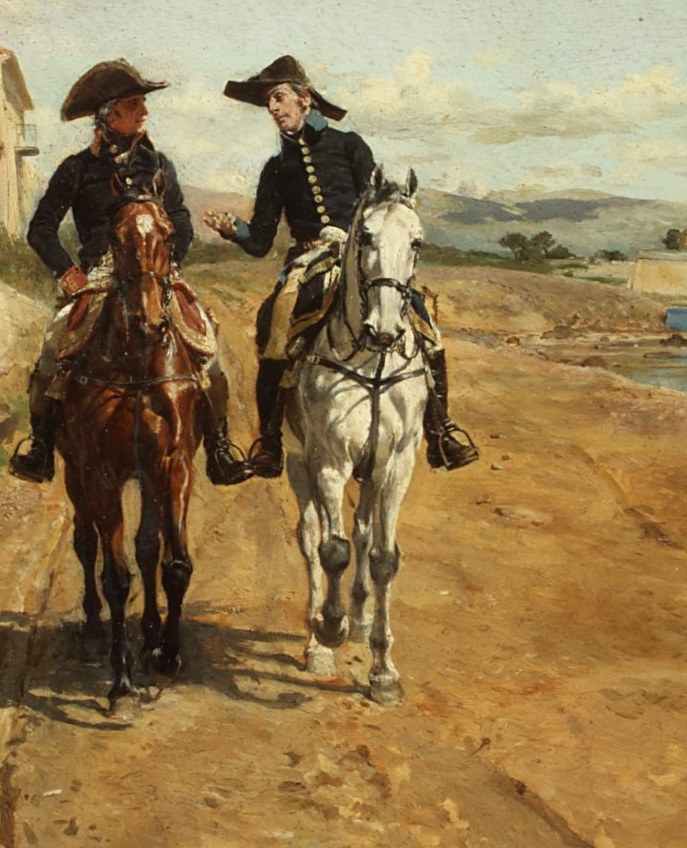
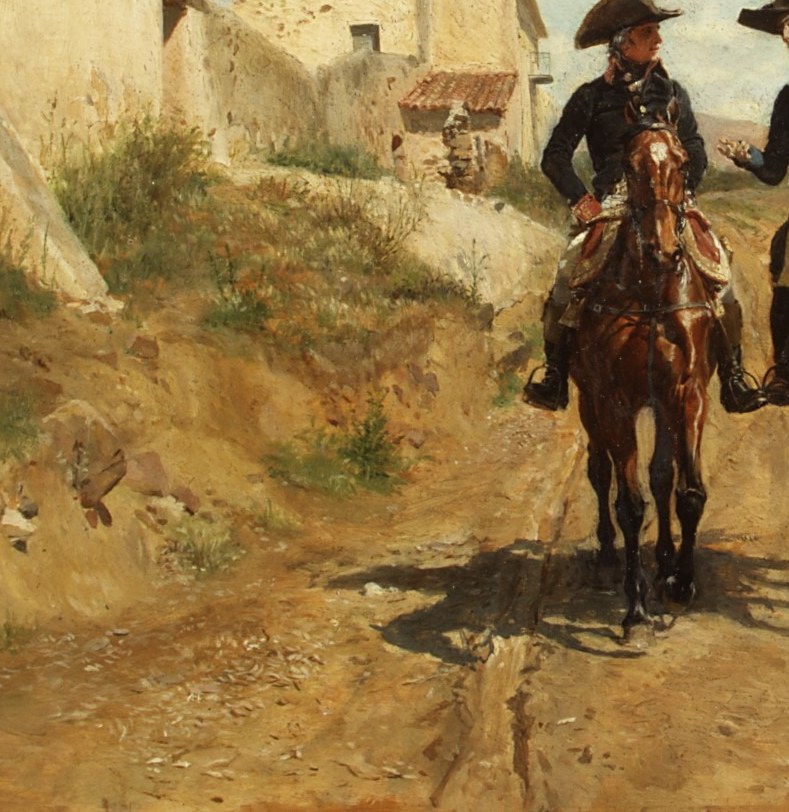
Ernest Meissonier's "A General and His Aide-de-camp" (1869) lives at the intersection of military precision and quiet landscape painting. At first glance you see two officers on a routine patrol, but Meissonier, the most celebrated and expensive artist of his era, never painted routine anything.
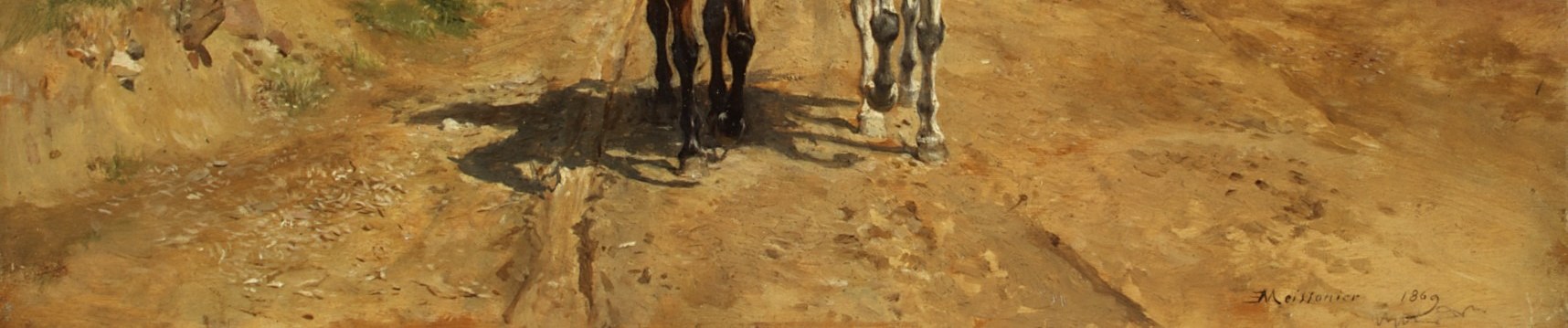
Look first at the horses. Meissonier's reputation rested on his almost fanatical attention to detail, critics routinely examined his paintings with magnifying glasses. Here he gives you two entirely different coat textures: the aide's luminous grey-white horse catching full Mediterranean sun, and the general's dark bay absorbing it. The contrast separates rank visually before you read a single uniform detail.
Now let your eye drift to the background, where a body of water catches the light and a distant shoreline settlement appears, complete with a tower. That tiny cluster of buildings, half-dissolved in noon haze, is the entire narrative engine of the painting: it tells you where these men are riding and why. Without it, the scene is a portrait of two soldiers. With it, it is the middle of a story.
Meissonier painted this during France's Second Empire, when he was, alongside Gérôme and Cabanel, one of the three most successful artists in the country. His Napoleonic scenes were so prized that he could demand, and receive, sums higher than any living painter. This canvas shows exactly why: a scene so apparently tranquil rewards the patient viewer with its full meaning.
#arthistory #meissonier #19thcenturyart
Details
Transcript
A general and his aide ride through midday sun. Meissonier was obsessed with military detail. The horses' coats alone are a masterclass in texture. But let your eye drift past the officers. See the water? This is a coastal campaign. Now look at what sits on the far shore. A distant settlement, complete with a tower. Their destination. The whole narrative lives in a detail most people scroll past.