Artwork
A General and His Aide-de-camp
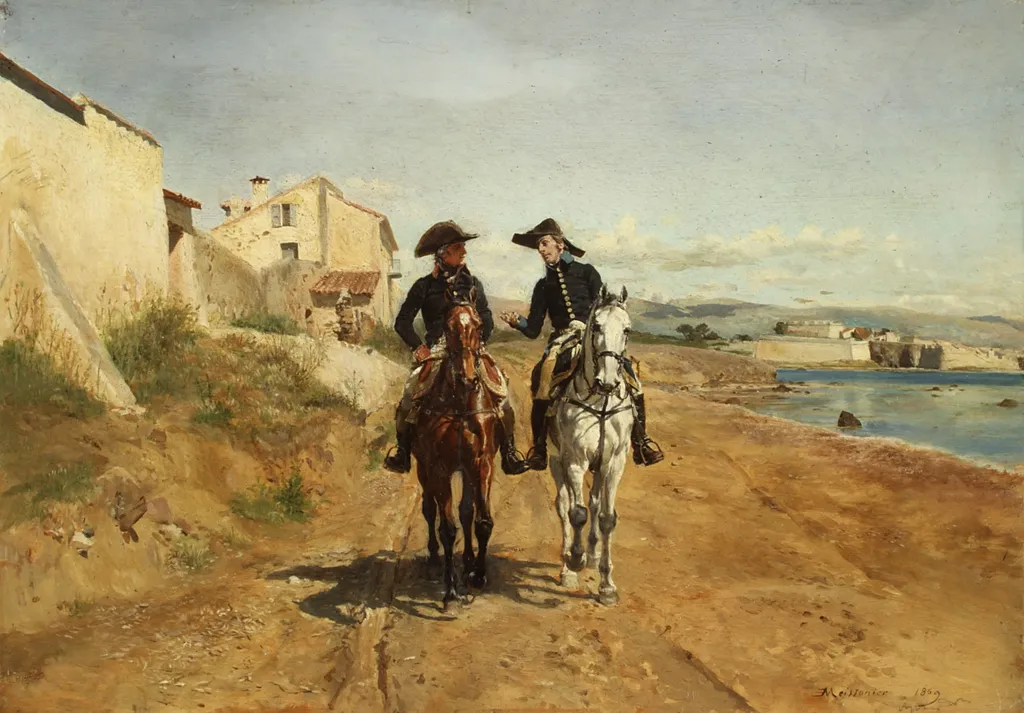
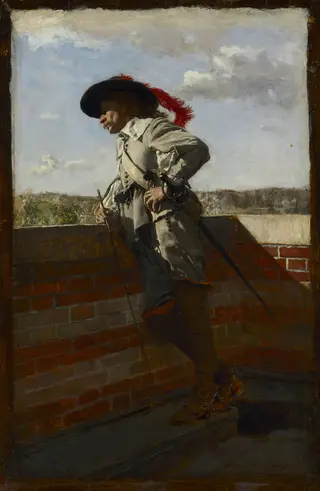
A General and His Aide-de-camp is an oil painting by the Realist artist Ernest Meissonier. It dates from 1869 and is held in the collection of the Metropolitan Museum of Art.
About this work
Subject & Meaning
The painting A General and His Aide-de-camp (1869) by Jean‑Louis‑Ernest Meissonier shows a mounted general accompanied by his aide‑de‑camp standing beside a shore and a low wall under a cloudy sky. The work’s iconography highlights equestrianism, a traditional visual marker of command, while the presence of the aide‑de‑camp reinforces the hierarchical relationship between commander and subordinate. The coastal setting of shore, wall, and cloud suggests a moment of pause or preparation, lending the scene a contemplative tone about leadership, duty, and the transient calm before action.
Technique & Style
The composition balances precise draftsmanship with a restrained palette, emphasizing the dignified pose of the general against a muted background.
The painting A General and His Aide‑de‑camp, completed in 1869 by Jean‑Louis‑Ernest Meissonier, is executed in oil on a wooden panel. Its support measures approximately 19.7 cm in height and 27.6 cm in width, placing it within the intimate scale of the artist’s detailed genre scenes. Meissonier employs a refined, almost linear brushwork that renders the folds of the uniform, the horse’s anatomy, and the surrounding landscape with meticulous clarity.
The composition balances precise draftsmanship with a restrained palette, emphasizing the dignified pose of the general against a muted background. The work’s formal qualities reflect the academic realist approach characteristic of mid‑nineteenth‑century French painting.
History & Provenance
A General and His Aide-de-camp was painted in 1869 by Jean-Louis-Ernest Meissonier in oil on panel. The support is a small wood panel measuring about 19.7 cm in height and 27.6 cm in width. The painting is now part of the collection of the Metropolitan Museum of Art in New York, where it is displayed.
The sources do not record any earlier owners, commissioning patron, or exhibition history prior to its acquisition by the Met.
Legacy
The 1869 oil on panel titled A General and His Aide‑de‑camp, painted by Jean‑Louis‑Ernest Meissonier, entered the collection of the Metropolitan Museum of Art, ensuring its continued public visibility. Its precise rendering of a mounted officer and attendant exemplifies the meticulous historical detail for which Meissonier became renowned, a quality that shaped his reputation as a leading French genre painter of the Second Empire. As part of the museum’s holdings, the work is frequently cited in studies of 19th‑century military subjects, underscoring its role in preserving the artist’s legacy and influencing later artists who emulated his exacting approach to composition and narrative.
Overview
"A General and His Aide-de-camp" is an oil painting that captures two uniformed men on horseback. They are shown riding along a dusty track bordered by a dilapidated stone wall, set against a backdrop of older structures under a subdued sky. The composition presents a specific moment in a seemingly tranquil, sunlit countryside, focusing on the interaction between the figures and their environment.
Context
This painting aligns with a broader artistic interest in depicting everyday scenes with sharp precision, a characteristic shared with contemporaries such as Jean Louis Ernest Meissonier. The artist's focus on the specific details of military life, even in a non-combative setting, reflects a trend towards realism and narrative clarity in genre painting of the period. This approach emphasizes careful observation and detailed execution.
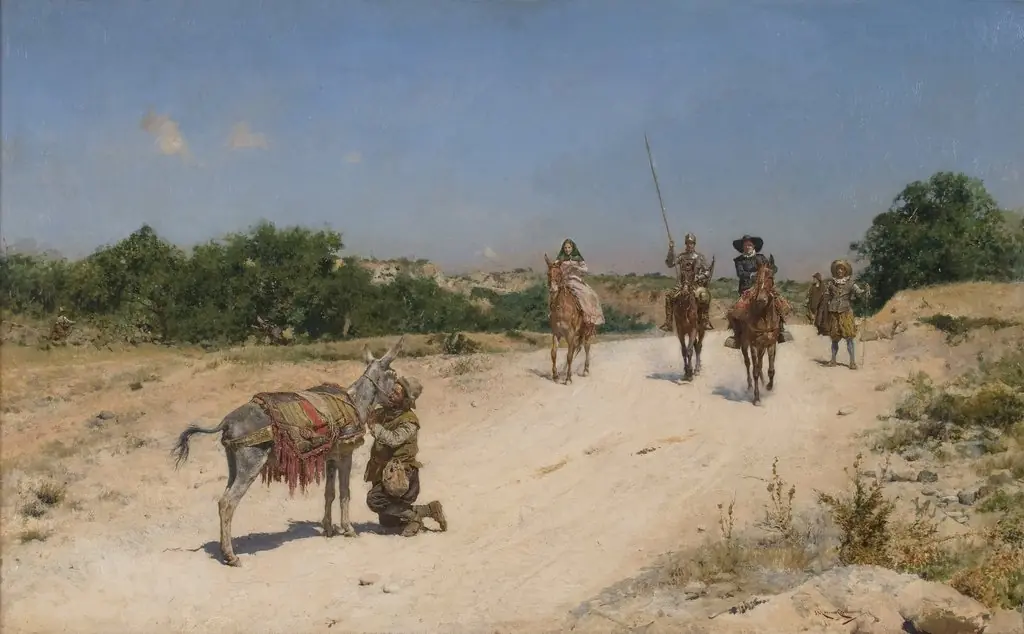
Artist & collection
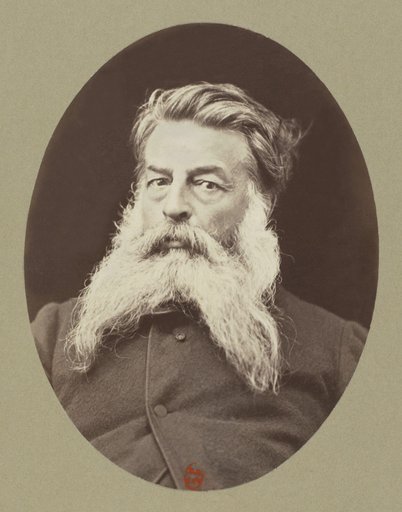
Artist
Jean-Louis-Ernest Meissonier was a French academic painter and sculptor. He became famous for his depictions of Napoleon and his military sieges and manoeuvres in paintings acclaimed both for the artist's mastery of…

- Sancho Panza recovers his lost donkey
 Horsemen at the Inn
 Robbers Attacking Travellers
 Eastern Soldiers with a Horse Drinking
 Robbers Attacking Travellers
 Ved Capucinerklostret i Rom
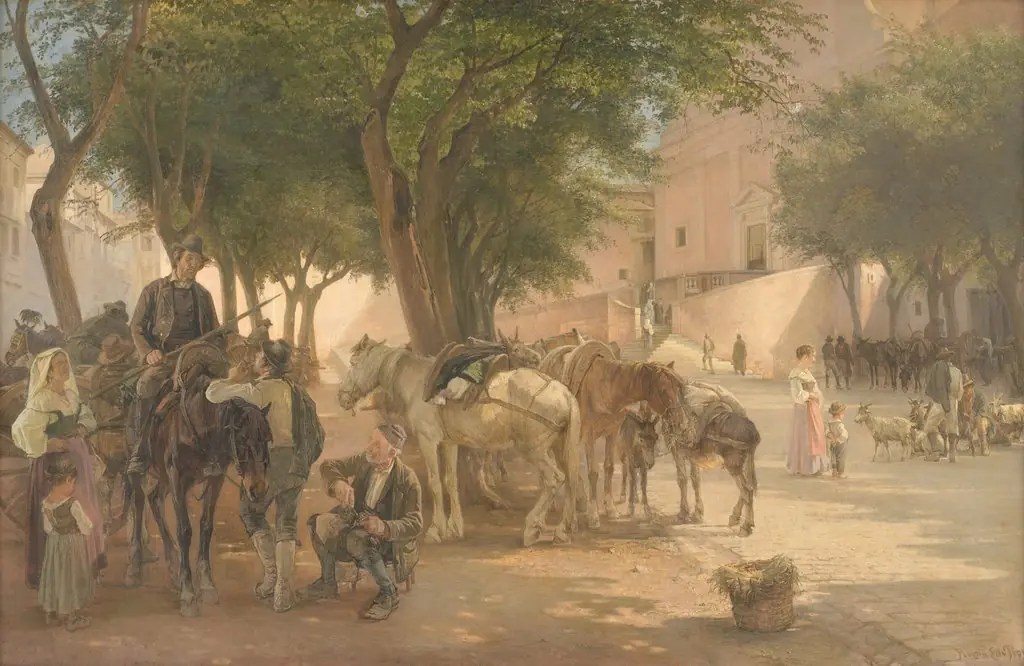 At the Capuchin Monastery in Rome
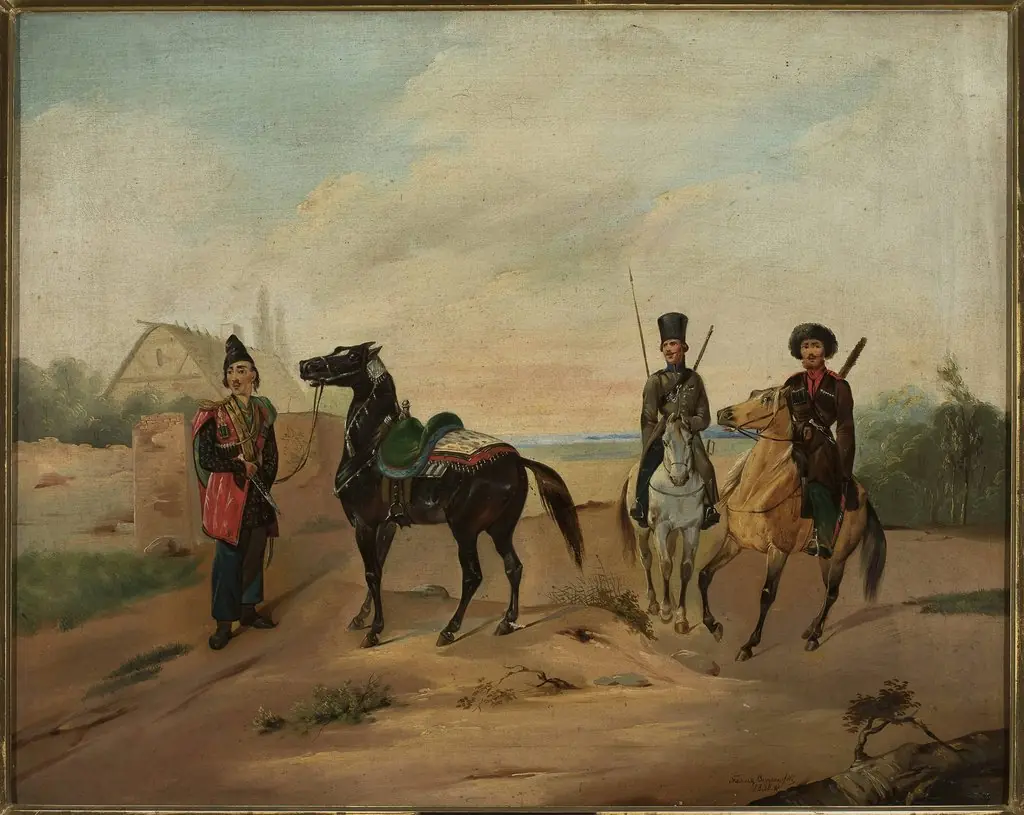 Three horsemen on the road
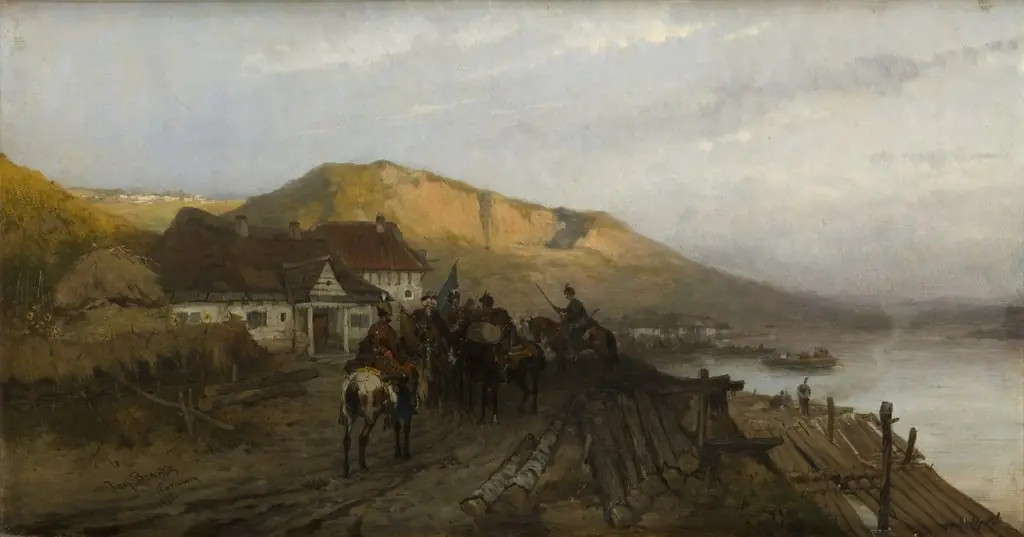 On the Dniester River
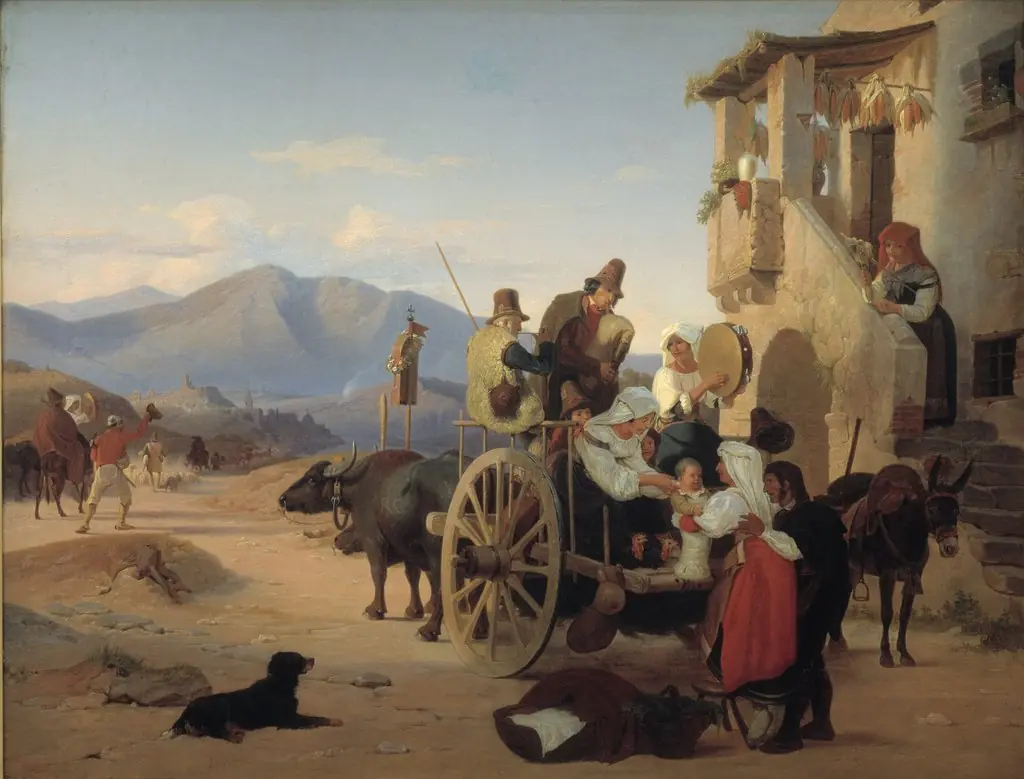 Romerske landfolk drager til marked
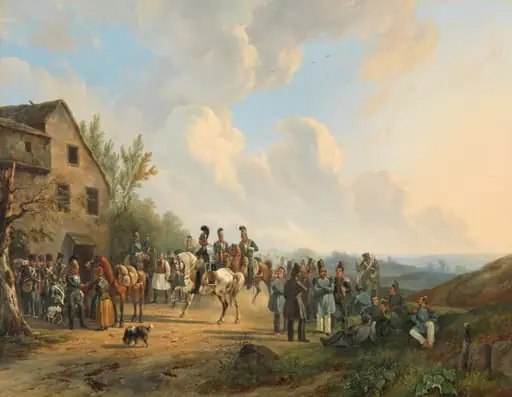 Scene from the Ten Days' Campaign against the Belgian Revolt, August 1831
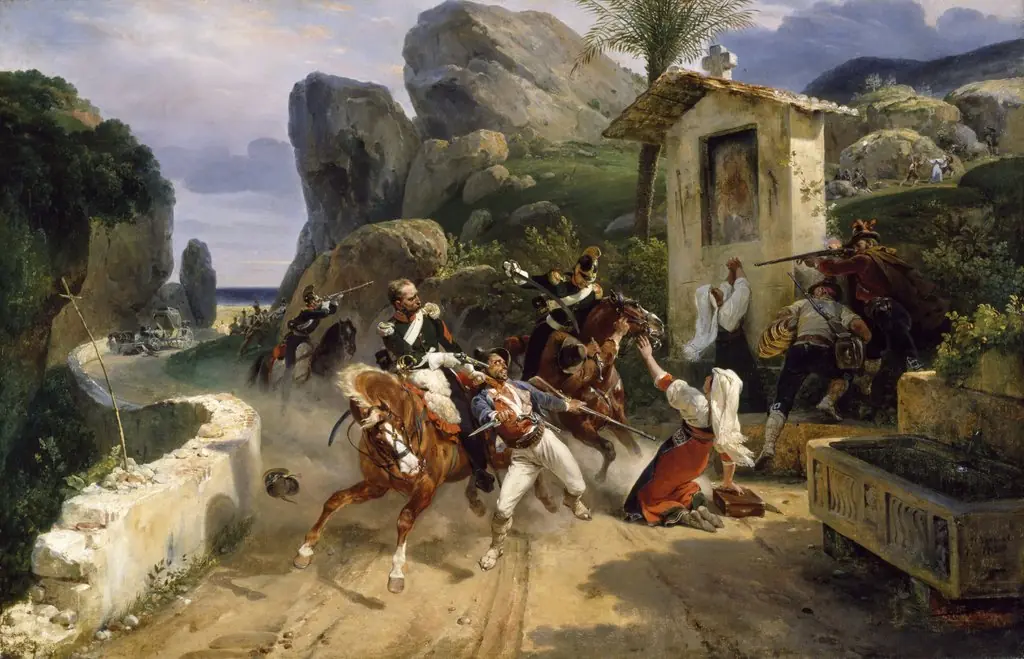 Italian Brigands Surprised by Papal Troops