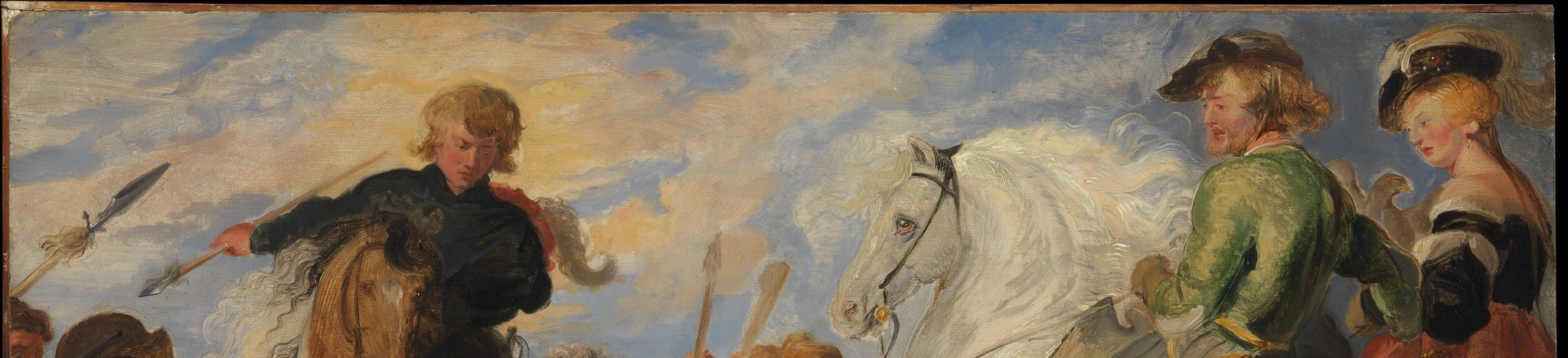
Copy after Rubens's "Wolf and Fox Hunt" by Edwin Landseer
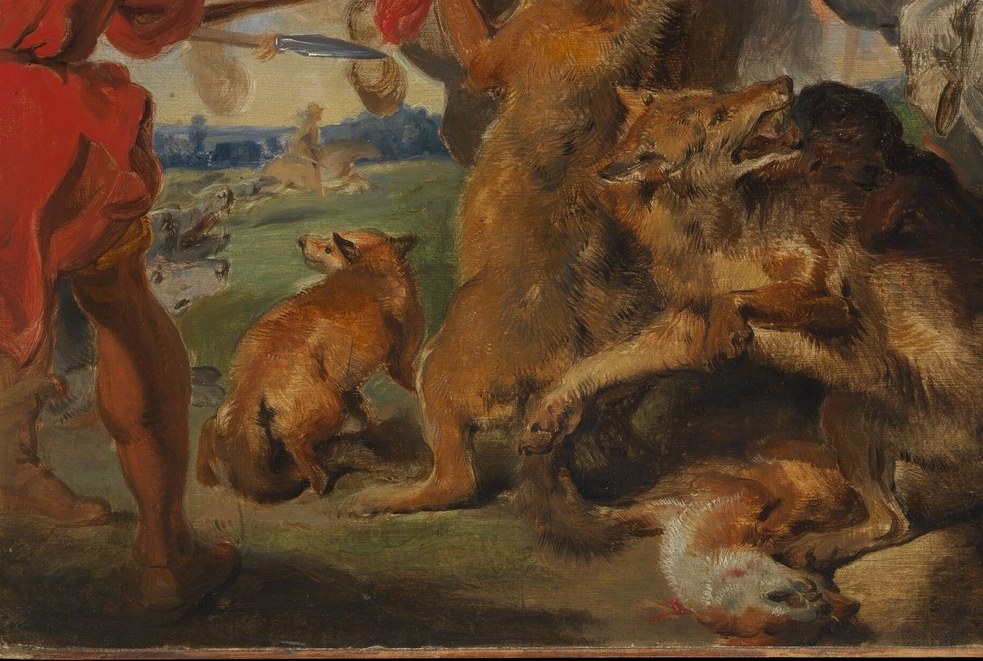
Edwin Landseer's "Copy after Rubens's 'Wolf and Fox Hunt'" (1824) is a masterclass in ambition. At just 22, the English painter whom we remember for dignified stags and the Trafalgar Square lions tackled one of the Baroque's most chaotic hunting scenes to prove his own skill. He wasn't just copying an Old Master; he was showing he could match Rubens's furious animal anatomy beat for beat.
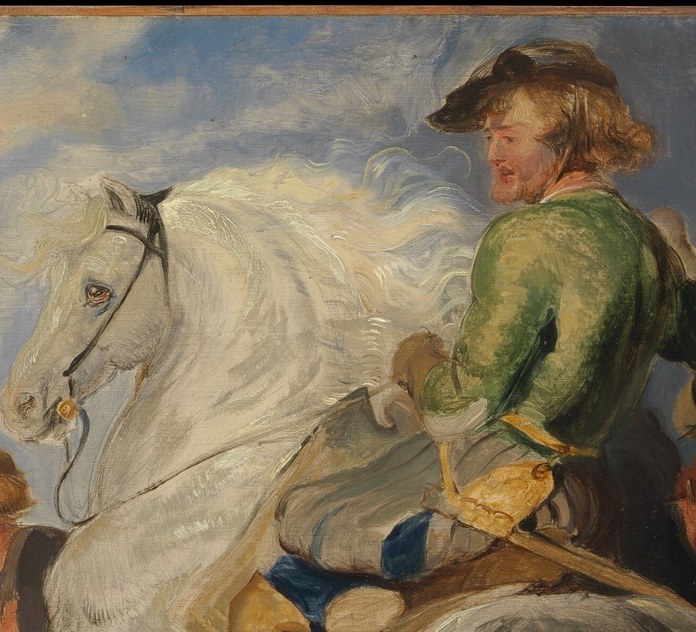
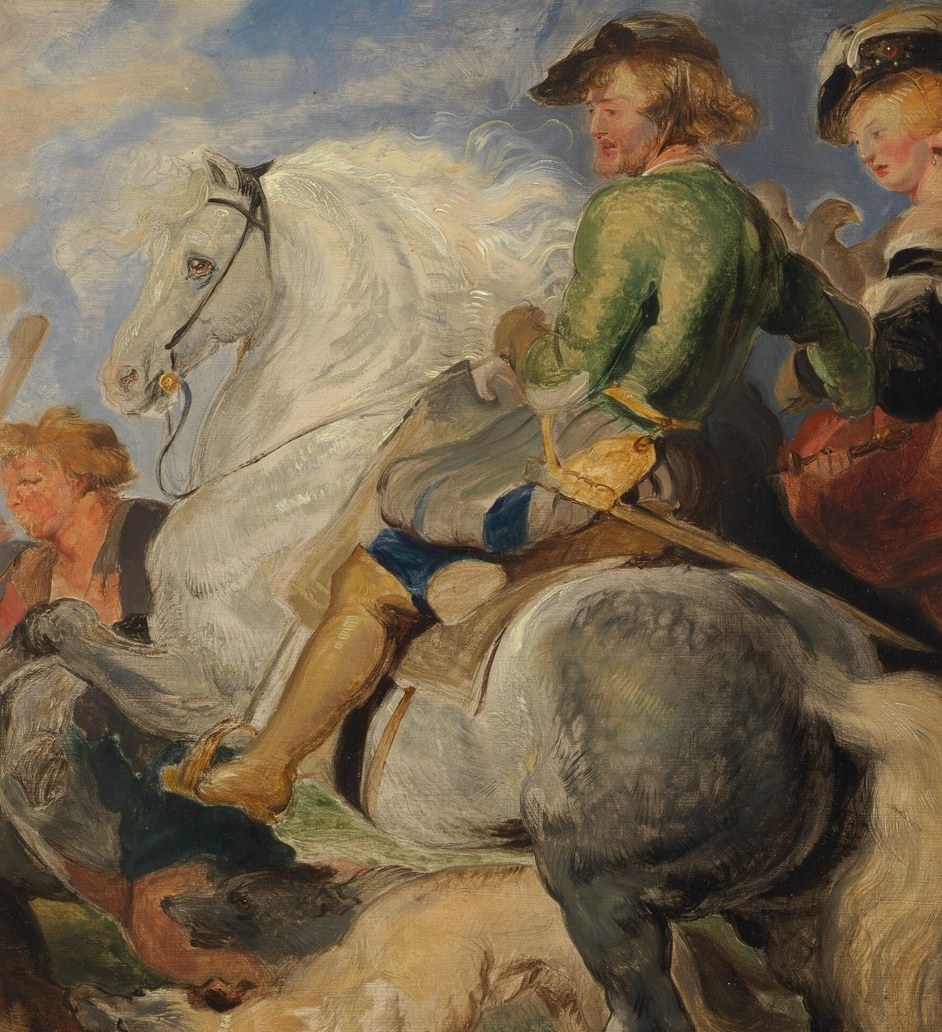
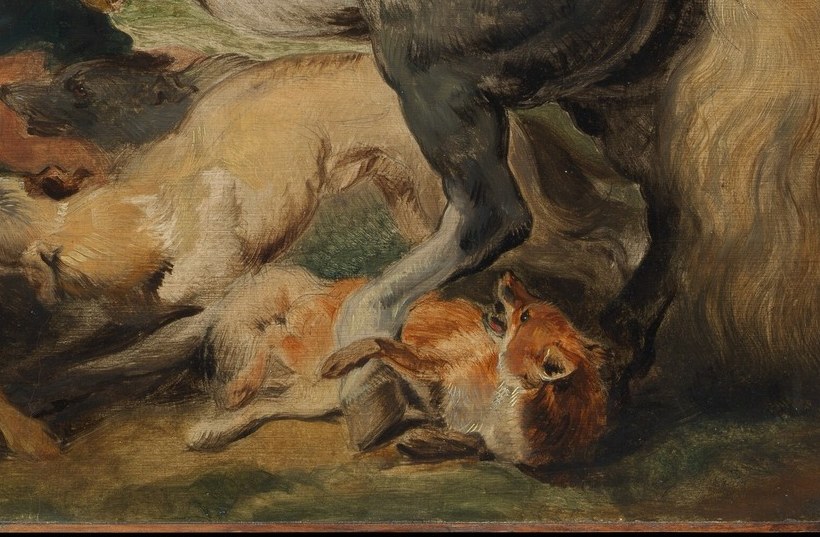
The camera leads you through the canvas from the flashy rearing white horse, the painting's undeniable anchor, down through the snarling hound pack, and finally to the lower right corner, where the actual fox resolves its struggle with a dog. It is a clever structural surprise: a painting with "Fox" in the title hides its namesake in the margins, letting a pinned wolf dominate center stage.
Landseer created this work early in his career, when copying great compositions was standard training for a rising artist. The Met's version is a faithful transcription of Rubens's Baroque grammar: the diagonal spear shaft, the warm golden atmosphere, and the brutal club-wielding huntsman on the left are all preserved from the original. It shows a student who absorbed not just the surface energy but the compositional thinking beneath it.
For a painter who would become Victorian England's favorite animalier, this early workout is a fascinating prologue. Before the sentimental dogs and noble stags, there was a young man wrestling with wolves.
Details
Transcript
A wolf hunt in full chaos, frozen in oil paint. Look at the pack of hounds driving the frenzy. But this isn't a 17th-century masterpiece. It was painted in 1824 by a young Englishman named Edwin Landseer. He was 22. And he was copying Rubens to prove he belonged. The fox in the title isn't the main event. It's down here.