The Floating Feather by Melchior d' Hondecoeter
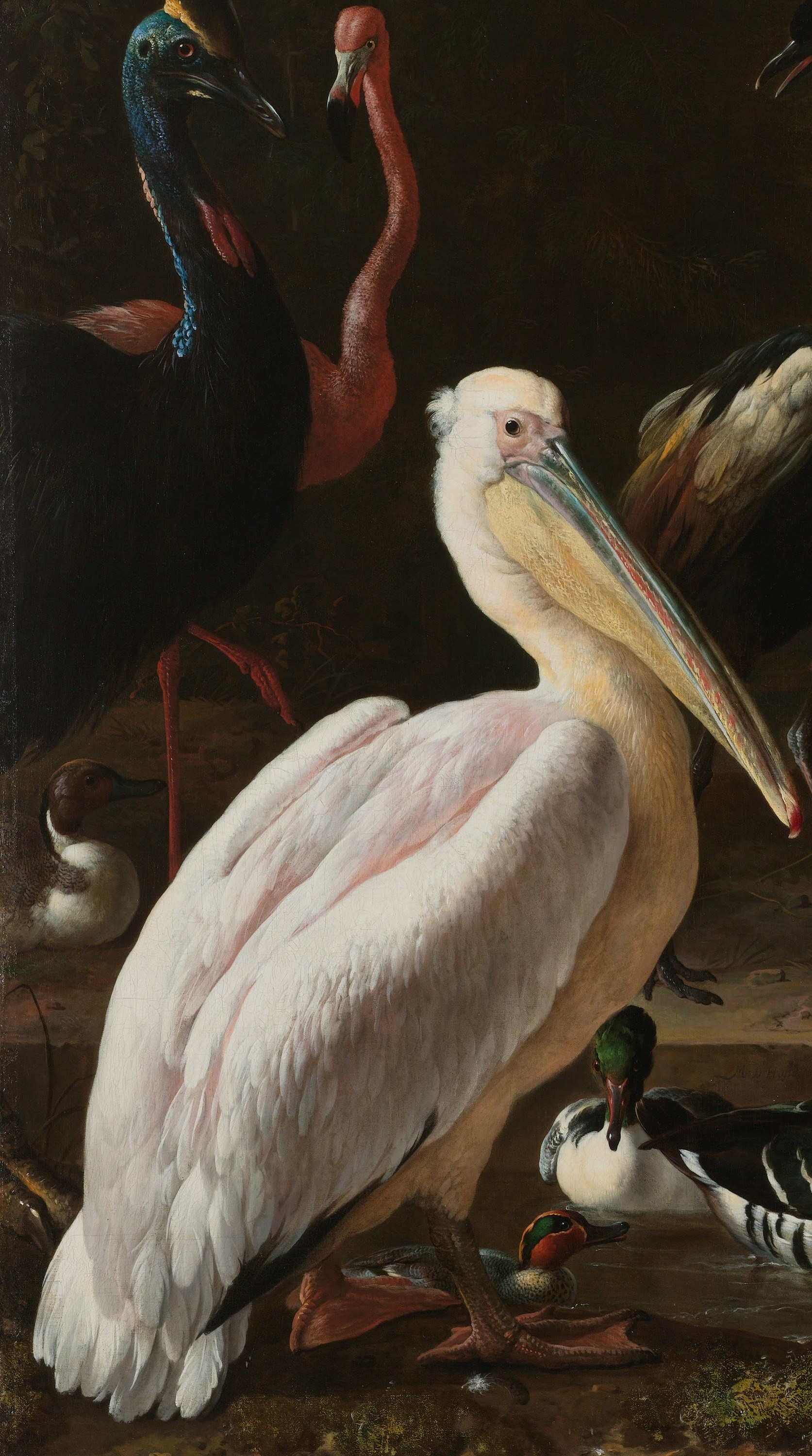
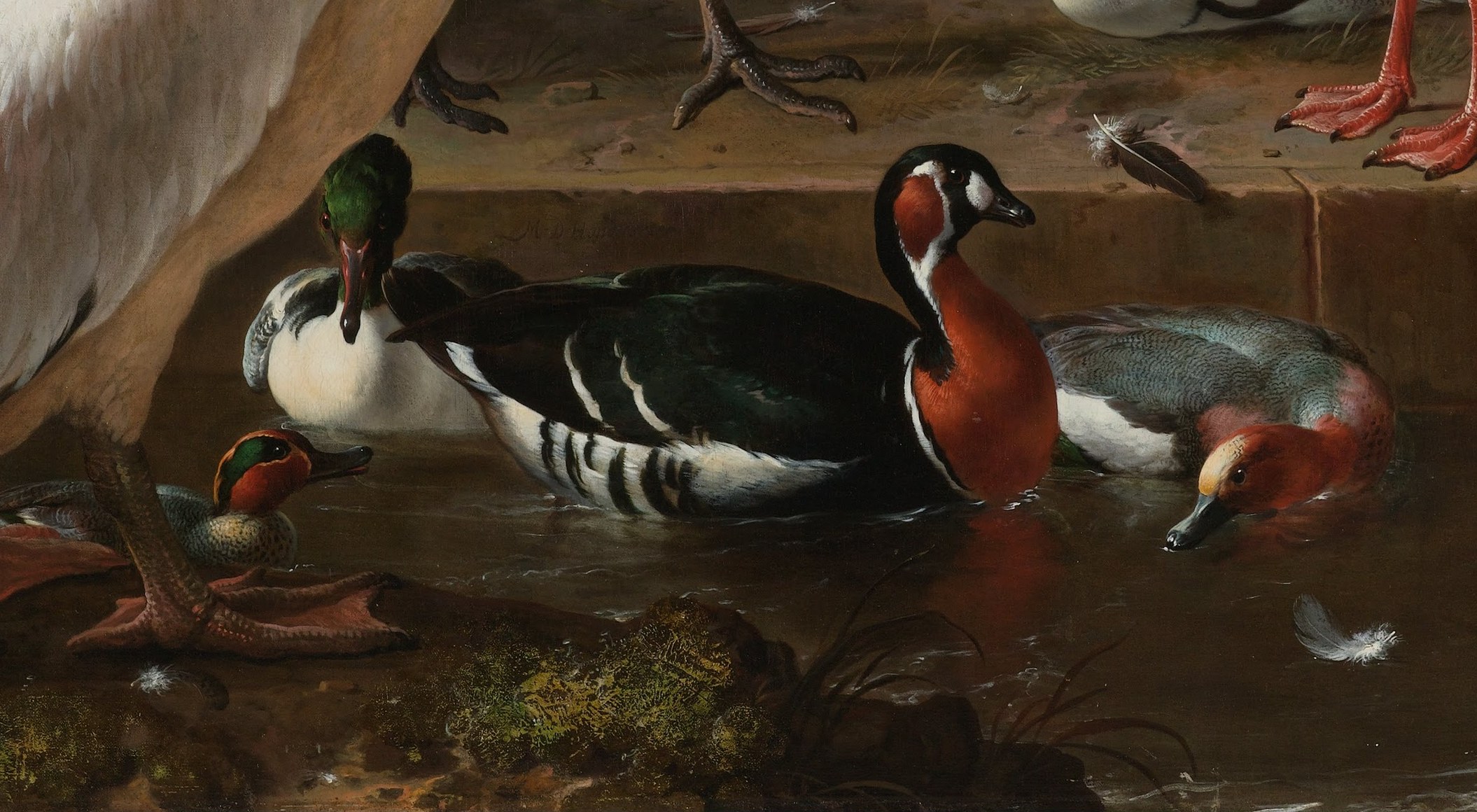
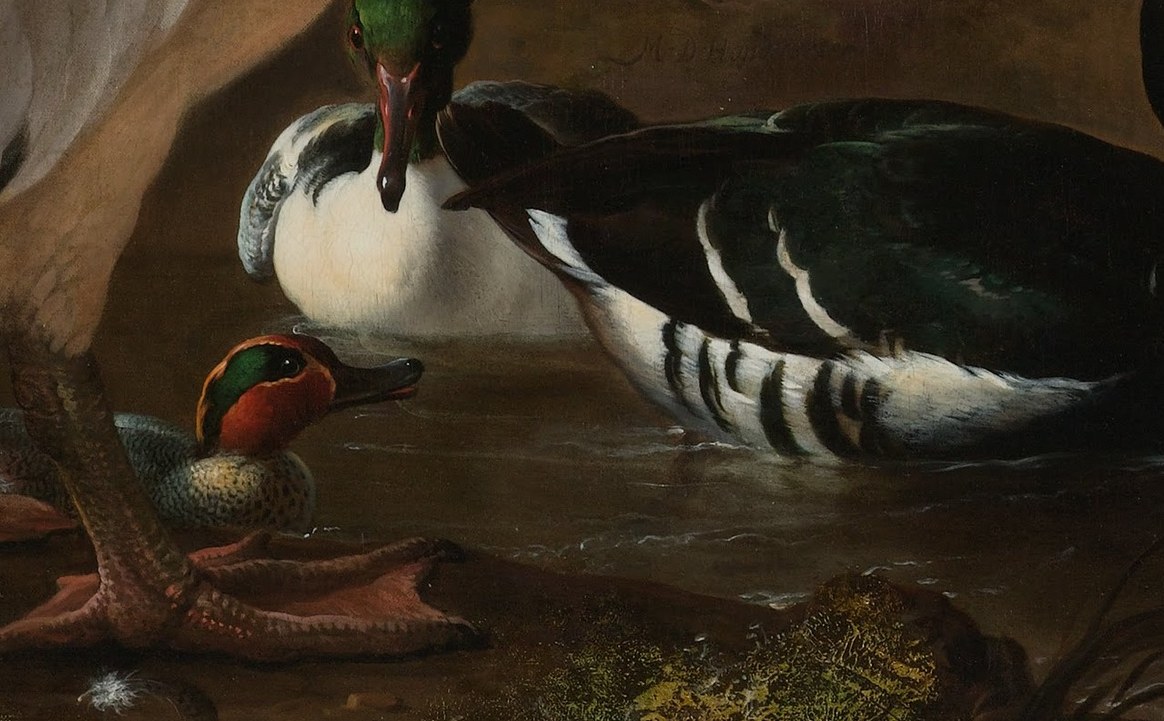
This is The Floating Feather, painted around 1680 by the Dutch artist Melchior d'Hondecoeter, and housed at the Rijksmuseum. Its official title is A Pelican and Other Birds Near a Pool, but almost no one calls it that. The painting was quickly and permanently renamed for one small, technically astonishing detail.
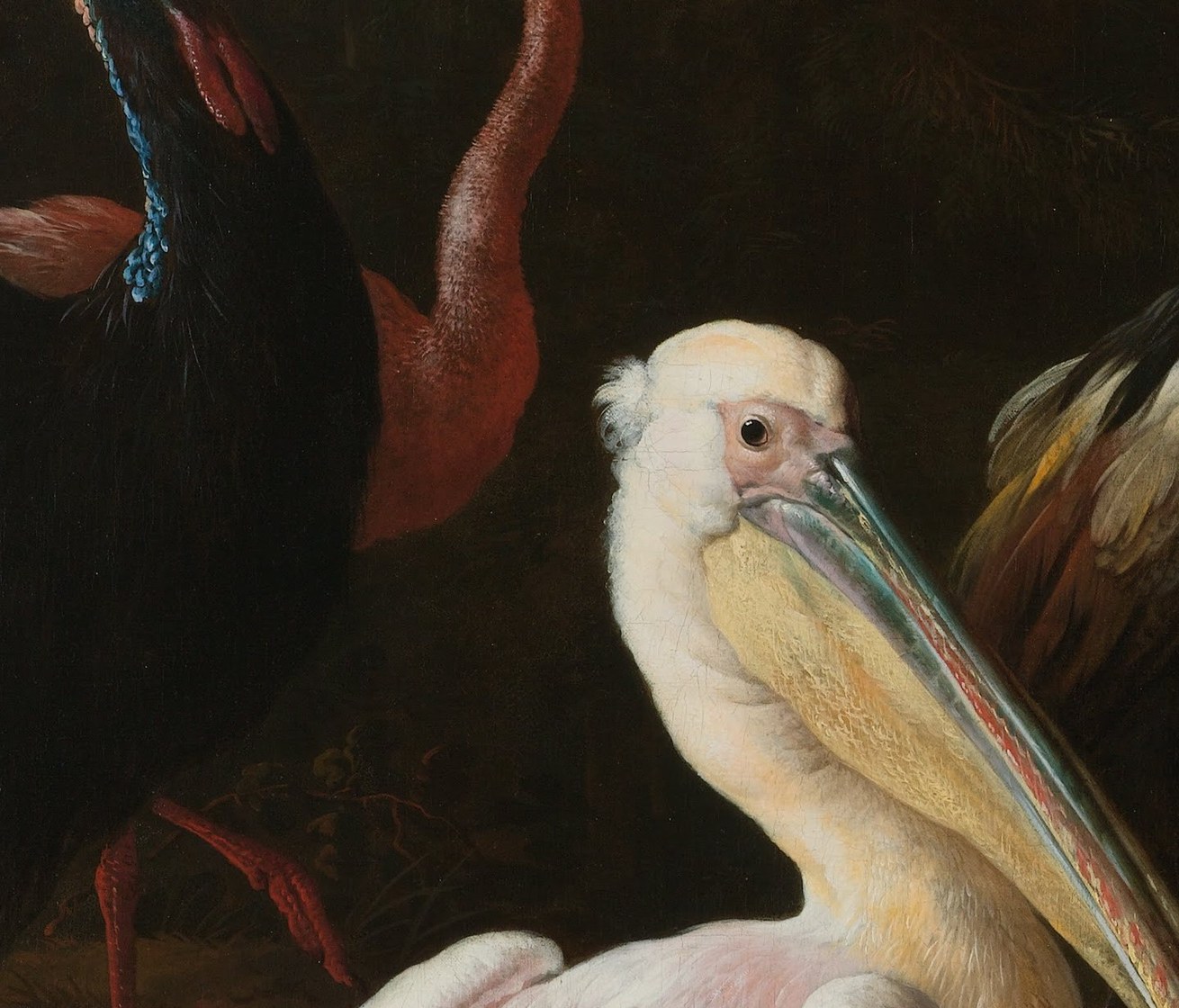
The white pelican in the foreground is the obvious anchor, but the real payoff is on the water. A lone feather floats on the still surface, painted with such precise trompe-l'œil skill that viewers fixated on it. Hondecoeter built the pelican's pouch with wet-on-wet brushwork, visible up close, but the feather is a quieter kind of showmanship: perfect stillness.
Hondecoeter was the leading bird painter of the Dutch Golden Age, sought after by Amsterdam merchants and royalty alike. This canvas was likely made for Stadholder William III of Orange, destined for a hunting lodge or palace. The artist kept his own poultry yard and visited country estates to study exotic species; he reportedly trained a rooster to stand still on command.
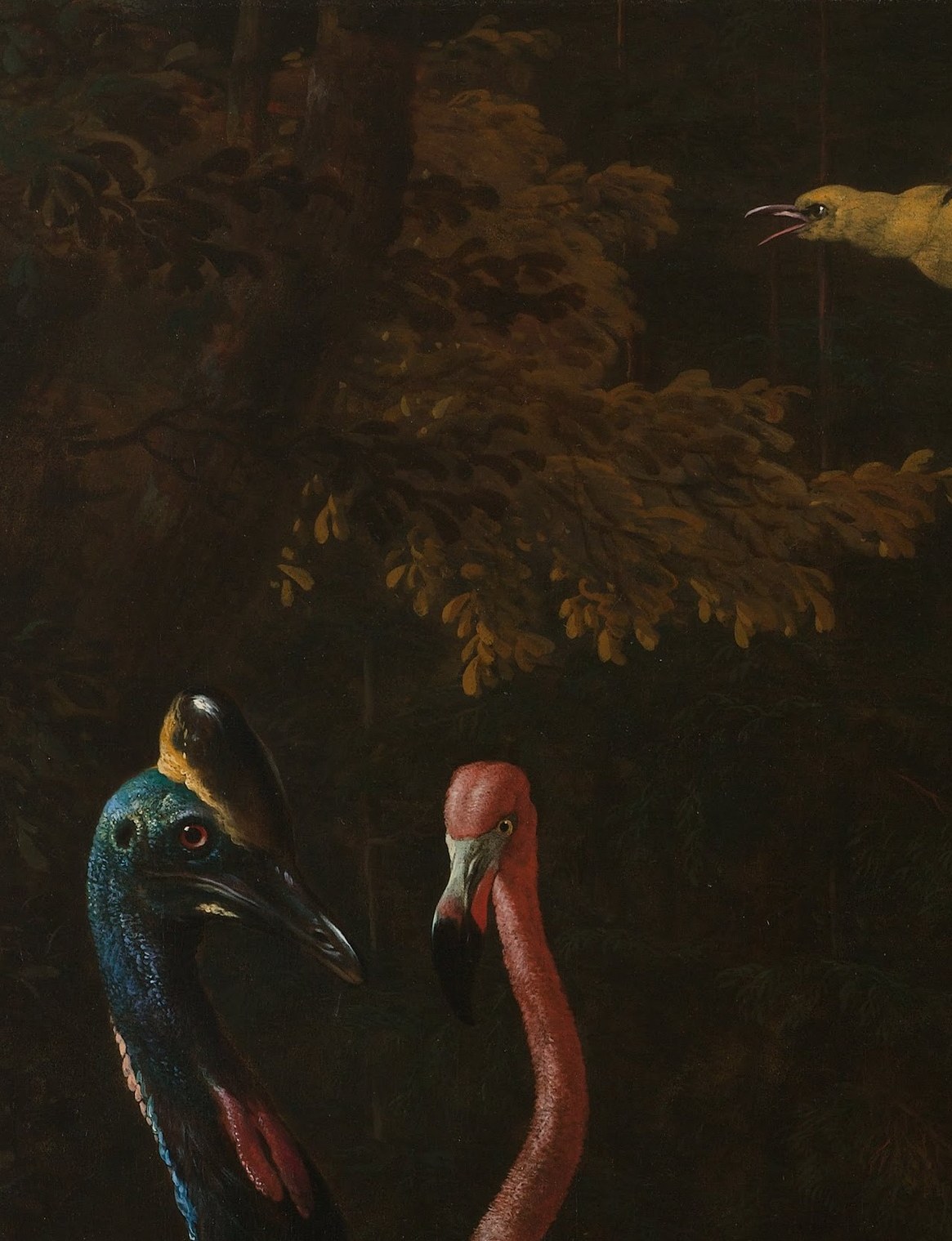
An entire menagerie of status symbols crowds the scene, Egyptian geese, scarlet ibises, a black swan, and yet the title belongs to the smallest thing in the frame. Sometimes a single feather is worth more than the whole flock.
Details
Transcript
It was painted around 1680 for a king's hunting lodge. A white pelican anchors the whole composition. Its pouch is built from wet-on-wet brushwork. Egyptian geese and scarlet ibises were status symbols. Now look at the water. A single white feather drifts on the surface. That feather so impressed viewers they renamed the whole work after it.