The Artist's Garden in Argenteuil (A Corner of the Garden with Dahlias) by Monet, Claude
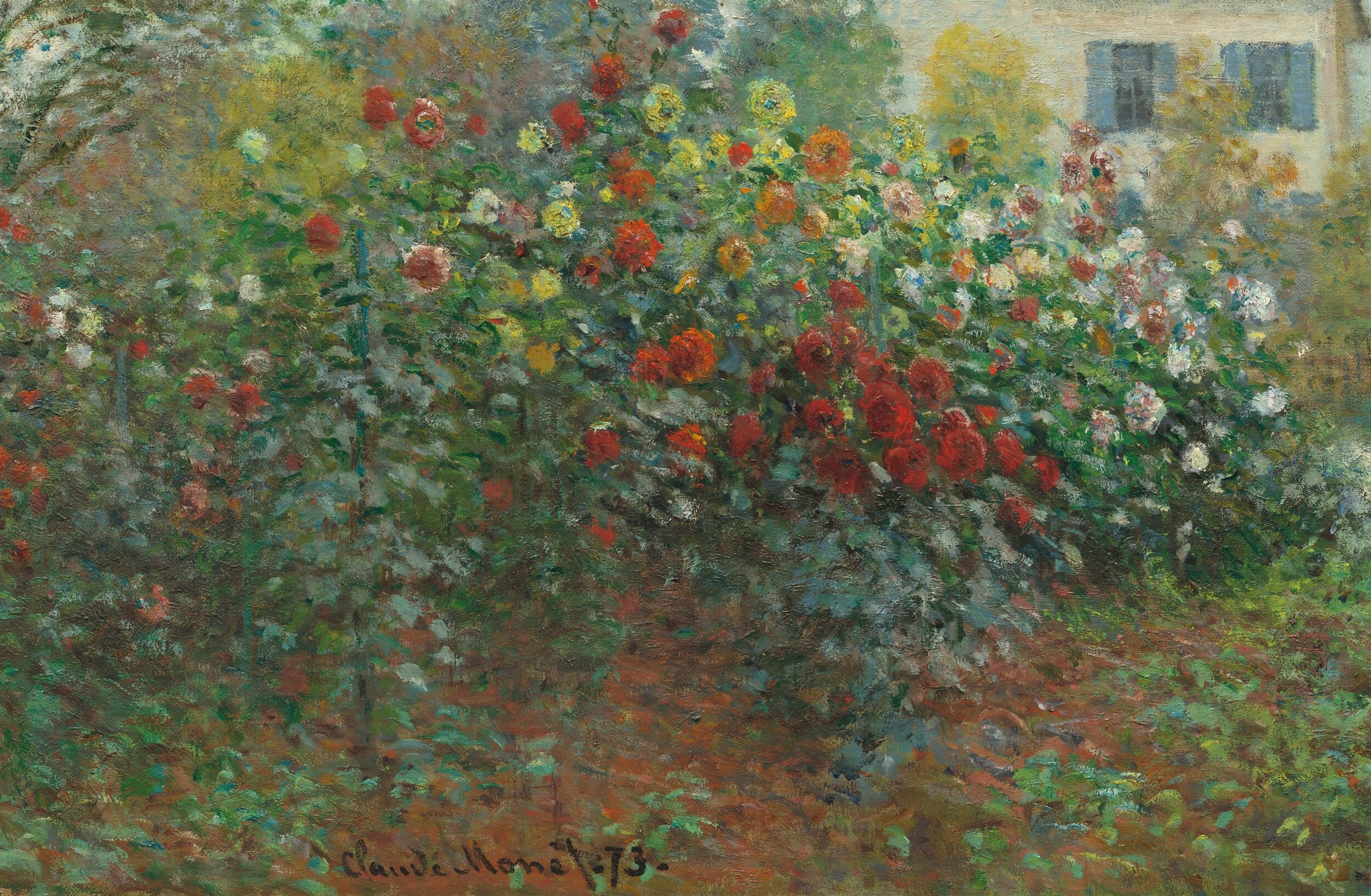
The Artist's Garden in Argenteuil (A Corner of the Garden with Dahlias) is an 1873 oil on canvas by Claude Monet, now held at the National Gallery of Art in Washington D.C. Painted during the artist's five-year residence in Argenteuil, a suburb northwest of Paris, this work captures the private garden of the Monet family home. It was here, in the early 1870s, that Impressionism coalesced, Monet, Renoir, Sisley, and others worked side by side, painting the river Seine and their own backyards with a radical new attention to light.
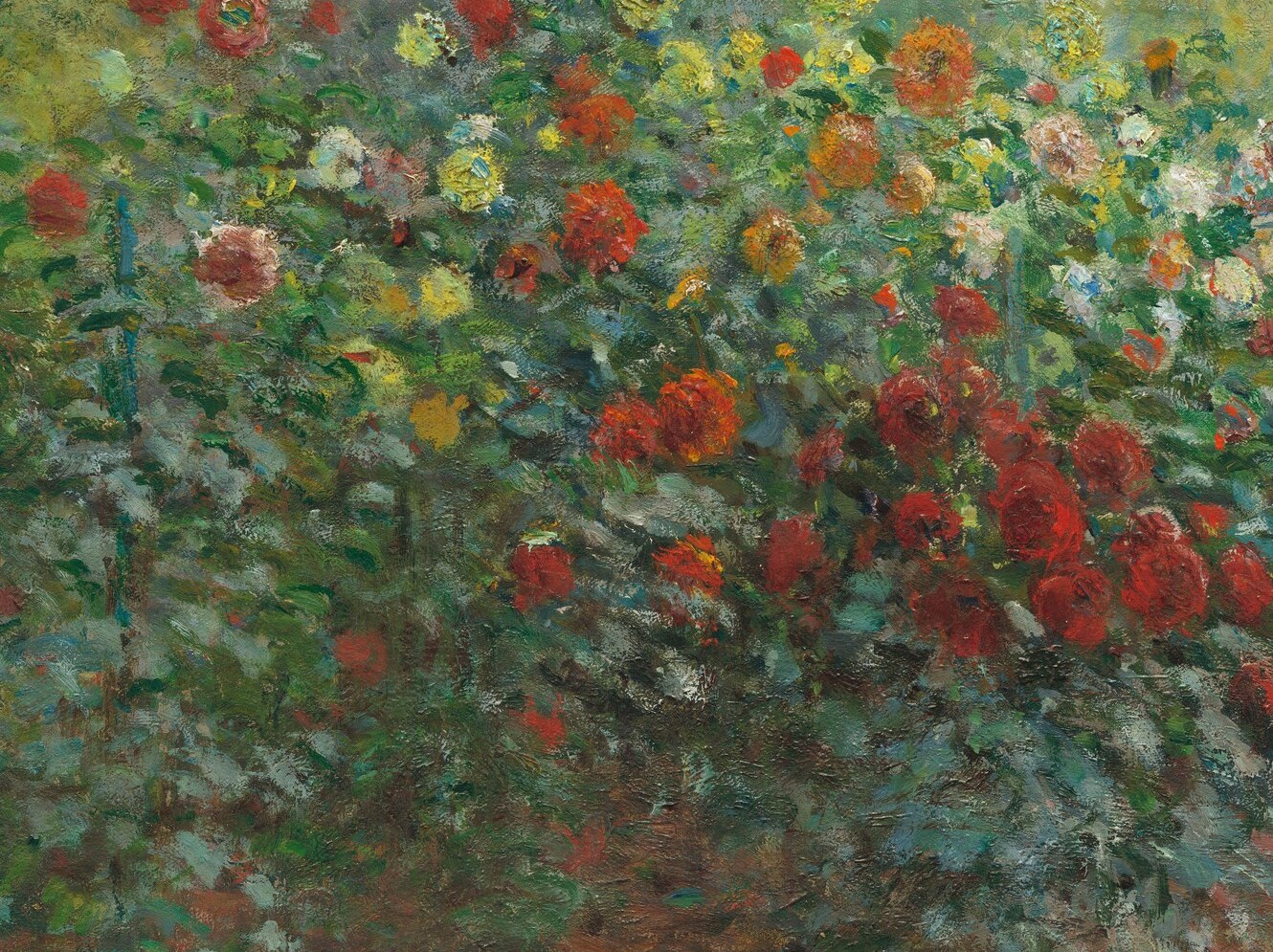
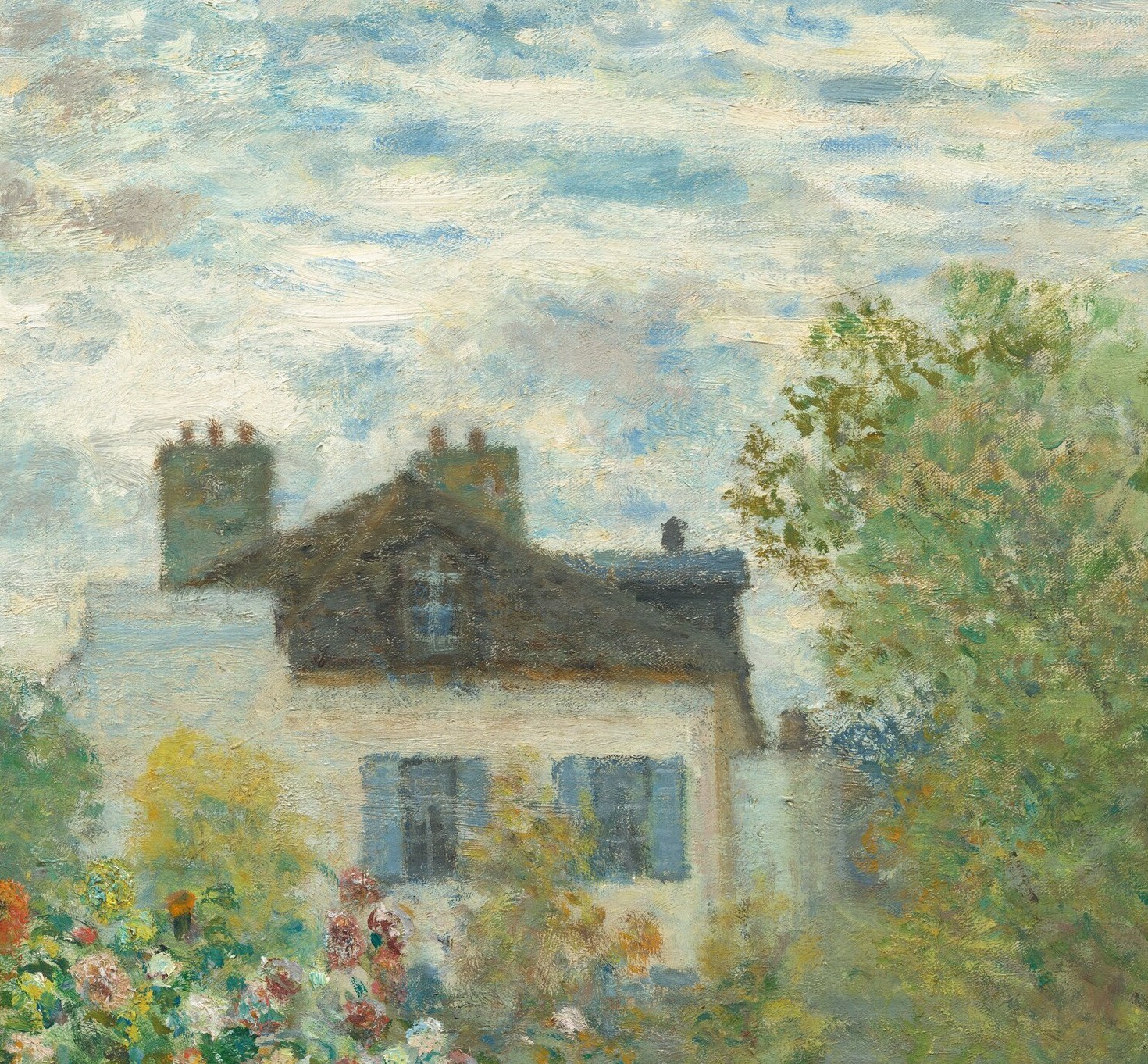
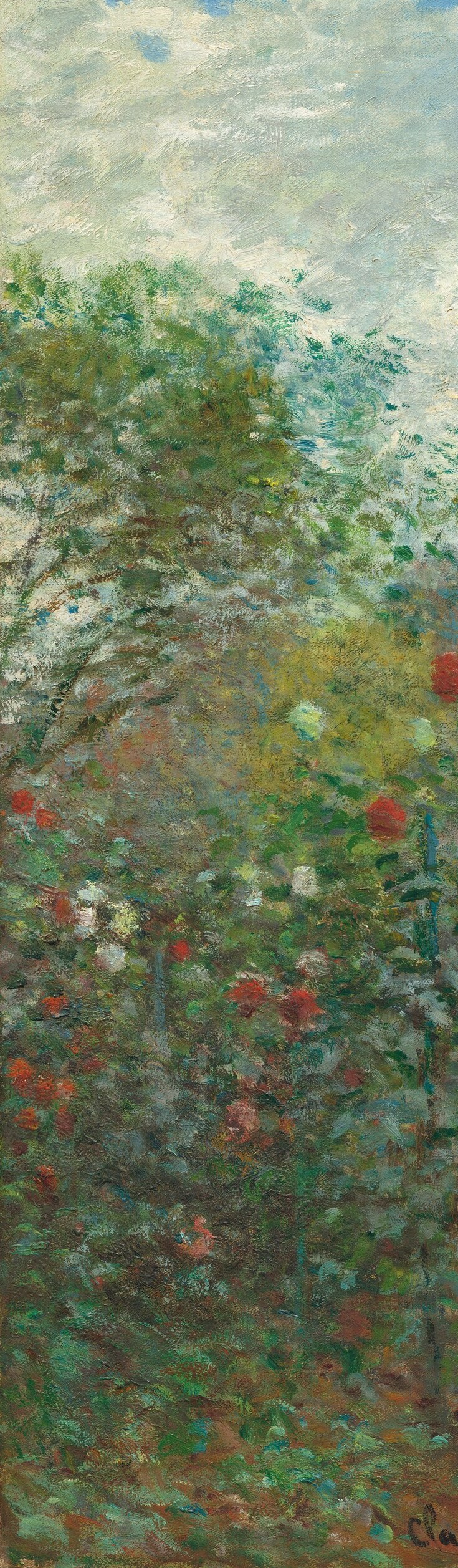
Look at the foreground dahlias first. The reds are astonishingly intense, nearly pure cadmium, applied with loose, trembling brushstrokes that dissolve into abstraction when you move closer. Behind them, a large tree trunk anchors the left edge, and the white stucco facade of the house bakes in direct sun. The blue shutters are a deliberate chromatic anchor, they rhyme with the sky and balance the overwhelming warmth of the flower bank.
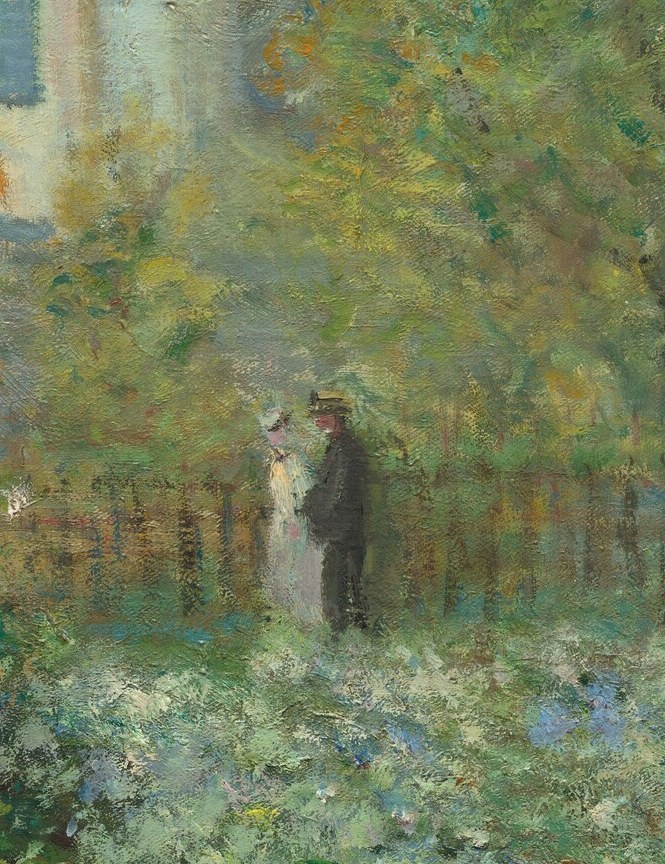
Now find the figure. Standing to the right of center, on the garden path, is a small human form, likely a family member, nearly swallowed by the scale of the blooms. This is unusual. Academic painting would have placed the person front and center. Monet does the opposite: nature dominates, and the human presence is an afterthought, a small note in a larger visual field.
Monet planted this garden himself, importing seeds and bulbs from specialist growers. He once wrote that he spent everything he earned on flowers. The garden was both subject and studio, a controlled environment where he could study light's endless variations. This is not just a pretty picture of a backyard, it is a laboratory for seeing.
Details
Transcript
At first glance, a riot of dahlias. Monet planted these himself, in 1873. The reds are almost pure cadmium. His house stands calmly behind the color. But there is someone else in this garden. A family member, almost lost in the blooms. Monet made nature the true subject here.