The Birth and Naming of Saint John the Baptist by Sano di Pietro
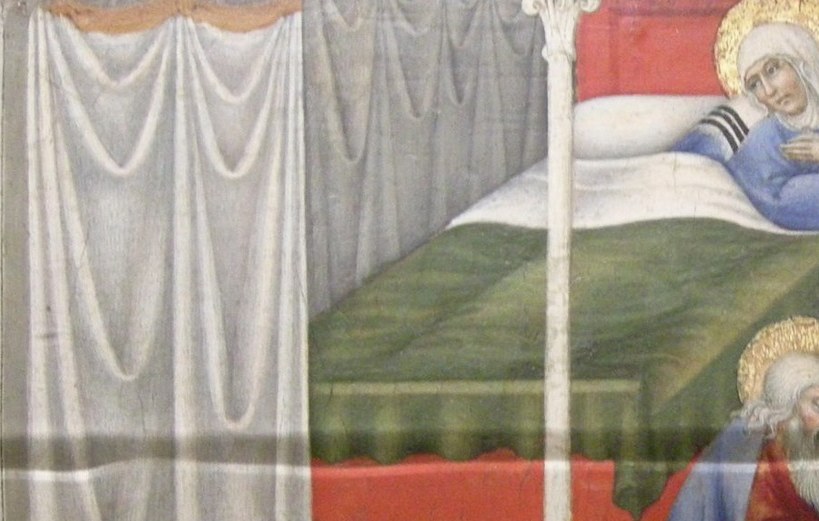
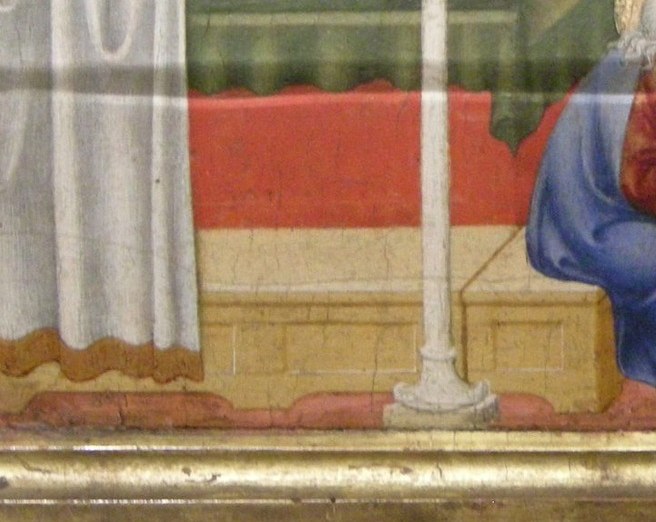
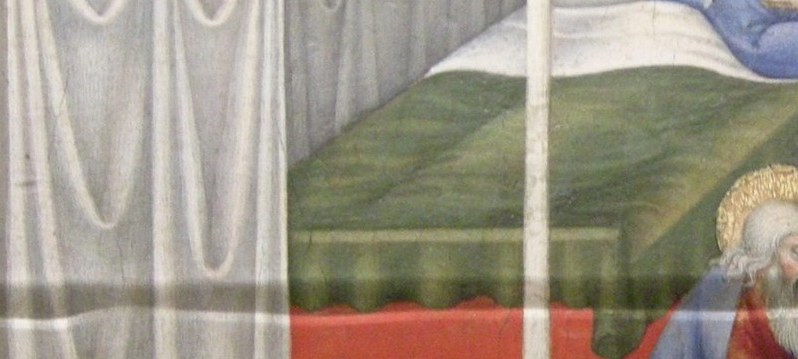
This is The Birth and Naming of Saint John the Baptist, painted by Sano di Pietro around 1450. It lives at The Metropolitan Museum of Art. The panel shows the aftermath of a miracle: the elderly Elizabeth has given birth, and her husband Zechariah, struck mute by the angel Gabriel for his doubt, prepares to name the child.
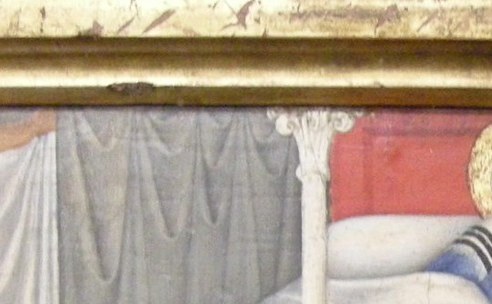
At first the painting reads as two scenes: Elizabeth recovering in bed on the left, and the newborn John being washed on the right. But there is a third presence. Tucked behind the wooden headboard, almost cropped out of the composition, a woman’s face peers into the room. She is easy to scroll past. Once seen, she reframes the entire panel.
The Bible tells this story as a tense domestic argument: the household expects the child to be named after his father, but the mute Zechariah writes “His name is John” on a wax tablet, and his speech is instantly restored. That social pressure explains the hidden witness. She is not an angel or a saint. She is part of the crowd that had gathered for a birth, the community watching a private act become a public declaration.
Sano di Pietro was a Sienese painter who spent half a century making small, precise devotional panels like this one. He understood that a miracle lands hardest inside an ordinary room, among ordinary people. The hidden face is his quiet proof.
Details
Transcript
A holy birth, painted in Siena around 1450. Elizabeth rests after the miracle. The infant is bathed. Her husband Zechariah was struck mute for doubting. Look closely above the headboard. The painter hid a woman here, witnessing everything. This is not a private miracle. It is a household story.