Pawnee Indians by Catlin, George
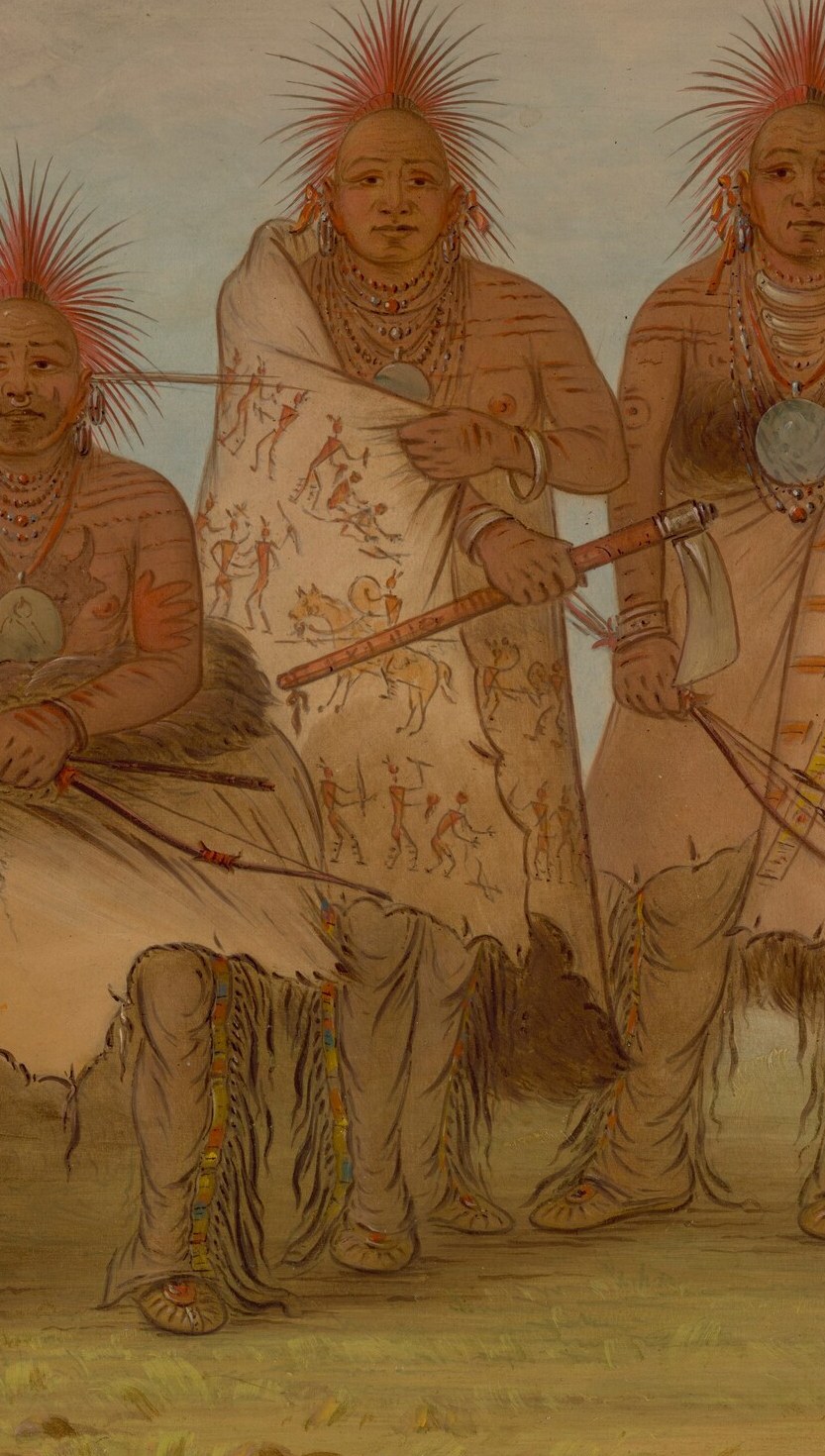
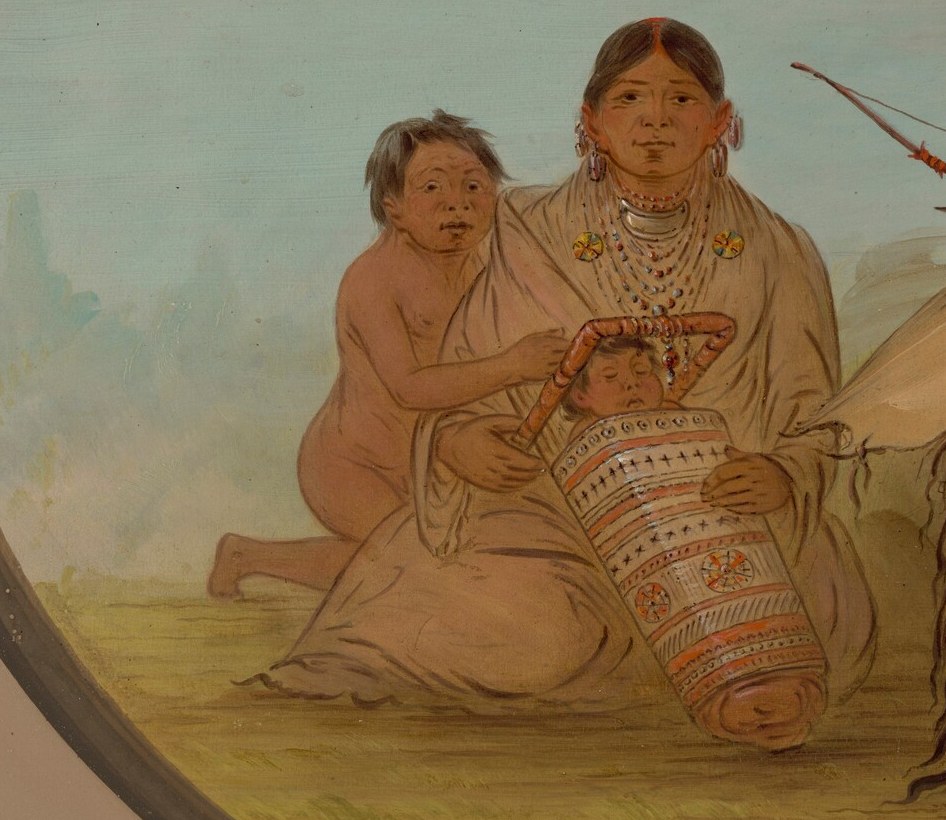
George Catlin's 'Pawnee Indians', painted around 1861-1869, offers a glimpse into Native American life on the American frontier. Catlin, a self-taught artist, dedicated his career to documenting Indigenous cultures through direct observation. This oil painting, part of his extensive series, captures a small group of Pawnee individuals with a focus on their quiet dignity and cultural markers.
In the painting, you can see men in feathered headdresses holding spears, symbolizing their martial and hunting traditions. Nearby, women and a child are seated, highlighting the importance of family and community. The ceremonial drum further points to the rich spiritual and ritualistic aspects of Pawnee life.
Catlin traveled the American West five times in the 1830s, driven by a desire to preserve a visual record of Native peoples during a period of immense change. His work aimed to offer an authentic counterpoint to the romanticized portrayals often seen at the time, capturing everyday life and customs with a documentary approach.
His efforts provide invaluable insight into communities that were undergoing profound shifts. What details in the painting speak to you the most?
Details
Transcript
In the 1830s, one artist traveled west to record Native American life. He aimed to capture moments of quiet dignity and strength. These men carry spears, symbols of hunting and warrior traditions. The women and child highlight themes of family and community. He spent years documenting cultures undergoing profound change. His work preserves a record of their lives and traditions.