The Deposition and the Entombment by http://www.wikidata.org/.well-known/genid/1accfe1d8724c6f7516d73d72191bcce
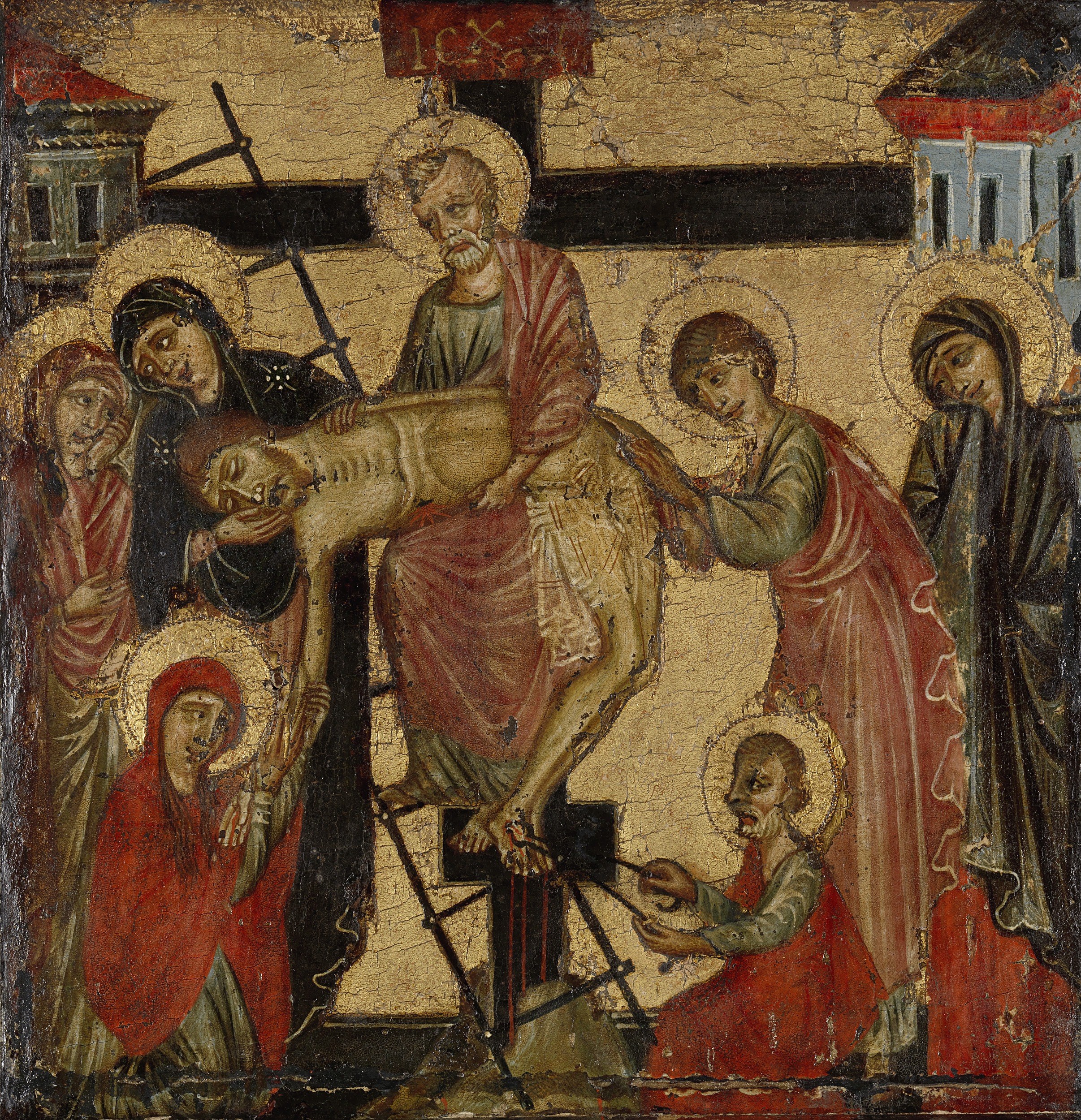
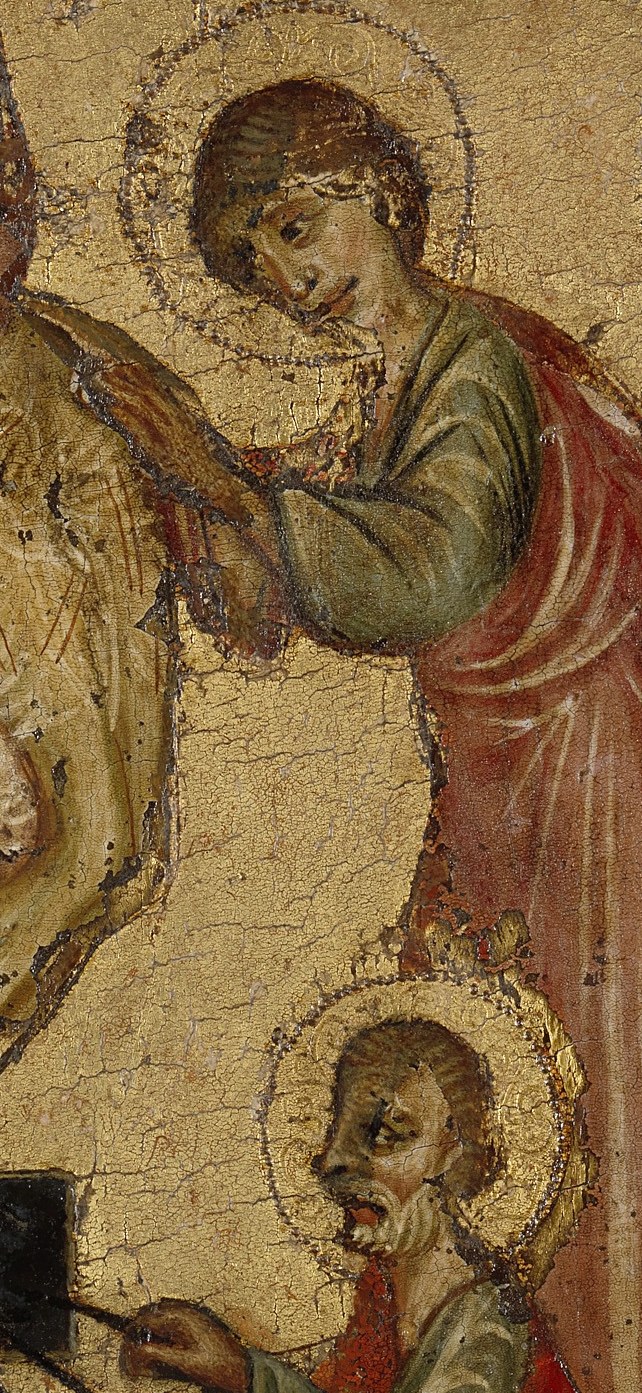
The Deposition and the Entombment, painted around 1290 by an unknown master in tempera on panel. It shows the moment when Christ's followers remove his body from the cross and prepare it for burial. No document records who painted it, who paid for it, or which church it was made for.
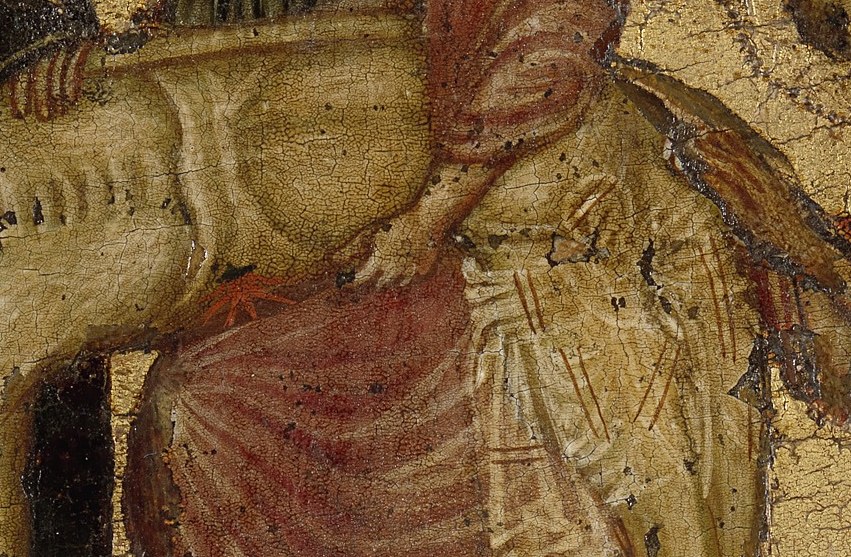
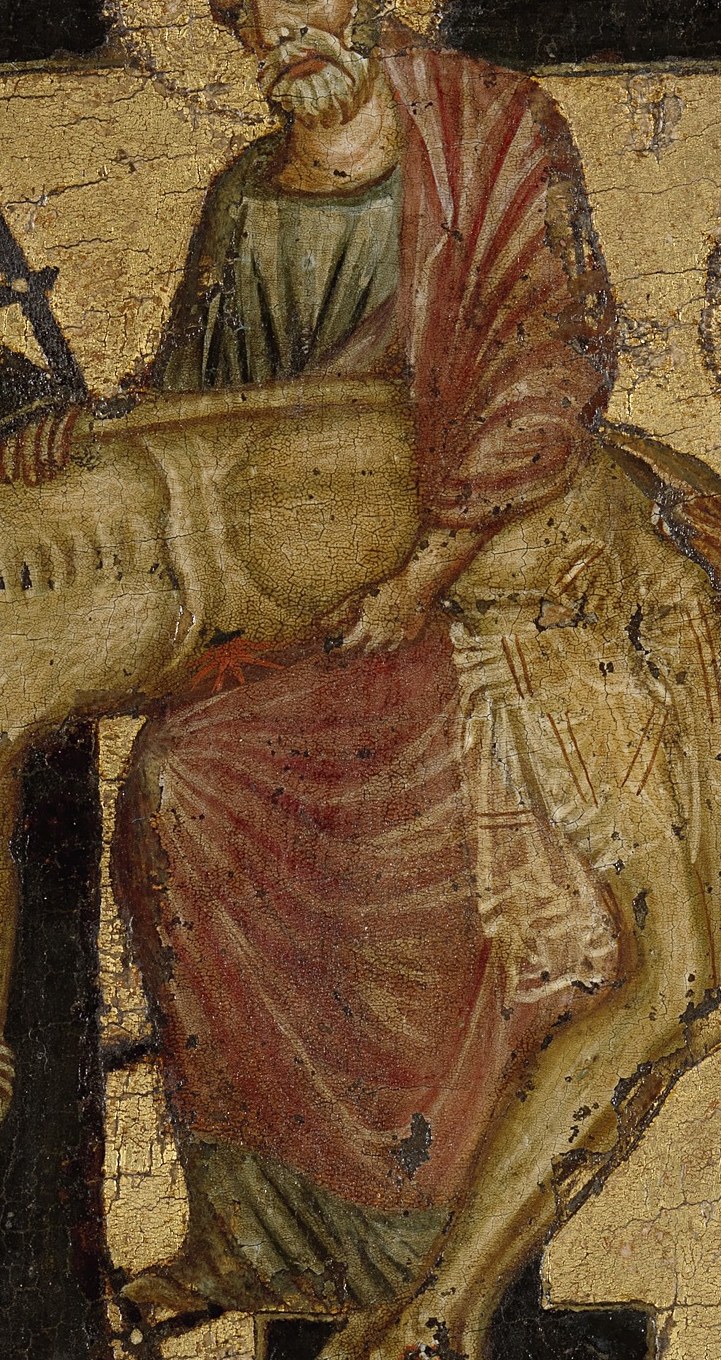
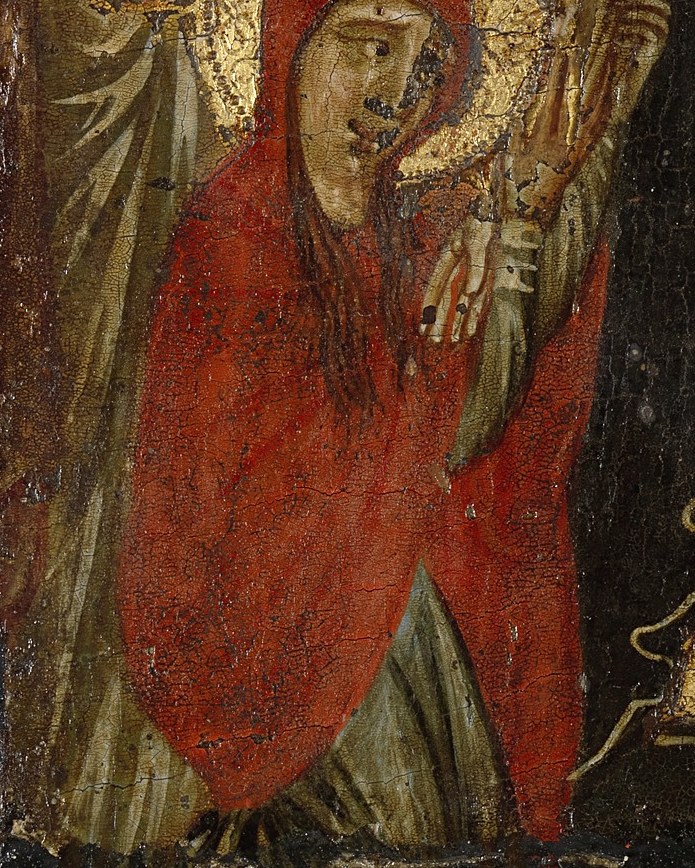
Look at the body, wrapped in white, carried by Joseph of Arimathea. Mary kneels nearby in red, her head bowed in grief. The gold leaf background has cracked and darkened over seven centuries, the physical record of the painting's age. The figures have the large heads and small bodies typical of medieval sacred art, a convention that pushes your eye to each face.
Around 1290, tempera, pigment bound with egg yolk, was the standard medium for panel painting across Europe. Works like this were made for churches and chapels, where they helped worshippers meditate on Christ's Passion.
The painter's name is gone. What remains is a quiet witness to both the biblical story and the hand that painted it, still legible after seven hundred years.
Details
Transcript
1290. A painter recorded this scene in tempera. The body, wrapped in white, is the center. Joseph of Arimathea bears the full weight. Mary kneels in red. Her head is bowed. The gold has cracked. The paint held for seven centuries.