De Tonty Suing for Peace in the Iroquois Village. January 2, 1680 by Catlin, George
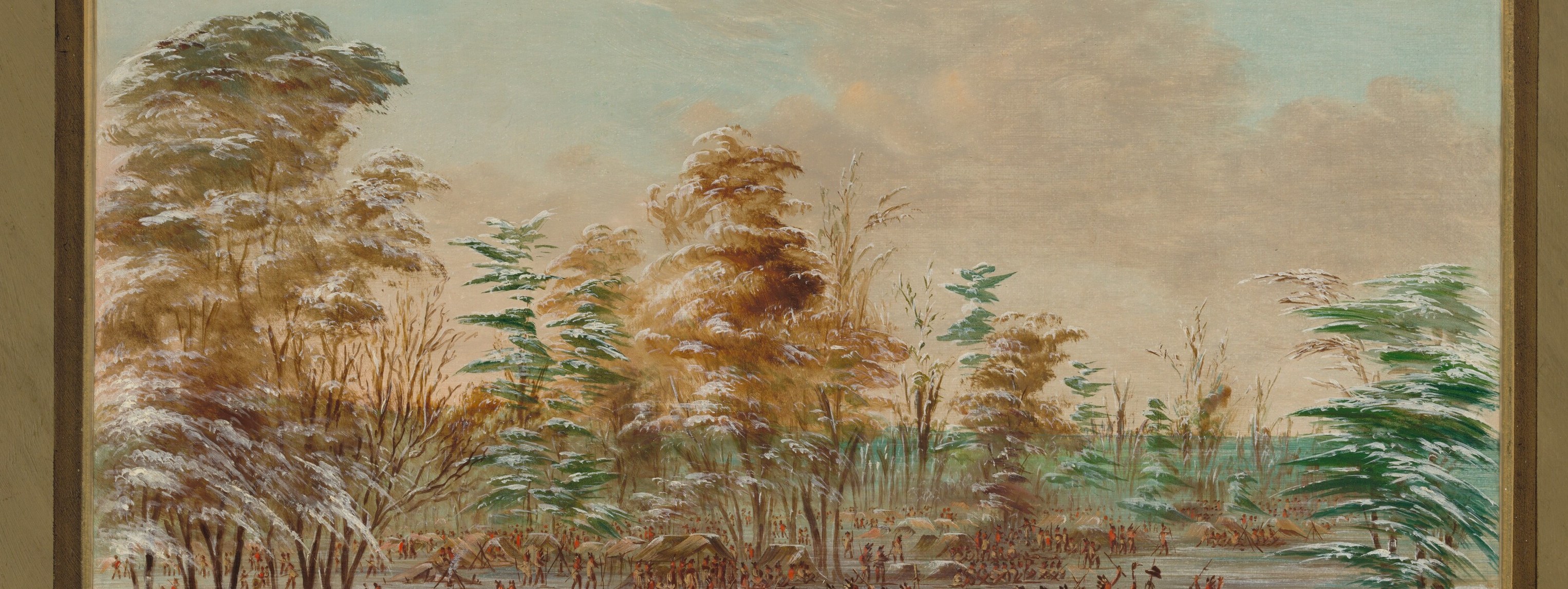
George Catlin, an American lawyer and painter, created *De Tonty Suing for Peace in the Iroquois Village* in 1848, depicting a dramatic historical moment from nearly two centuries earlier. This painting, made with oil on card mounted on paperboard, captures a critical negotiation in the harsh winter of 1680.
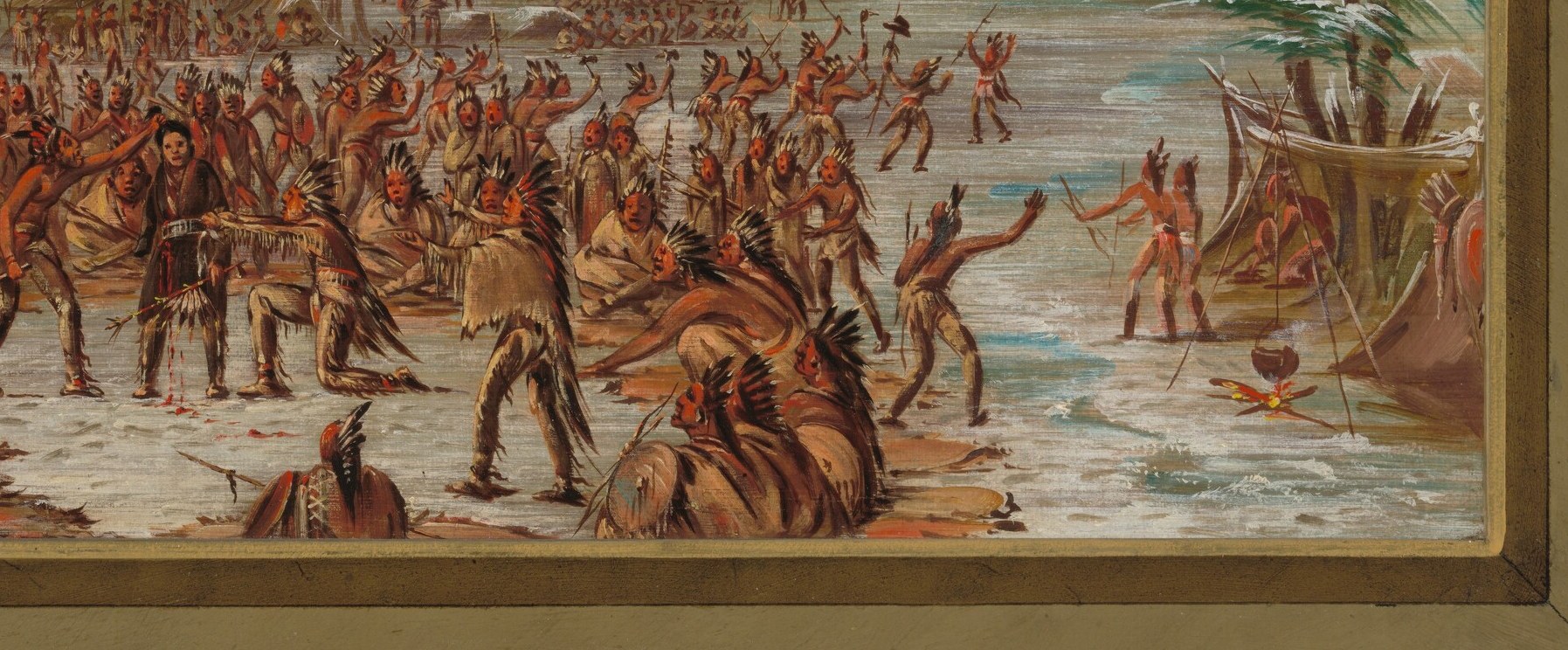
The scene centers on the French envoy De Tonty, shown kneeling with an outstretched hand, appealing for peace to the Iroquois leaders. Around him, the Iroquois council gathers, some holding spears, reflecting the tense atmosphere of cross-cultural diplomacy. Catlin's muted palette effectively conveys the snow-covered landscape and stark winter light.
Catlin is best known for his extensive travels in the 1830s, documenting Plains Indian communities through portraits and written accounts. This work, though looking back to an earlier colonial encounter, reflects his broader ambition to record Native American histories and present a visual record of their interactions with Europeans.
What do you notice first in this depiction of a historic diplomatic encounter?
Details
Transcript
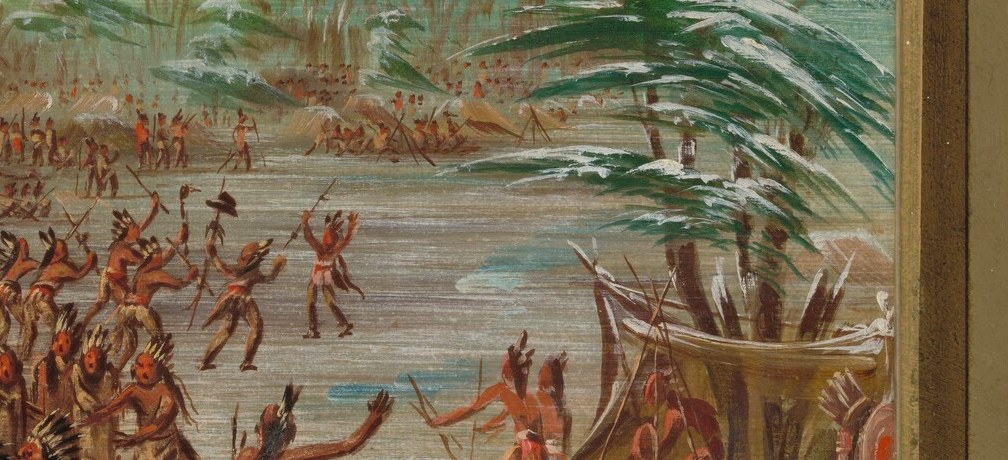
Winter, 1680. A French envoy seeks peace with the Iroquois. This painter, George Catlin, captured the moment nearly 200 years later. De Tonty kneels, his outstretched hand pleading for calm. Iroquois leaders listen, with spears ready in the deep snow. Catlin, a lawyer, traveled extensively to document Native American life. Even as diplomacy unfolds, daily life continues on the frozen river.