The Trinity Adored by All Saints by http://www.wikidata.org/.well-known/genid/e29fd817bbccbe987356296ceda0d6ec
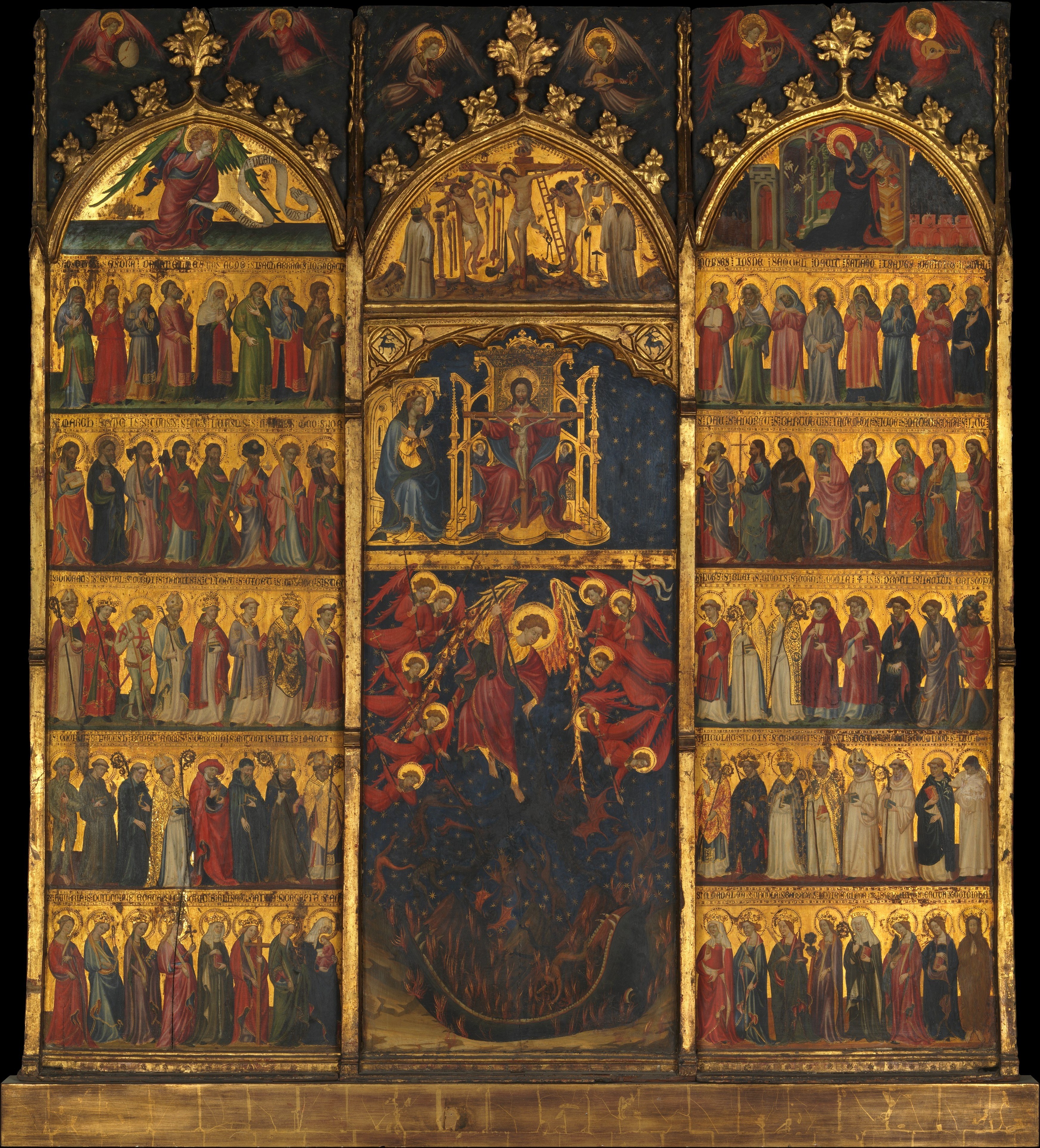
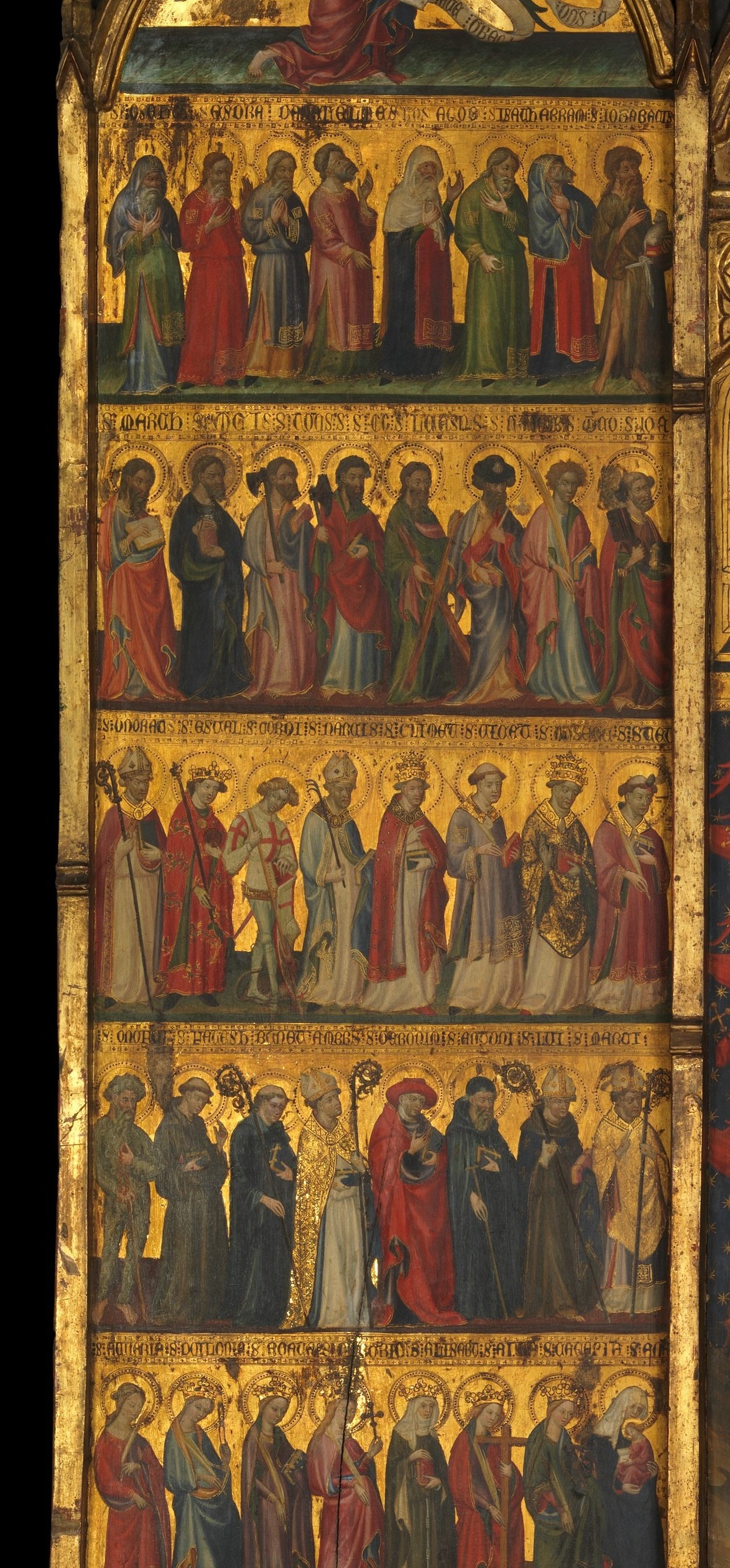
This is The Trinity Adored by All Saints, a large altarpiece painted around 1400 by an artist now called the Master of the Morrison Triptych. It lives in a museum collection and is rarely scrolled past online, because at phone size it looks like a dense wall of pattern. But what you are actually seeing is one of the most ambitious attempts in medieval art to build heaven out of light.
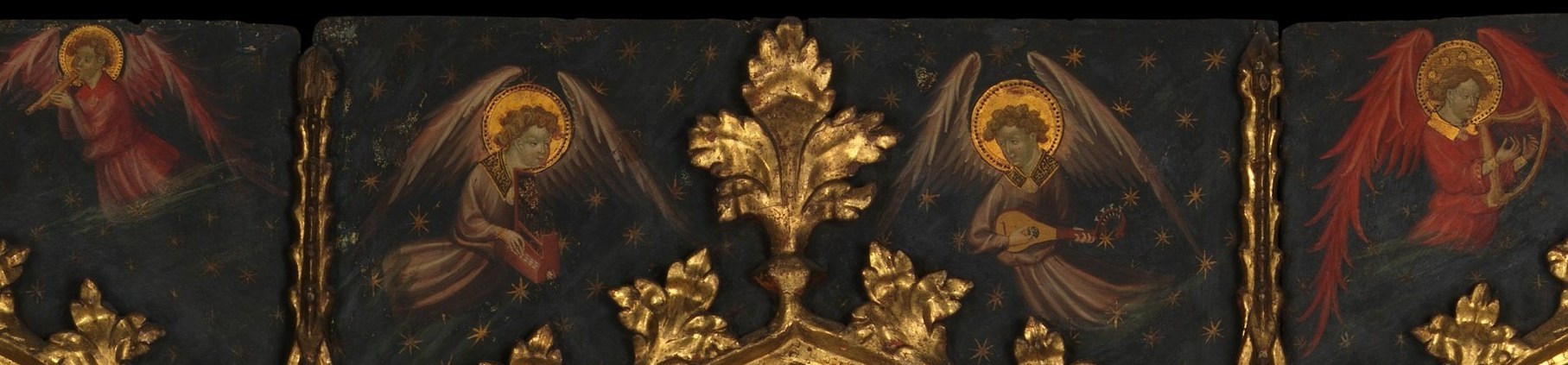
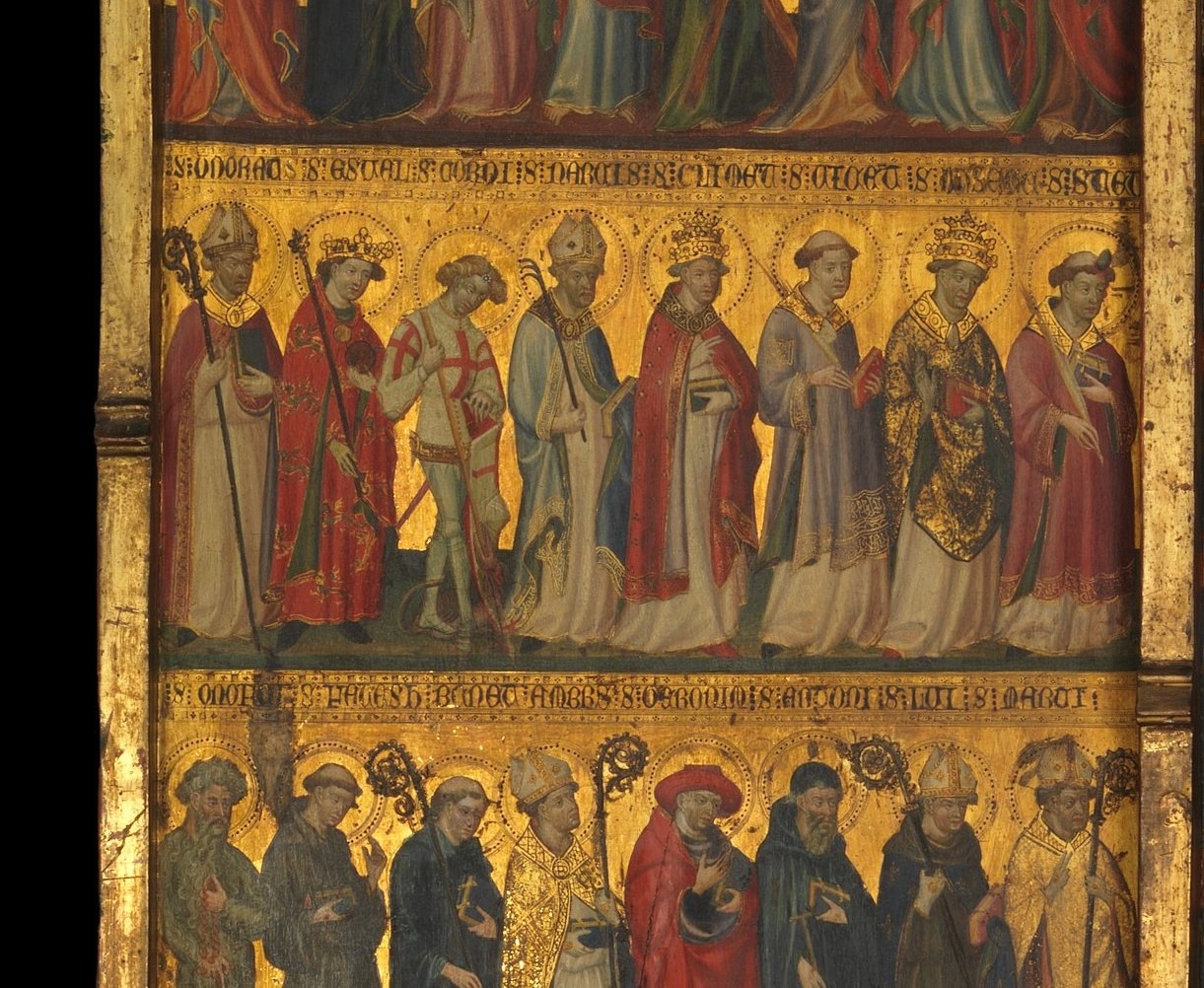
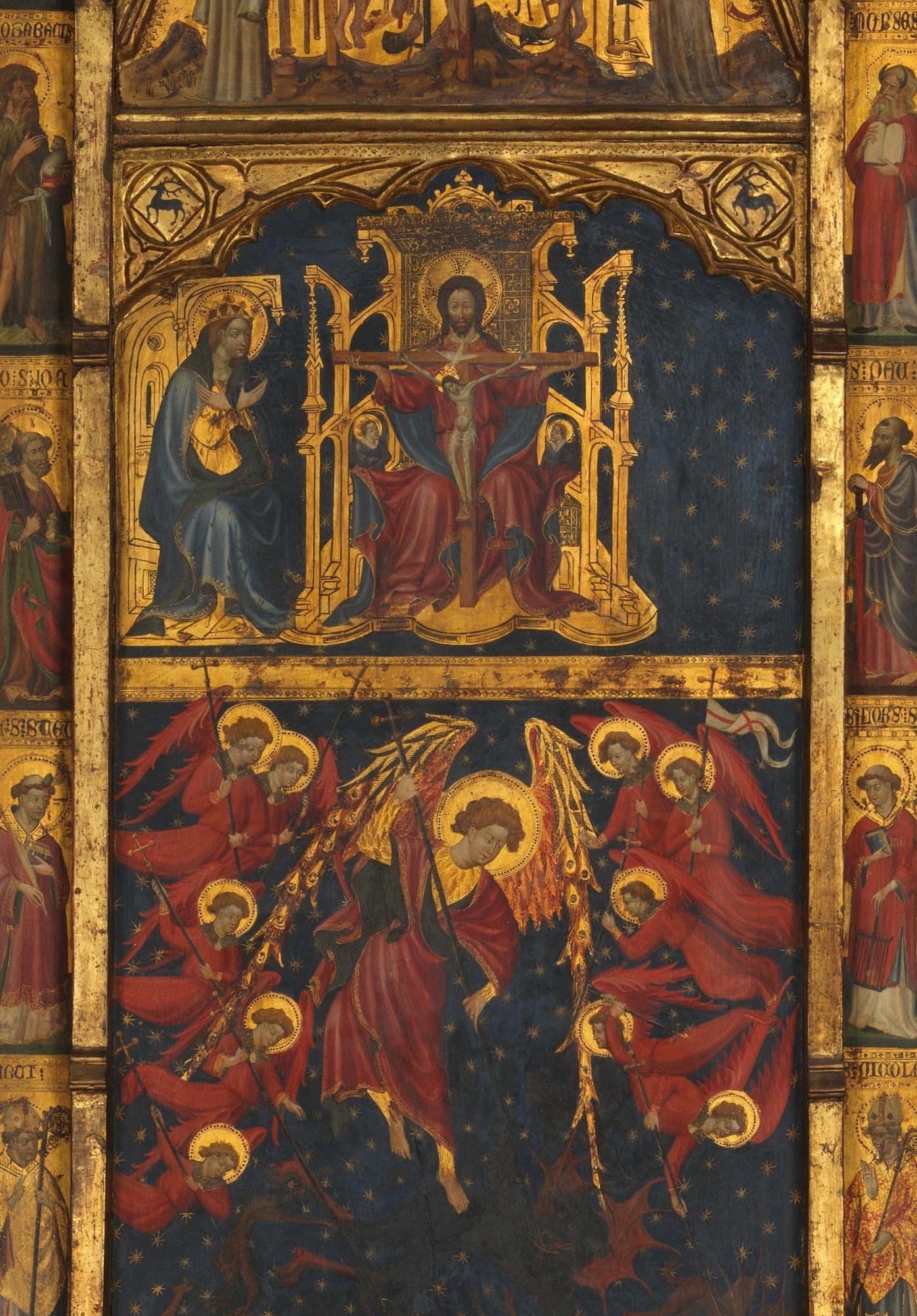
Look past the figures. The gold is not a painted backdrop. It is real gold leaf, hammered impossibly thin, laid over a prepared surface, and burnished with a hard tool until it becomes a mirror. The halos, the pinnacles, the edges of the throne, all of it is tooled gold, reflecting actual light back at the viewer. In a candlelit church, this painting would have glowed before you saw any faces.
The painter and his workshop organized an entire celestial hierarchy across this surface: the Trinity enthroned at center, rows of saints in ordered registers, all of them floating in that gold field which medieval theology understood as the material of divine light. Gold was not decoration. It was the one substance on earth that seemed to carry light inside itself, and so it was the only thing fit for heaven's floor.
Next time you see an altarpiece like this, imagine standing before it in 1400, with only candle flame to see by. The gold would have found you before anything else did.
Details
Transcript
This is not yellow paint. It is gold leaf, burnished into a sheet of solid light. Every halo, every pinnacle, is tooled gold, hammered thin, laid down, and polished to glow. The gold is not behind the saints. It is what they stand in. Medieval viewers understood this: gold is the only material that carries light inside itself. So the painter built heaven from real light.