Antiochus and Stratonice by Jean Auguste Dominique Ingres
Jean Auguste Dominique Ingres's "Antiochus and Stratonice" (1838) at The Cleveland Museum of Art tells a dramatic ancient tale, but a tiny detail on the back wall holds a key to its meaning.
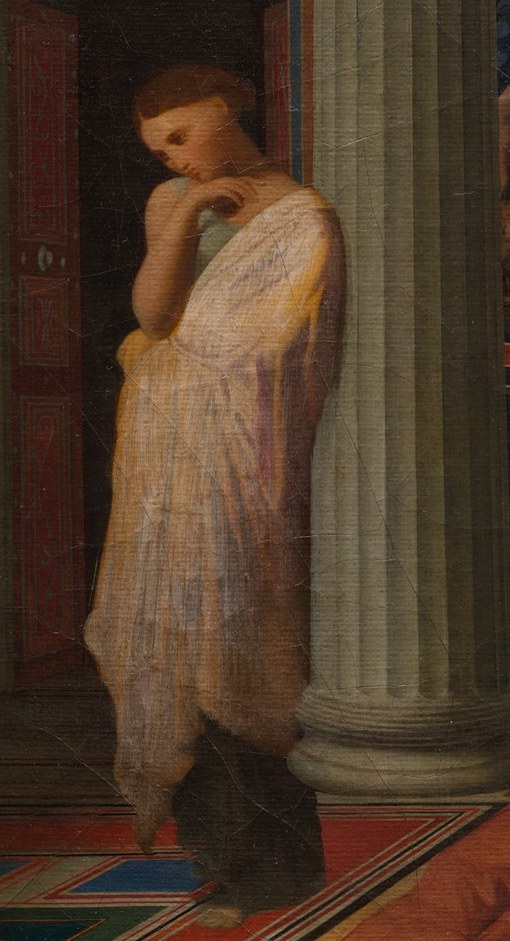
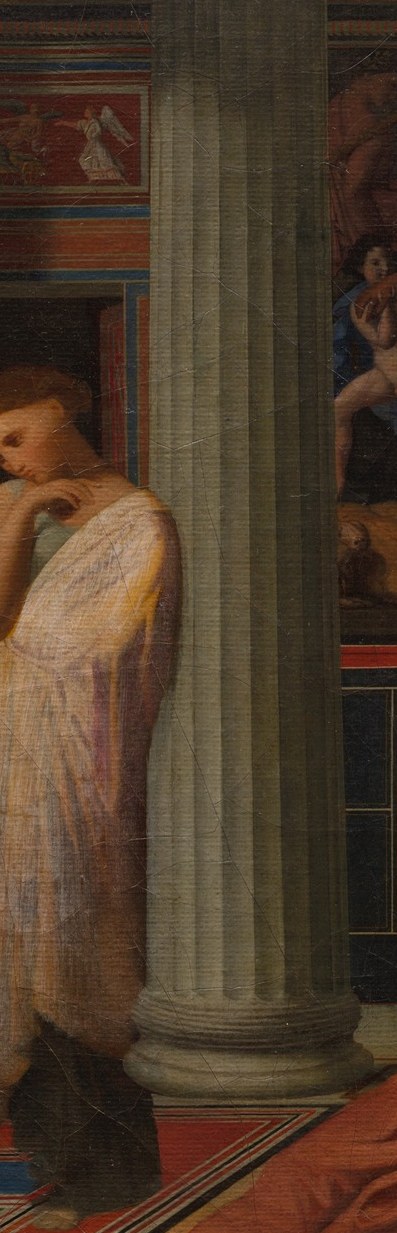
The painting depicts Antiochus, the son of King Seleucus I, wasting away from a mysterious illness. The king's physician, Erasistratus, discovers that Antiochus's heart rate quickens only when his young stepmother, Stratonice, enters the room, revealing his forbidden love. Notice the small fresco on the wall in the background, a seemingly minor detail.
This fresco subtly features Cupid, the god of love, with his bow, an iconographic clue to the true nature of Antiochus's malady. It's a clever visual shorthand, allowing Ingres to convey complex emotional and narrative information without overt dialogue or grand gestures, a hallmark of Neoclassical painting.
Ingres was a master of detail, using such subtle elements to enrich his historical narratives. What other small details in paintings have you noticed that change the whole story?
Details
Transcript
This painting tells an ancient story of forbidden love. A king's son, Antiochus, pines away for his stepmother. His doctor discovers the secret in his pulse. Now look closely at the wall behind them. This tiny fresco shows Cupid with a bow. A subtle hint that love is the cause of his illness.