Houses in Provence: The Riaux Valley near L'Estaque by Cezanne, Paul
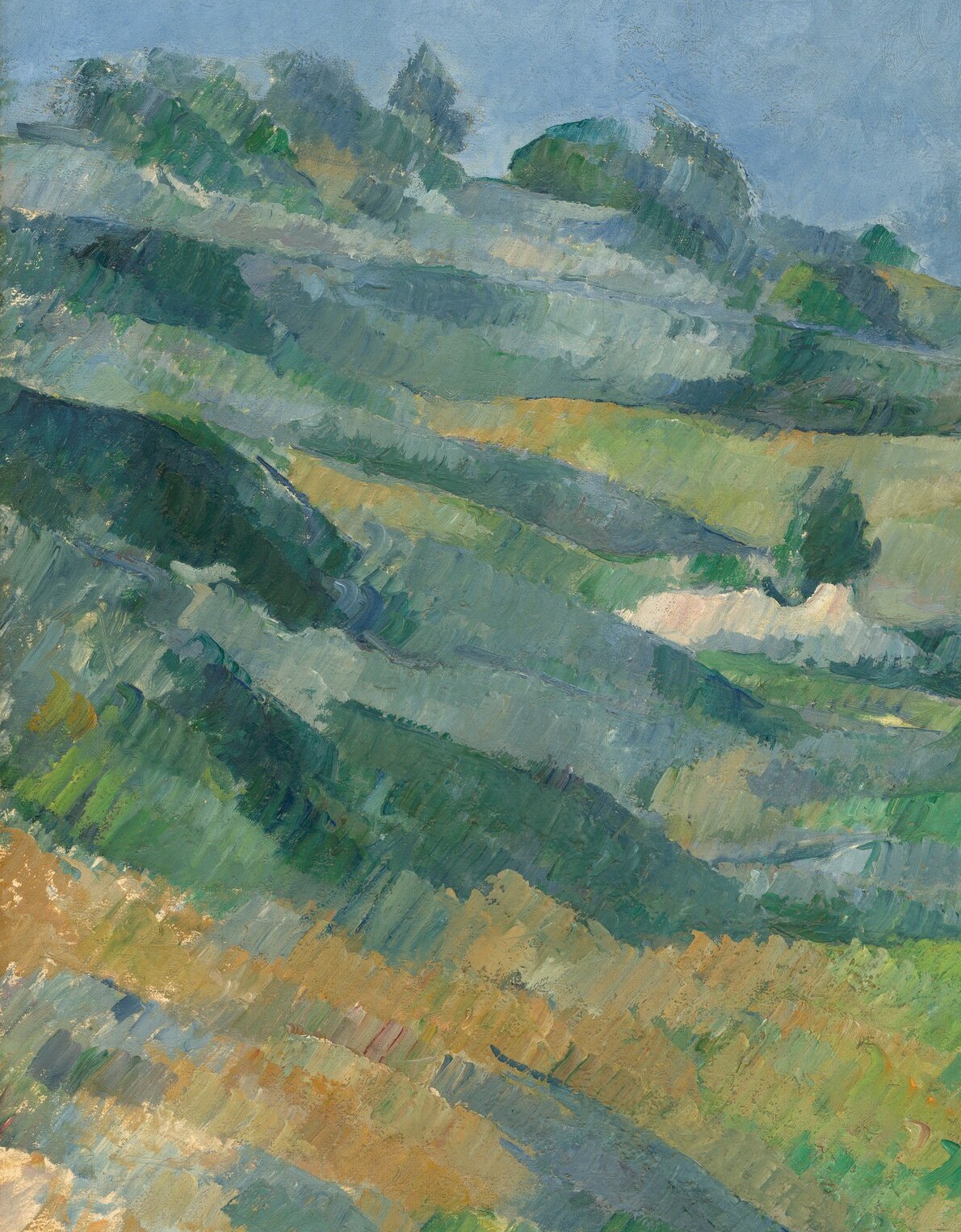
Houses in Provence: The Riaux Valley near L'Estaque, painted by Paul Cézanne around 1883, is not a description of a place but a construction of it. The ochre farmhouse, the limestone ledge, the green slopes, none of these are rendered as surfaces with textures. They are built, brick by brick, from identical directional strokes of paint.
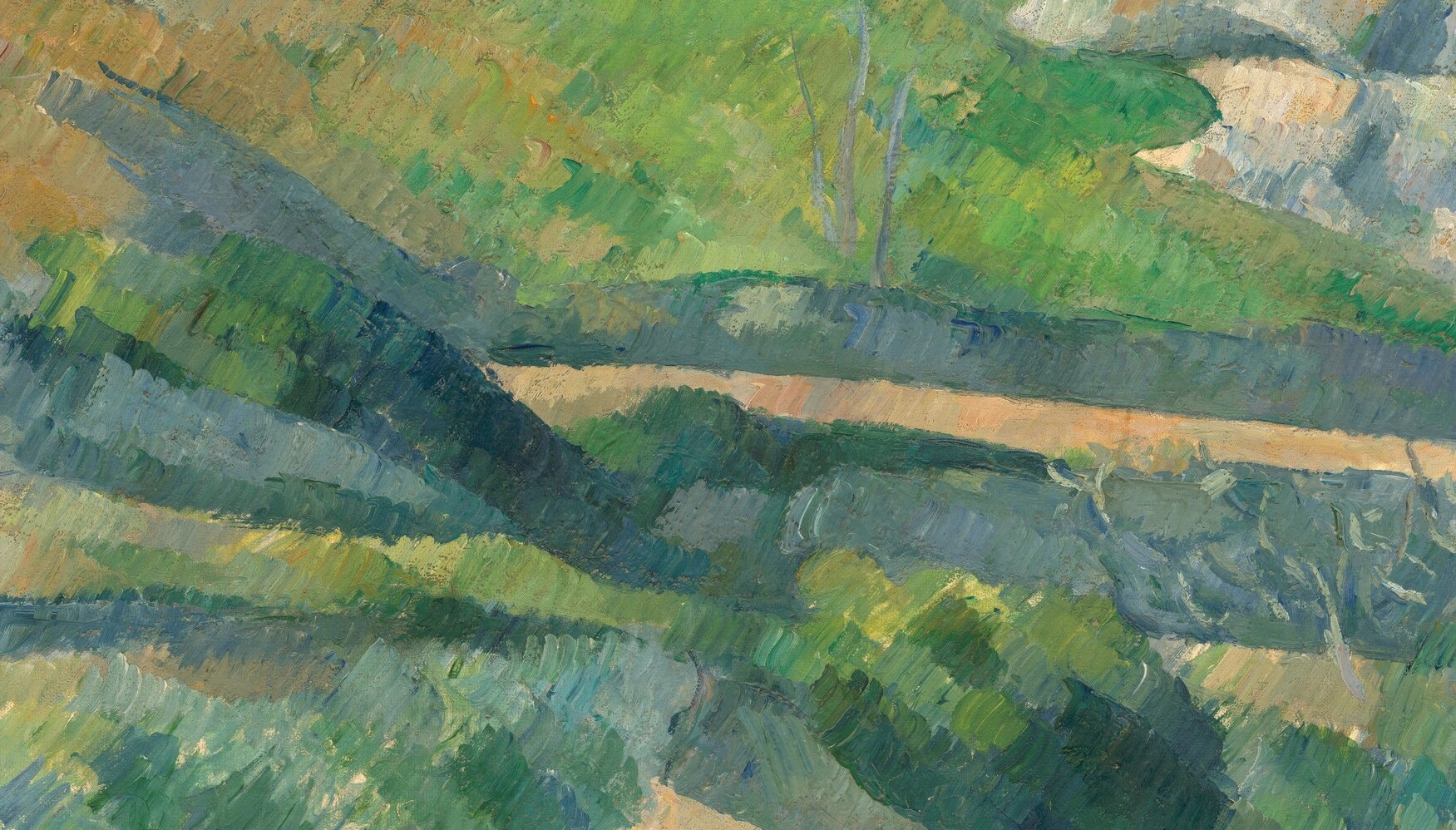
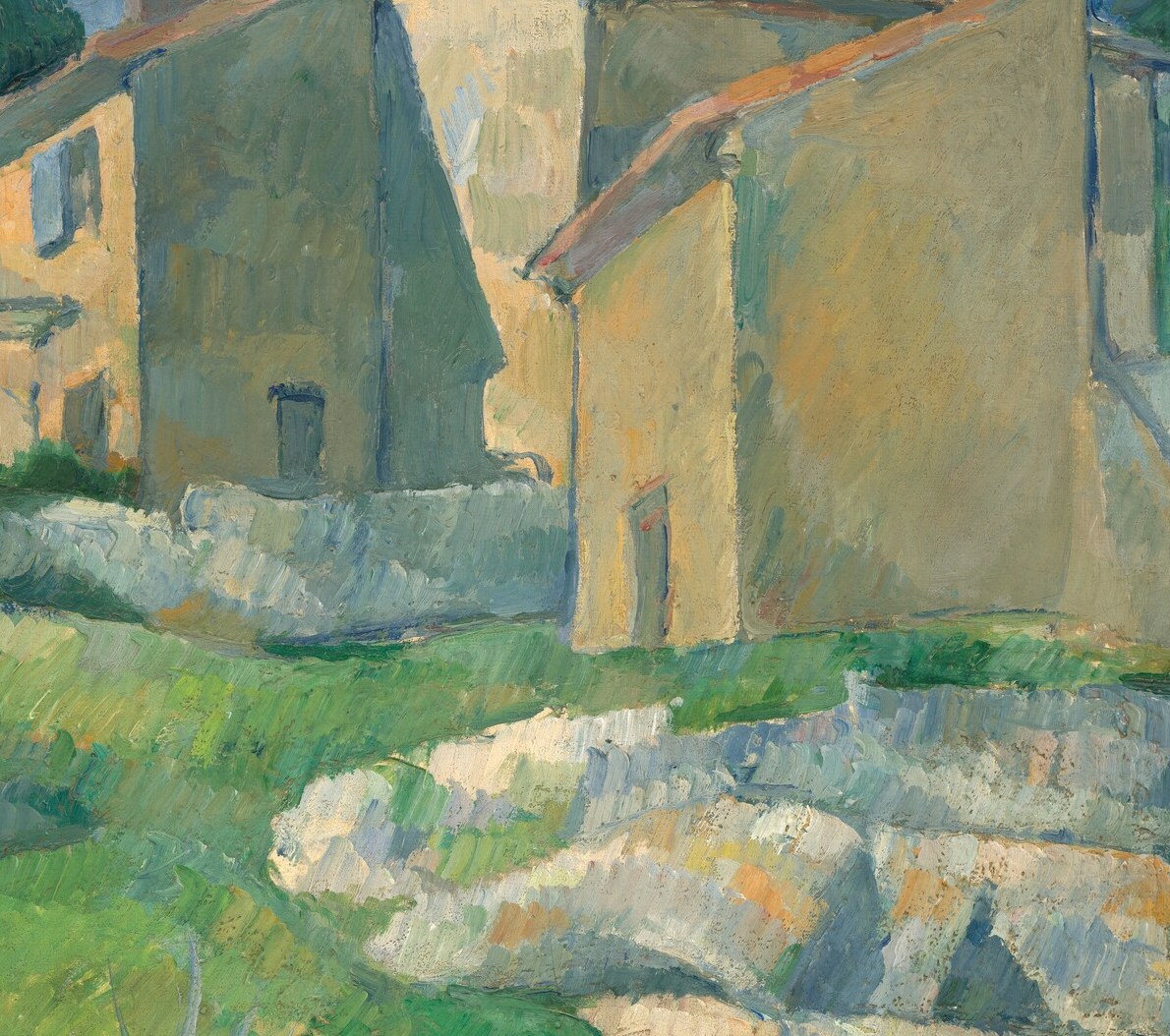
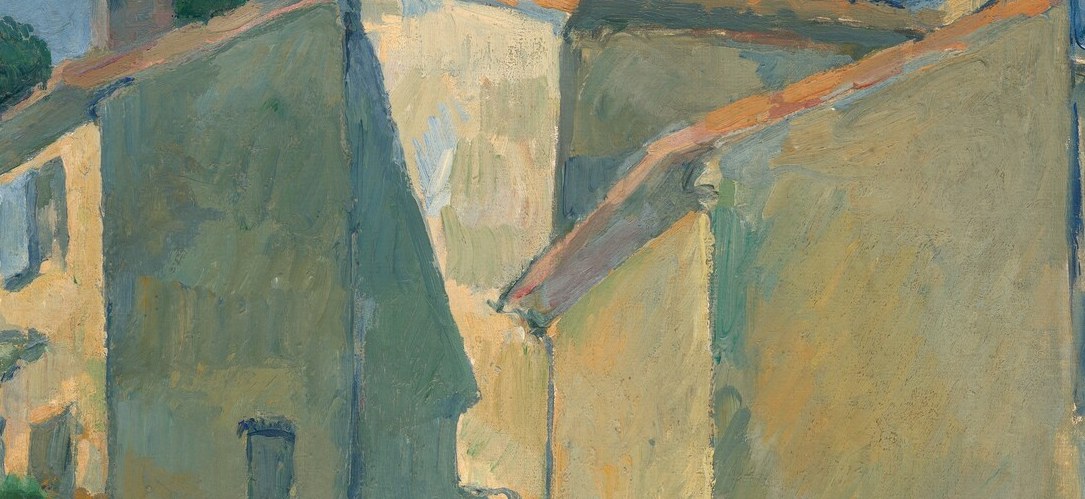
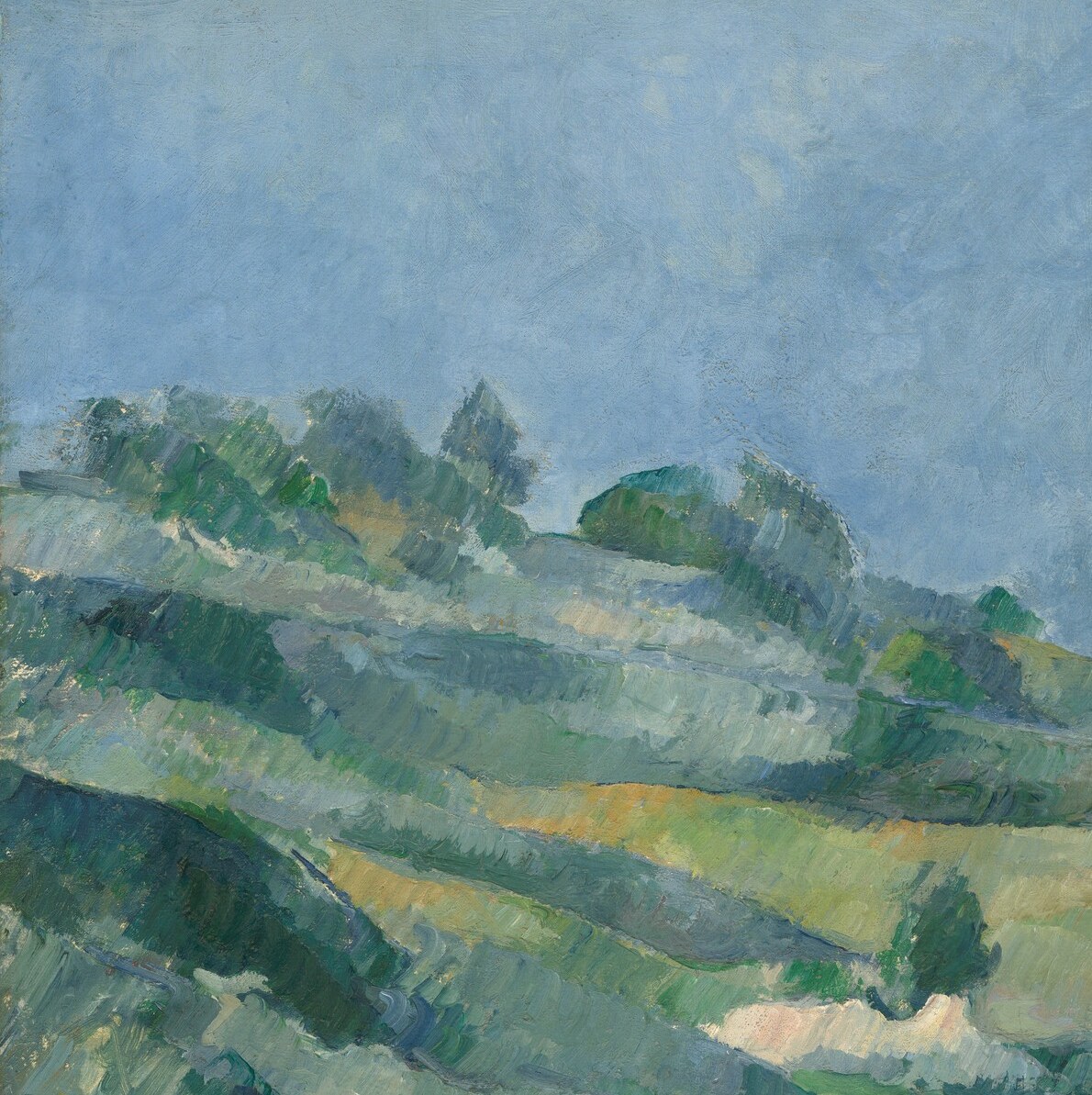
Look closely at the foreground rock, then at the farmhouse wall. They share the same structural stroke. Cézanne made no distinction between geology and masonry, both are solid volumes in space, and paint is the substance that declares them. On the pale hillside at upper left, where there is no foliage or architecture to describe, the system appears in its most exposed form: a faceted field of parallel marks that model form through colour temperature alone.
Cézanne painted this near the village of L'Estaque, a fishing port west of Marseille where he had hidden from conscription during the Franco-Prussian War. By 1883 he had broken with Impressionism and was pursuing what he called "something solid and durable, like the art of the museums." His aim was not to capture a fleeting moment of light but to reveal the permanent, geometric order underlying nature.
The stroke you see on this hillside, each mark a distinct plane, shifting from ochre to blue without blending, became a direct model for Braque and Picasso twenty years later. The first Cubist landscapes were painted at L'Estaque, on ground Cézanne had already marked out.
Details
Transcript
A farmhouse in southern France, 1883. Look at the rock in the foreground. Now look at the farmhouse wall. Rock and plaster are built with the same stroke. He treats geology and masonry as one continuous substance. Now see the raw hillside behind the house. Here, with no subject to describe, the system is naked. Every stroke is a facet. This way of seeing became Cubism.