The Old Violin by Peto, John Frederick
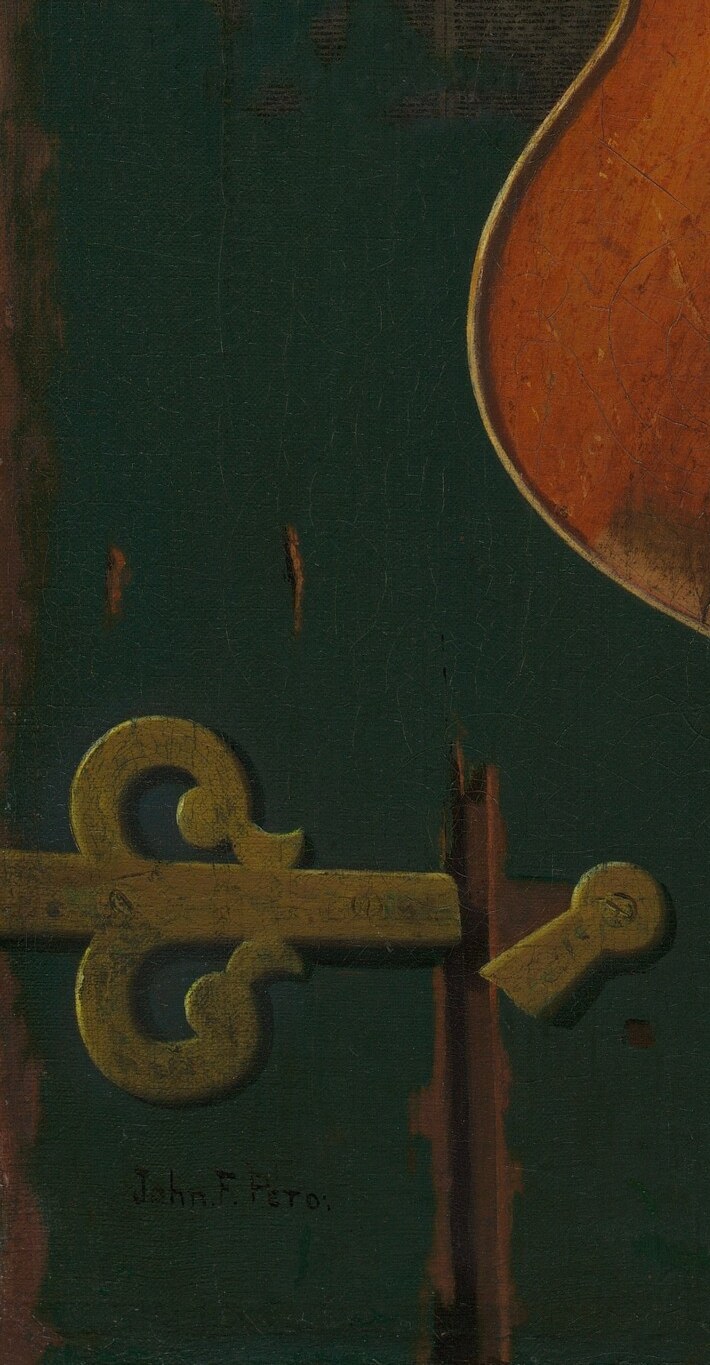
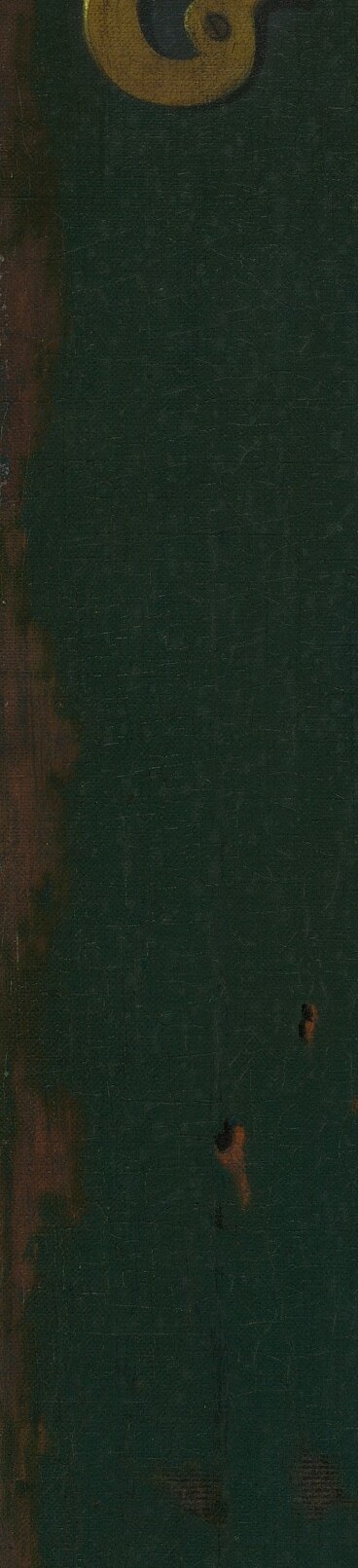
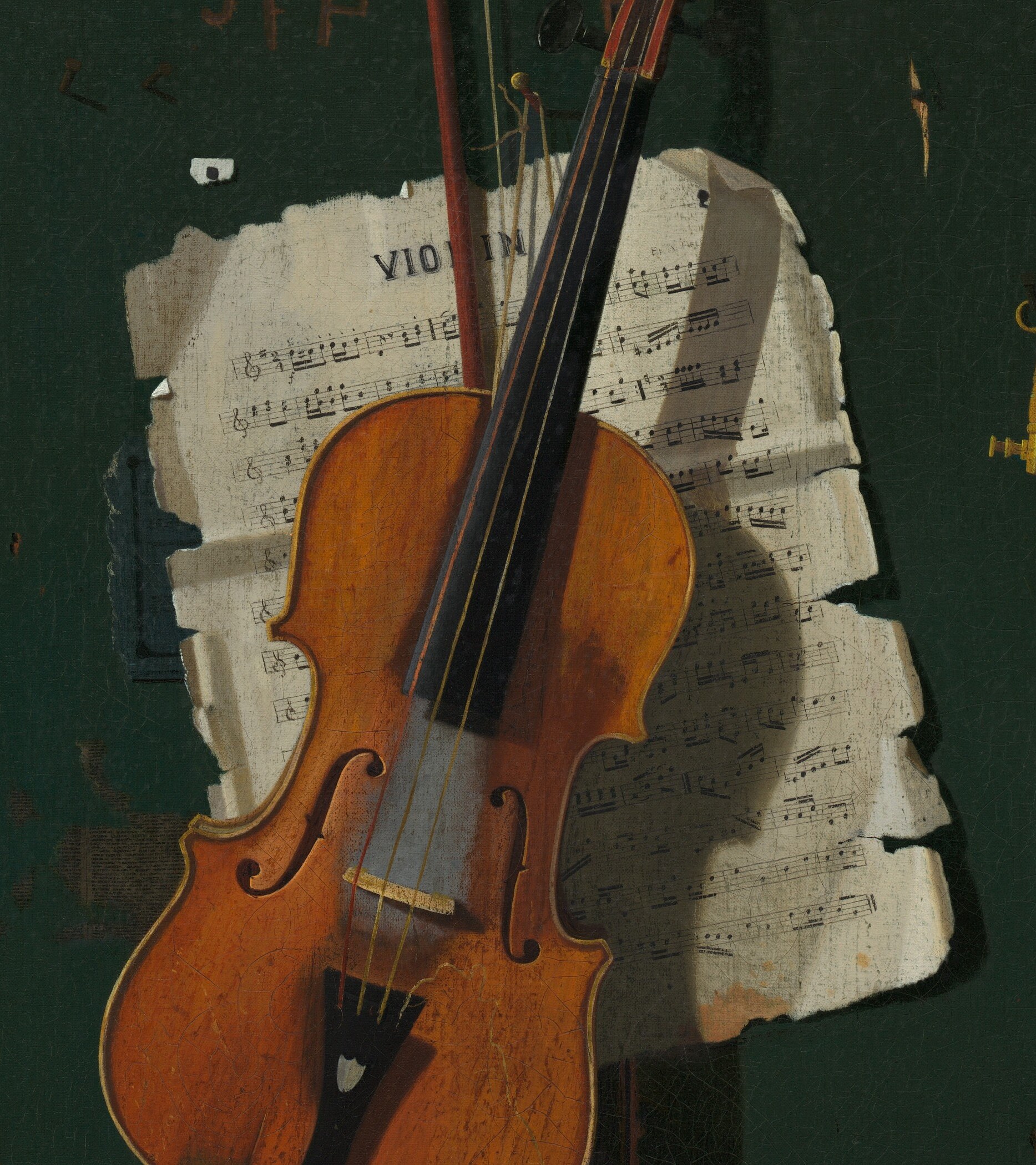
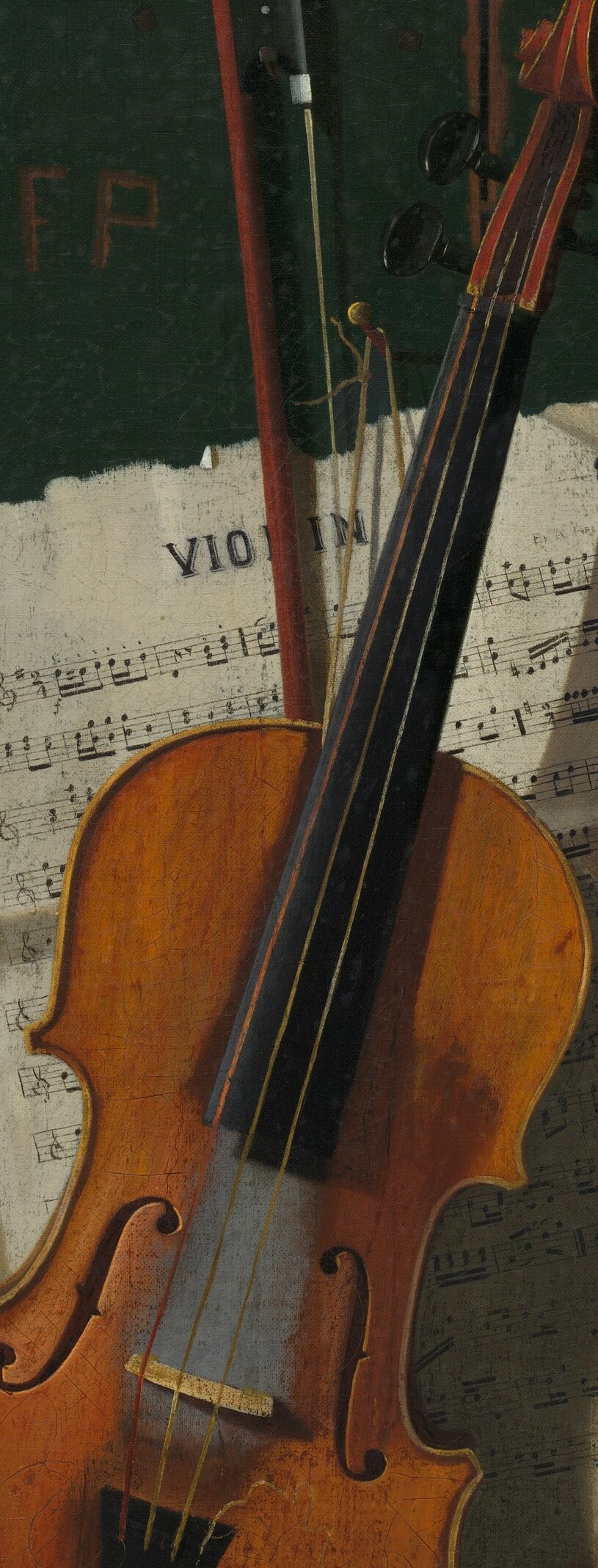
John Frederick Peto's 'The Old Violin', painted around 1890, is one of the most convincing trompe l'oeil paintings in American art, and it hides its biggest illusion in plain sight. The worn door the violin hangs on is not real. The cracked green paint, the brass hinges, and the wooden surface are all rendered in oil on canvas.
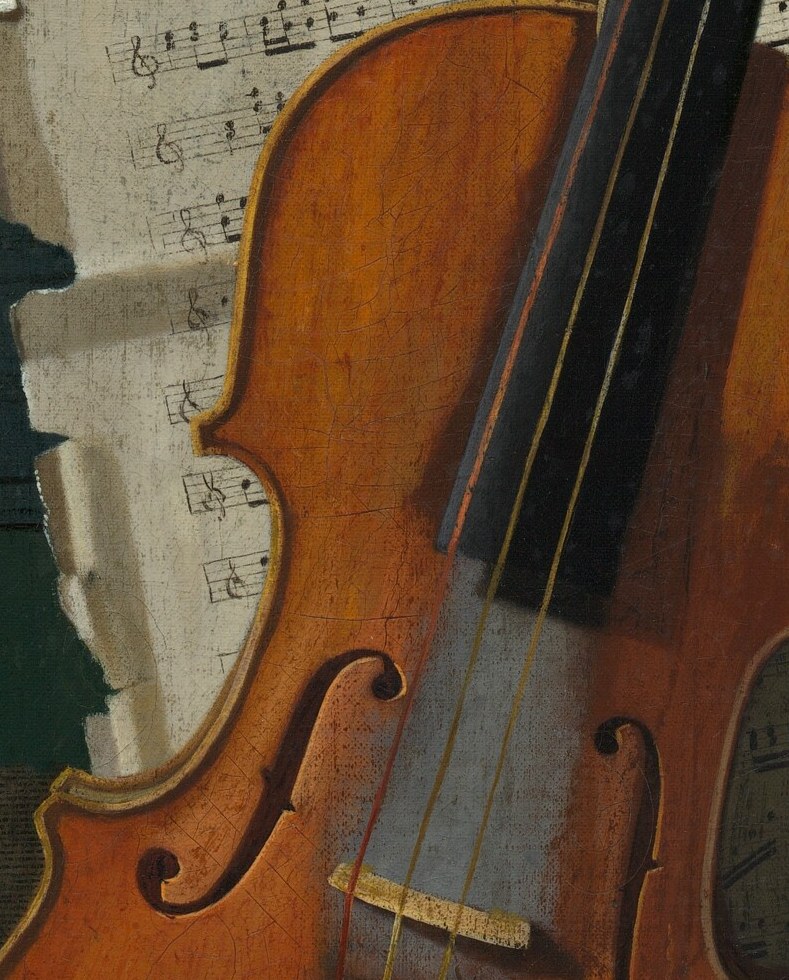
Peto builds his illusion from the ground up. Look closely at the bright raking light across the violin's upper bout. That single light source gives the instrument its astonishing weight and volume. Below it, the sheet music is crumpled and dog-eared, a detail Peto included often, inviting you to lean in and try to read the printed staves buried in the shadow.
By 1890, Peto was living in semi-obscurity in Island Heights, New Jersey, painting humble still lifes far from the art world's centers. His eyesight was failing, yet his brushwork remained so precise that curators later confused his work with his better-known contemporary, William Harnett. This painting was genuinely hung on a door for years by its owners, a fact that proves just how well Peto's trick worked.
A worn violin. A silent bow. Music no one is playing. Peto never said it aloud, but the painting reads like a gentle memento mori, a reminder that the most beautiful things are also passing.
Details
Transcript
A violin, a bow, some sheet music. The first trick: this isn't even hanging on a door. The hinges and the aged green paint are the painting. Peto wants you to reach out and touch it. Now look at the music. It is dog-eared and worn. A silent instrument and unplayed notes. A paused life. Peto painted ordinary objects as if they were sacred relics. He called it 'The Old Violin' in 1890. He was almost blind by then.