清 佚名 清明上河圖|Going Upriver on the Qingming Festival by After Qiu Ying
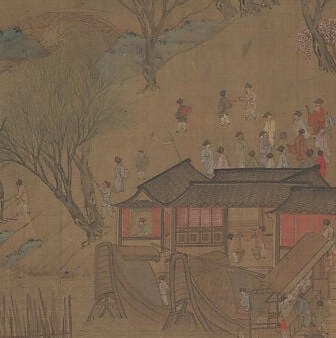
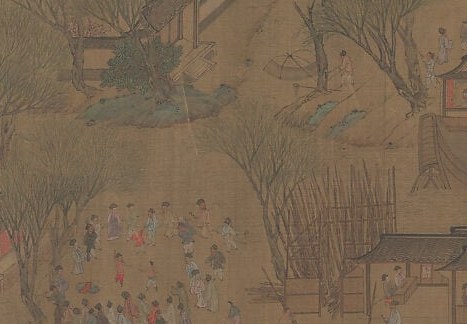
This is "Going Upriver on the Qingming Festival," an anonymous handscroll painted in 1777, now held at the Metropolitan Museum of Art. It is not a singular masterpiece but a late echo of one of the most beloved and copied compositions in Chinese history, reaching back to the Song dynasty. The scroll is a time machine built of ink and silk, longing for a past it never knew.
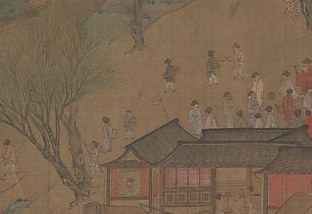
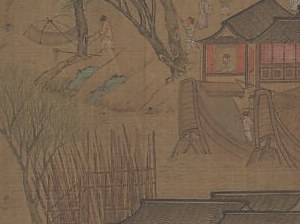
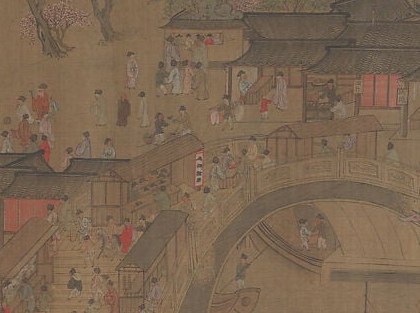
You can scan it for an hour and still not see everything. The eye must travel from misty open hills into a crush of commerce. Look for the rainbow arch bridge at the center of the drama. It is packed with figures. But the true tension is underneath, where a cargo boat is barreling toward the arch with its mast still raised. The crew is in a panic. This tiny, urgent human moment is what gives the vast panorama a heartbeat.
The original version of this scroll by Zhang Zeduan was a 12th-century sensation, so famous it spawned centuries of copies and forgeries. This 18th-century version follows a tradition associated with the artist Qiu Ying, though the hand that actually painted it is now lost. The anonymity is part of the point: this is less an individual statement than a collective memory of what a perfect city once felt like.
Every inch is a meditation on what it means to live alongside each other. One missed command at the tiller, and a cargo ship turns into a disaster story that interrupts the festival. It reminds us that a great city is just a million small, fragile moments held in balance.
Details
Transcript
Imagine a city so vast it takes an hour to unspool. Painted in 1777, but longing for a golden age 800 years earlier. From the sky, a breathing space. Now plunge in. The bridge is the heart of the city. A crowd of hundreds, each a deliberate brushstroke. But look down at the water. A boat is seconds from disaster. The crew strains to lower the mast before it hits the arch.