Entrance to the Harbor, Le Havre by Boudin, Eugène
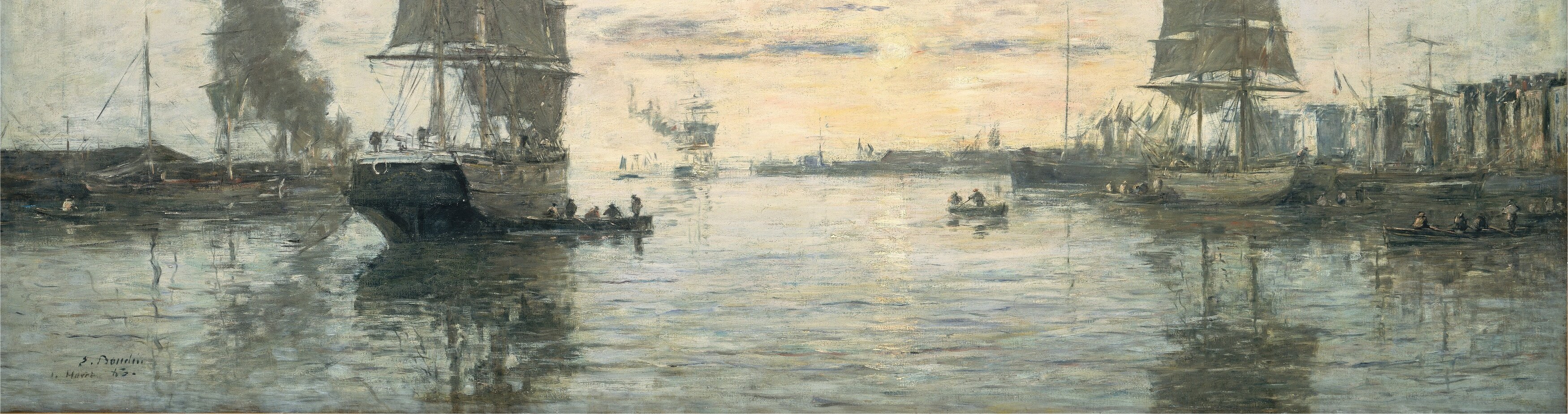
Eugène Boudin's 'Entrance to the Harbor, Le Havre' (1883) is a small oil painting that teaches a large lesson about light. Most painters treat the horizon as a dividing line. Boudin treats it as a seam he can dissolve.
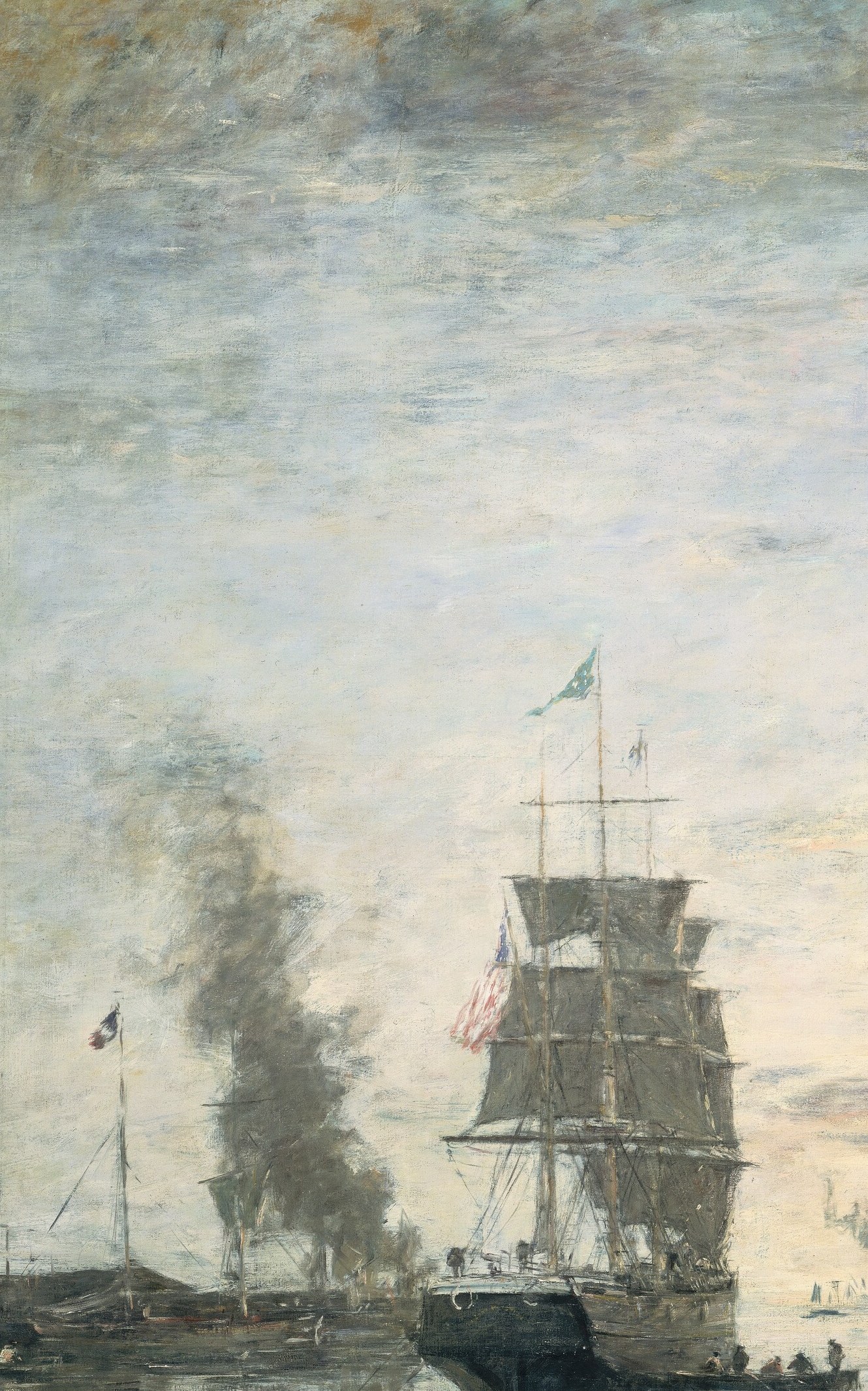
Look first at the narrow band where sky meets water. That pale yellow-gold glow is not painted as a hard edge but as a soft, vaporous transition. The water beneath carries the same pale tones as the sky above, so the two become one luminous field. The dark smoke plume on the left is the only strong vertical in the upper canvas, a deliberate foil that makes the surrounding atmosphere feel even brighter.
Boudin was one of the first French painters to work outdoors, and his obsession with the sky influenced the young Claude Monet directly. The poet Baudelaire praised his pastels; Corot gave him that nickname. This harbor scene comes late in his career, when the steam age was edging into his beloved world of sail, you can spot a dark steamship on the far left, barely legible against the edge.
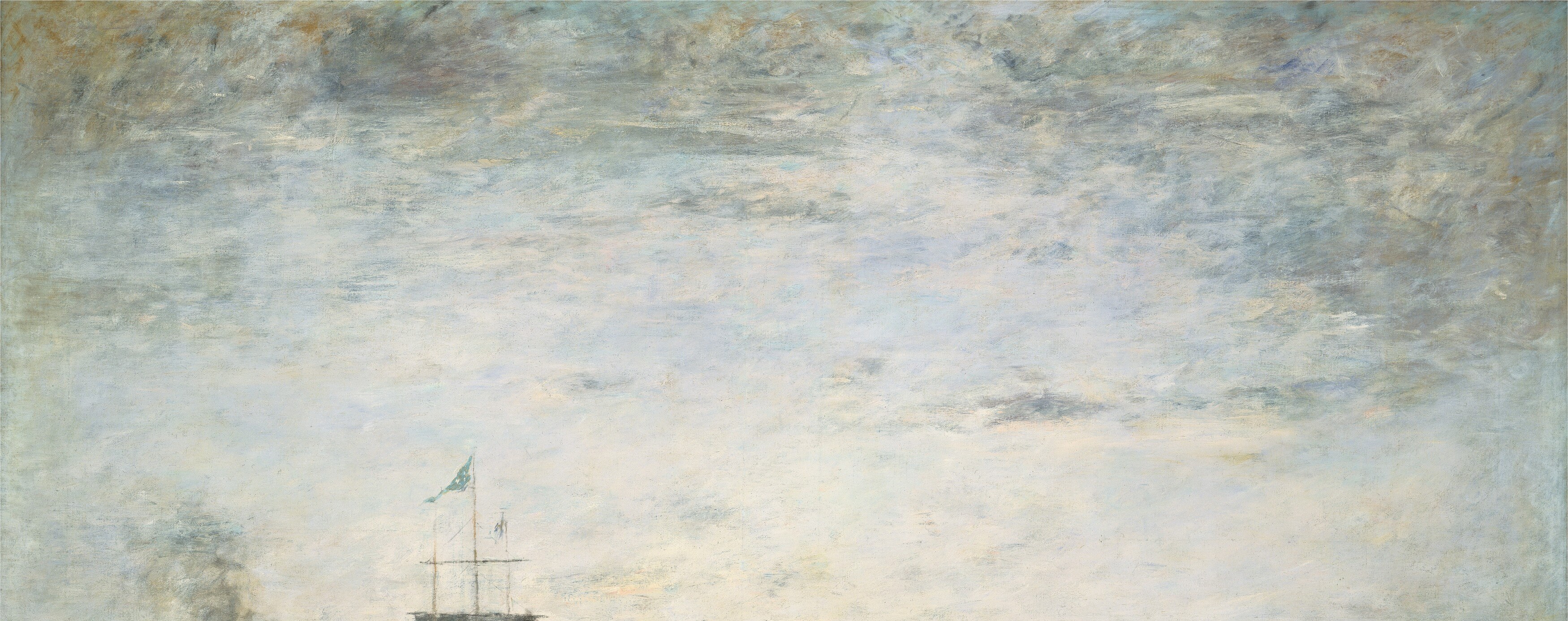
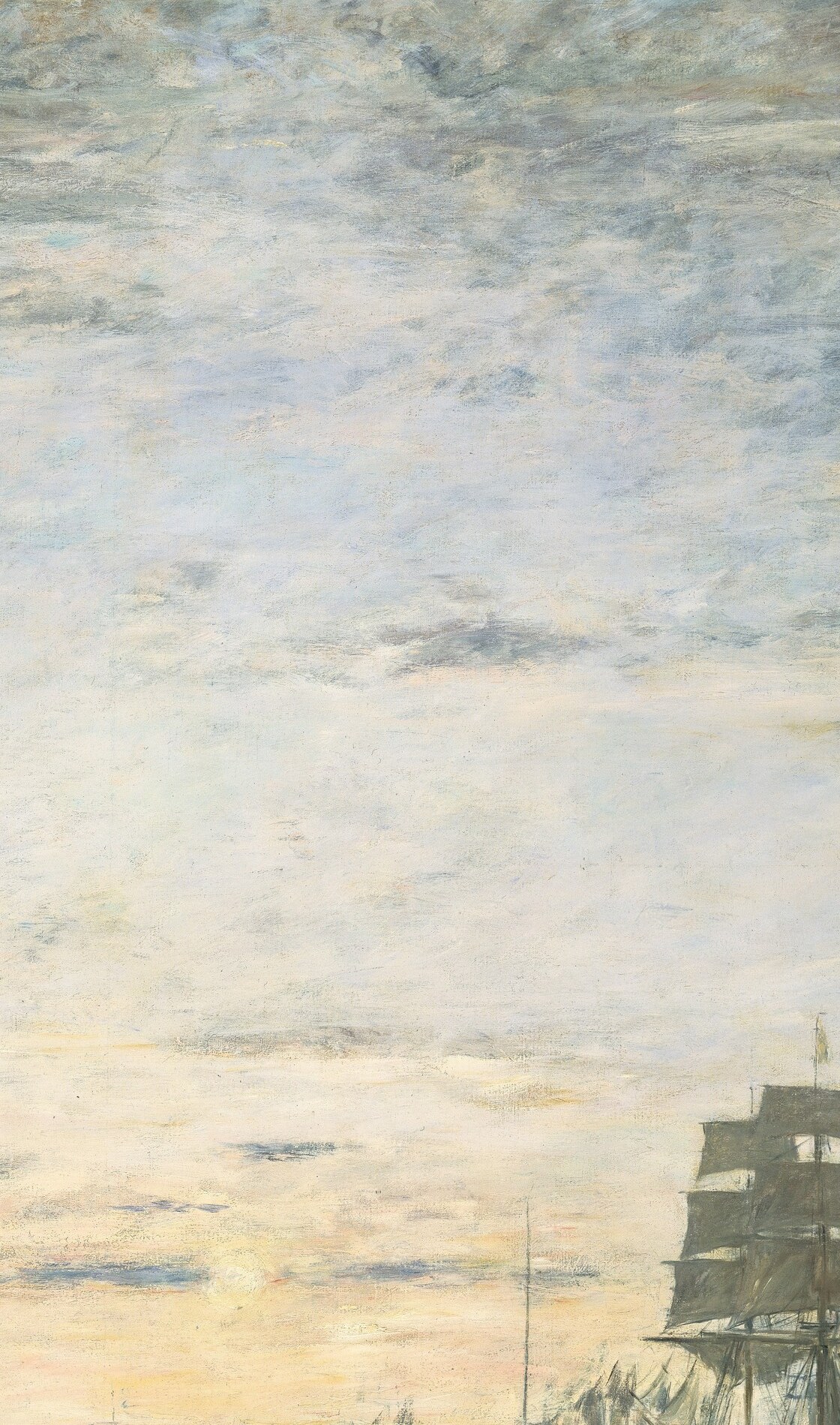
A painting where more than half the surface is pale grey cloud should feel empty. Instead it feels full of light. How does so little paint hold so much air?
Details

Transcript
More than half this painting is sky. Pale grey, loosely brushed. It should feel empty. But your eye drops to a thin band of glowing yellow. This is the trick. Sky and sea don't meet, they fuse. Boudin paints the water as a second sky beneath the hulls. Corot called him 'the king of the skies' for this exact light.