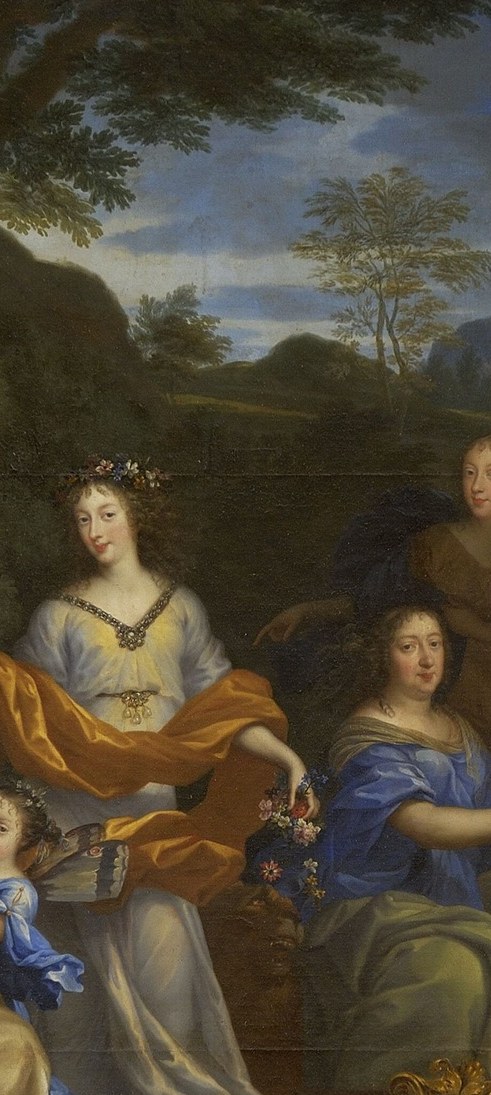
Mythological portrait of Louis XIV and the royal family by Jean Nocret
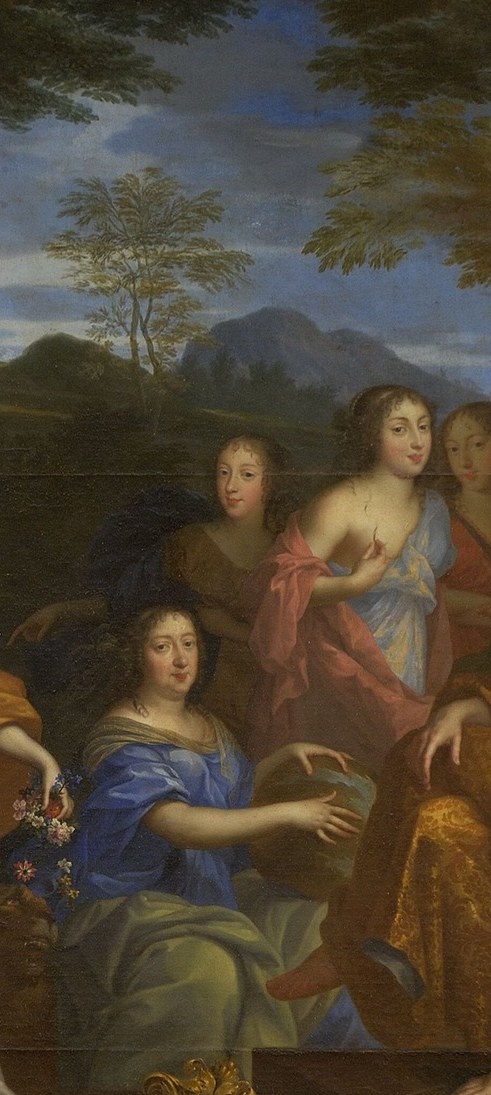
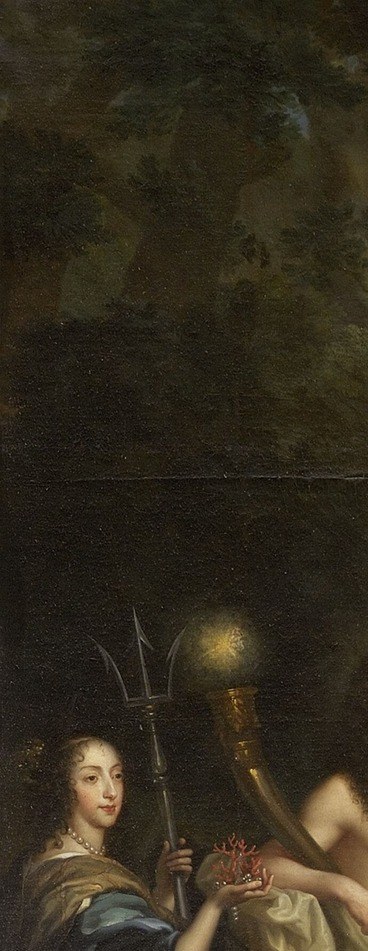
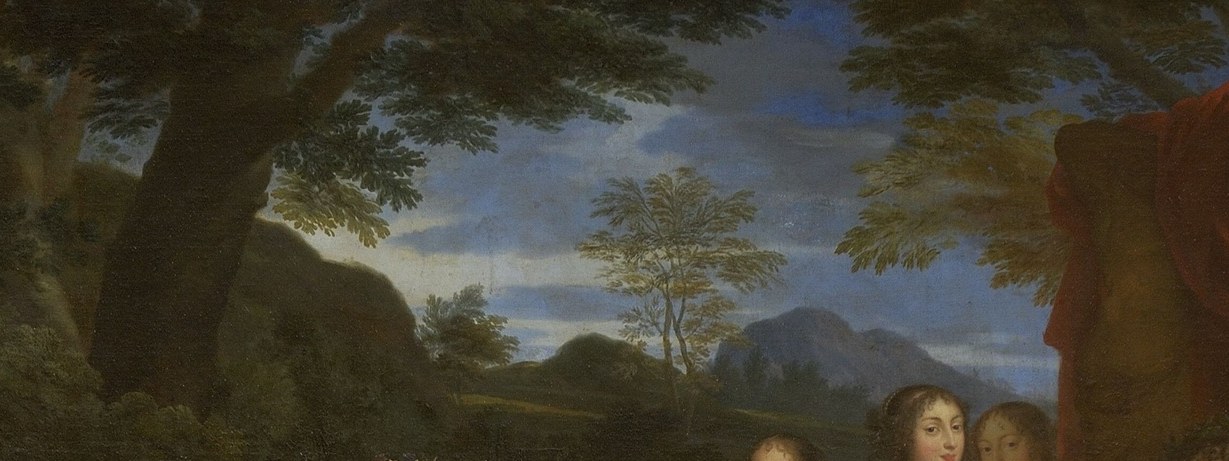
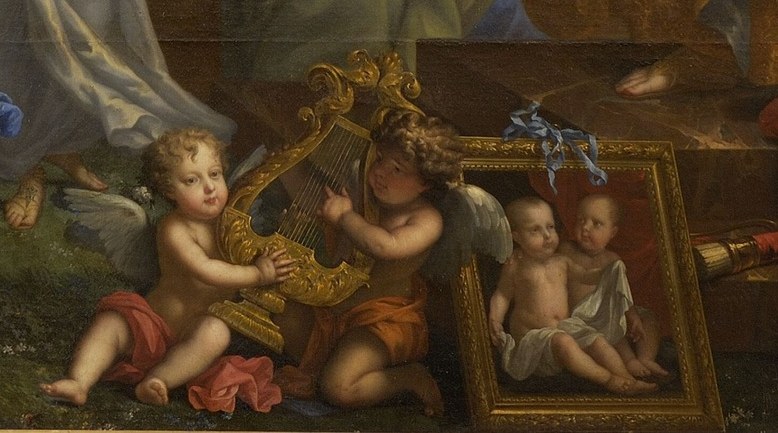
This painting is hiding a celestial secret in the trees. Jean Nocret's 'Mythological portrait of Louis XIV and the royal family,' painted in 1670 and held at the Palace of Versailles, is not just a family portrait in fancy dress. The top quarter of the canvas, often overlooked, contains the engine that powers the entire allegory.
Look past the central figures. In the dark wooded background, a golden chariot breaks through the canopy. This is Aurora, the goddess of dawn, racing across the sky and pulling the daylight into position. She is the mechanism by which the sun rises. Without her, the Sun King below cannot shine.
Nocret was a specialist in royal portraiture, and this work is a tight piece of political messaging. By nesting a celestial event in the landscape, he frames Louis XIV's rule as a literal sunrise willed by the heavens. Every figure below, from Minerva to Apollo, is bathed in a light that Nocret argues was orchestrated for them. It is a complete visual argument for divine right.
Next time you see a crowded Baroque portrait, check the margins and the sky. The piece of the story that explains all the others is often painted smallest.
Details
Transcript
It looks like the whole royal family, dressed as gods. Louis XIV, the Sun King, stands at the center as Apollo. His mother, Anne of Austria, is seated in a plumed helmet. But the real secret is hiding above them in the trees. A golden chariot races across the shadowed sky. Nocret painted Aurora, goddess of dawn, pulling the sun into place. The message is complete: dawn itself bows to this dynasty.