Landscape with an architectural view surrounded by trompe-l’oeil elements symbolising the Arts by Charles Joseph Flipart
Charles Joseph Flipart’s 1790 painting, “Landscape with an Architectural View Surrounded by Trompe‑l’oeil Elements Symbolising the Arts,” is a complex work that blends realistic and illusory objects. It is held at the Museo del Prado.
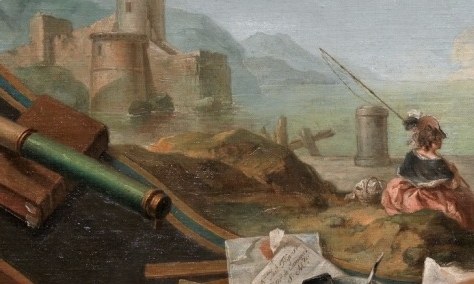
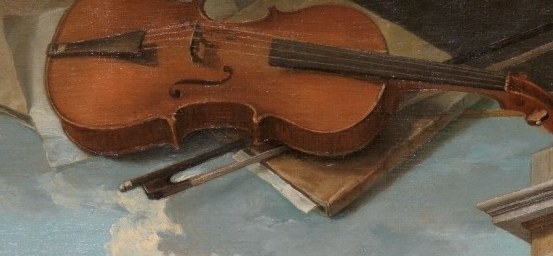
Flipart fills the composition with symbols of various disciplines. You can spot a violin and bow for music, an artist's palette for painting, and a spotting scope for scientific observation. These elements, along with a map and various tools, reinforce the theme of interdisciplinary knowledge.
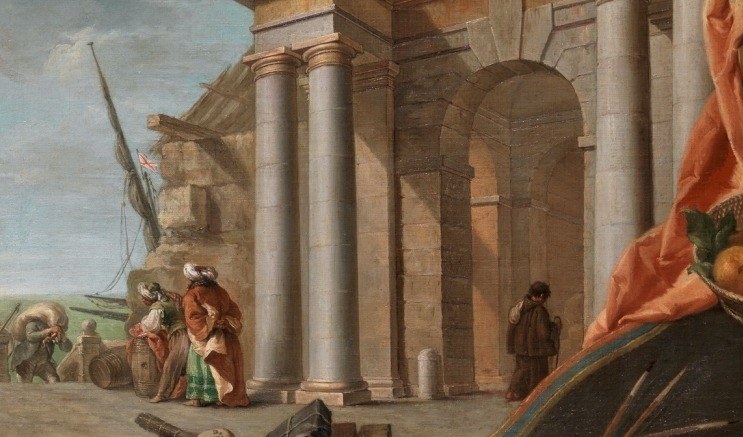
One of the most intriguing aspects is a tiny, solitary figure standing within a distant archway in the background. This subtle detail often goes unnoticed but adds significant depth and narrative mystery to the scene.
This painting reflects the 18th century's fascination with decorative illusion and the symbolic representation of the liberal arts. What other hidden details can you find?
Details
Transcript
This painting from 1790 is a tribute to the arts. Look at the violin, representing music, and the artist's palette. Even a spotting scope hints at scientific observation. But look inside the crumbling architectural ruins. A solitary figure stands within the archway, almost hidden. This small detail adds unexpected depth to the landscape.