Forging the Shaft by John Ferguson Weir
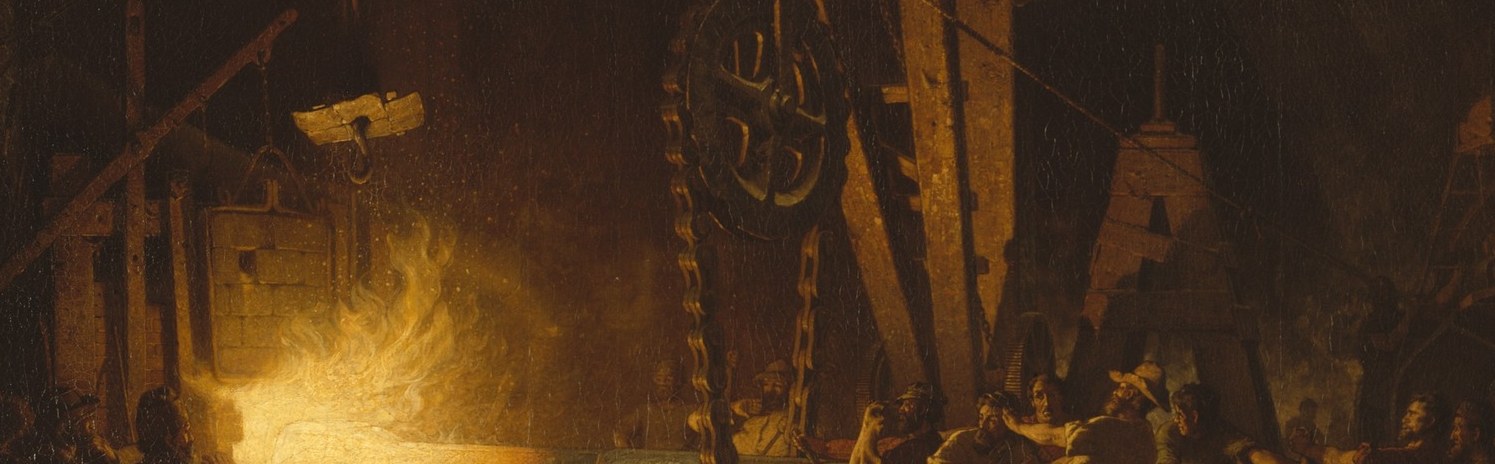
John Ferguson Weir’s "Forging the Shaft" (1874) is a painting that rewards patience. At first glance, it is a dramatic study of fire and industry, held in the collection of The Metropolitan Museum of Art. But let your eye adjust to the dark and a hidden reality emerges from the factory gloom.
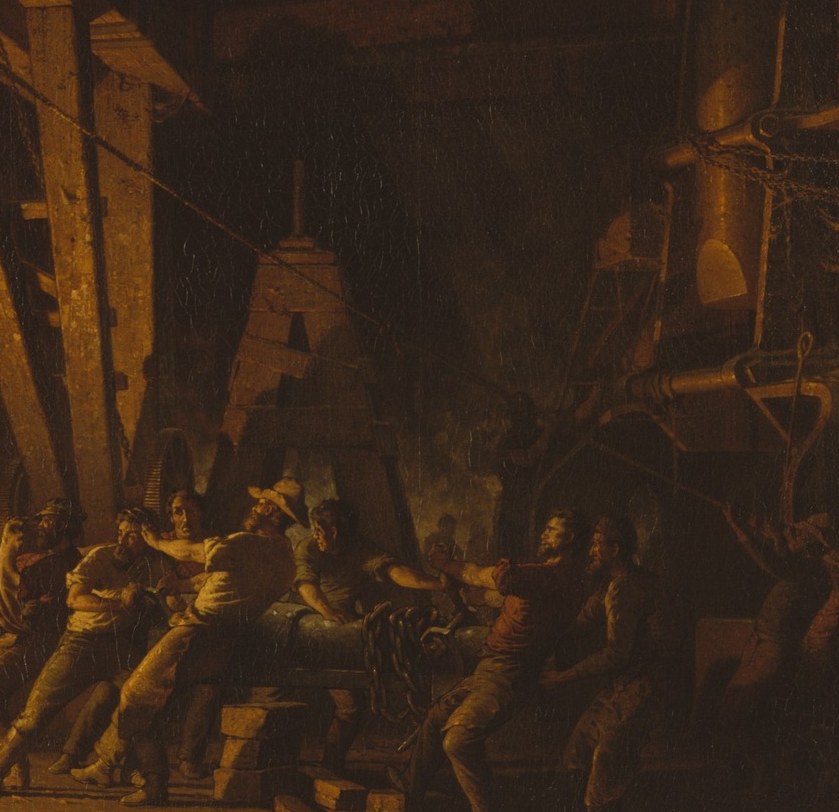
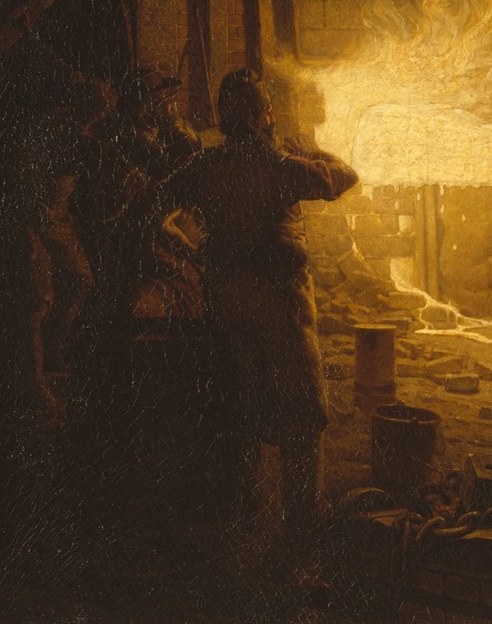
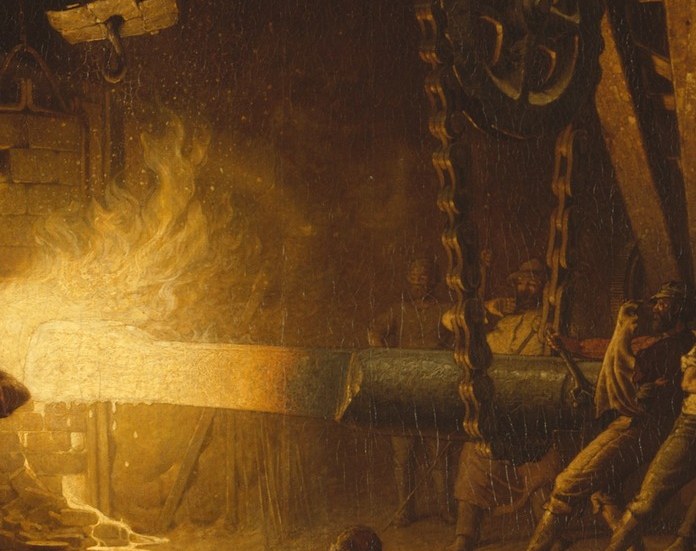
Weir structures the entire composition around a single white-hot metal rod, a blinding horizontal line that links every worker. The light is so fierce it nearly erases the men on the right-hand side, reducing their faces to smudges of paint. Yet the real secret lies deeper: on the left, beyond the central stoker, two more figures are nearly dissolved by shadow. They are not absent, they are invisible on first scroll.
Painted just nine years after the American Civil War, this work belongs to a rare tradition in American art: the honest industrial interior. Weir came from an artistic dynasty, his father taught at West Point and his brother became a celebrated Impressionist, but John chose the forge over the landscape. He argued that art should confront the modern world, not escape it.
So when you look at this painting, don't just see the fire. See the men that history nearly swallowed. How many faces can you find?
Details

Transcript
New York, 1874. The heart of a factory at night. A single rod of molten iron holds every worker in place. Look at the men to the right. Their faces are nearly lost. Weir was the son of a painter, and the brother of one too. But he chose to paint what others ignored: human effort. Now look deeper into the left background. Two more men labor in silence, half-swallowed by the dark. This is not just a machine. It is a portrait of the forgotten.