Henry Frederick (1594–1612), Prince of Wales, with Sir John Harington (1592–1614), in the Hunting Field by Robert Peake the elder
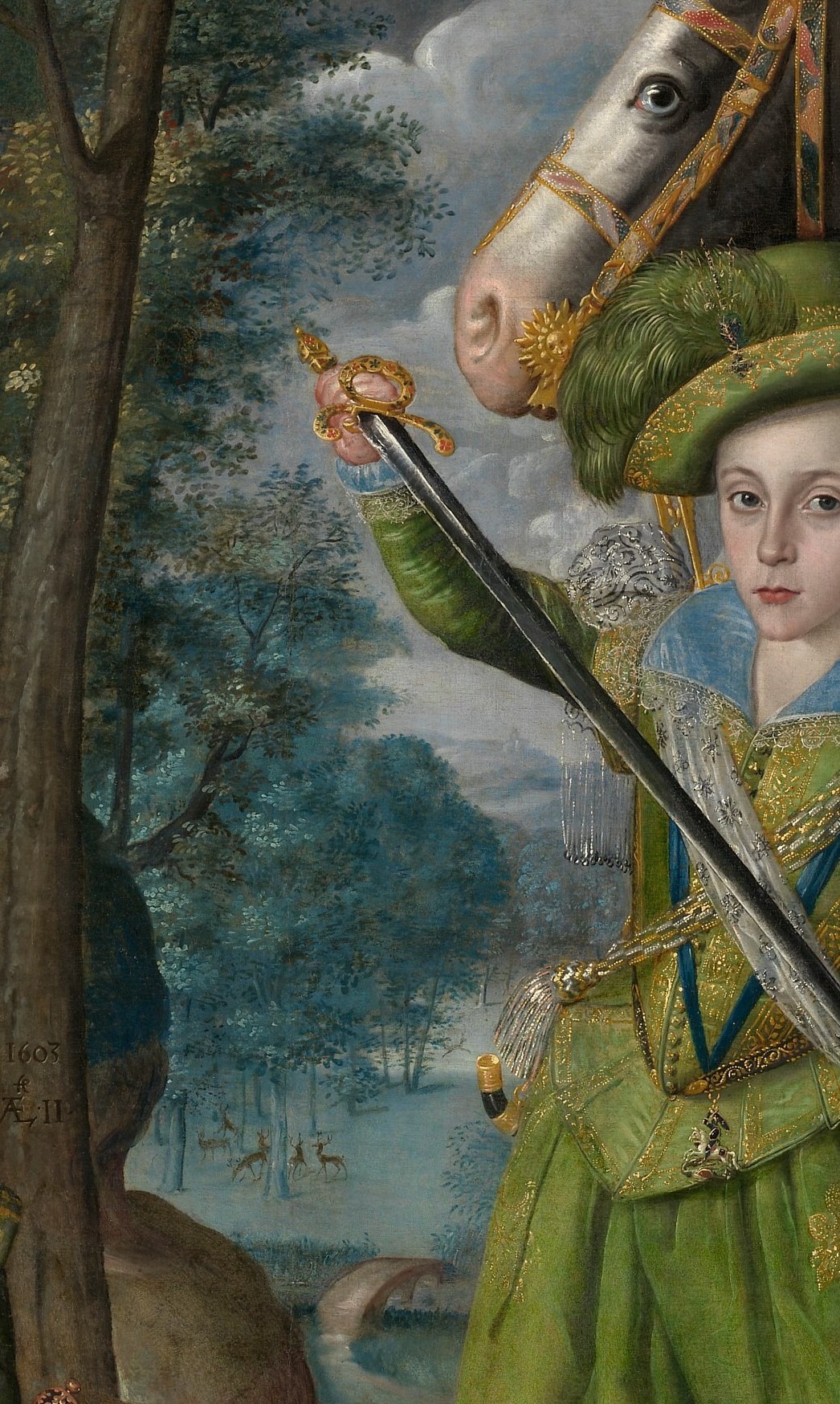
In 1603, a nine-year-old boy became the most important child in Britain. Henry Frederick, eldest son of James I, was suddenly Prince of Wales and heir to the united crowns of England and Scotland. This painting, by Robert Peake the Elder, was made almost immediately. It is not really a hunting scene.
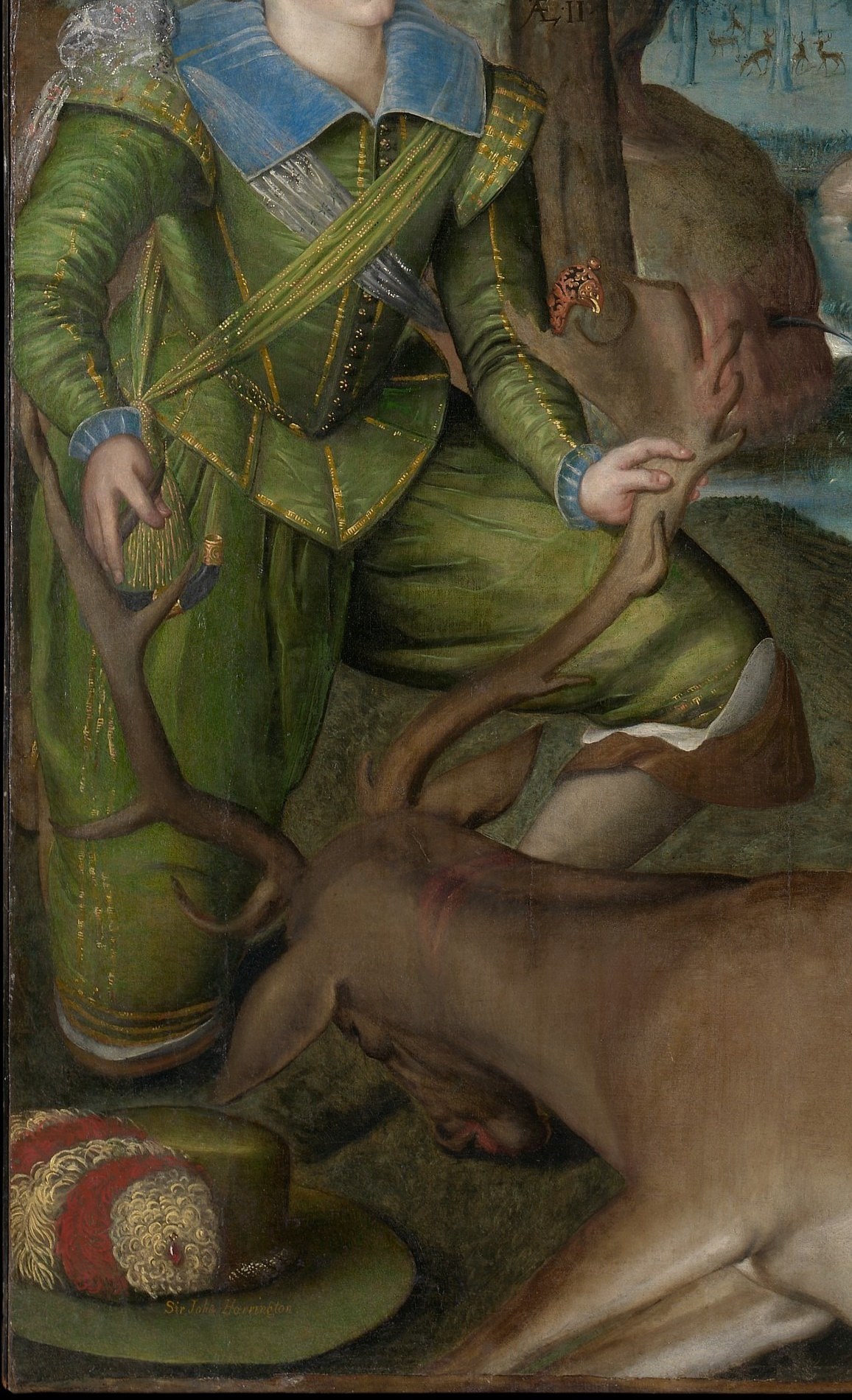
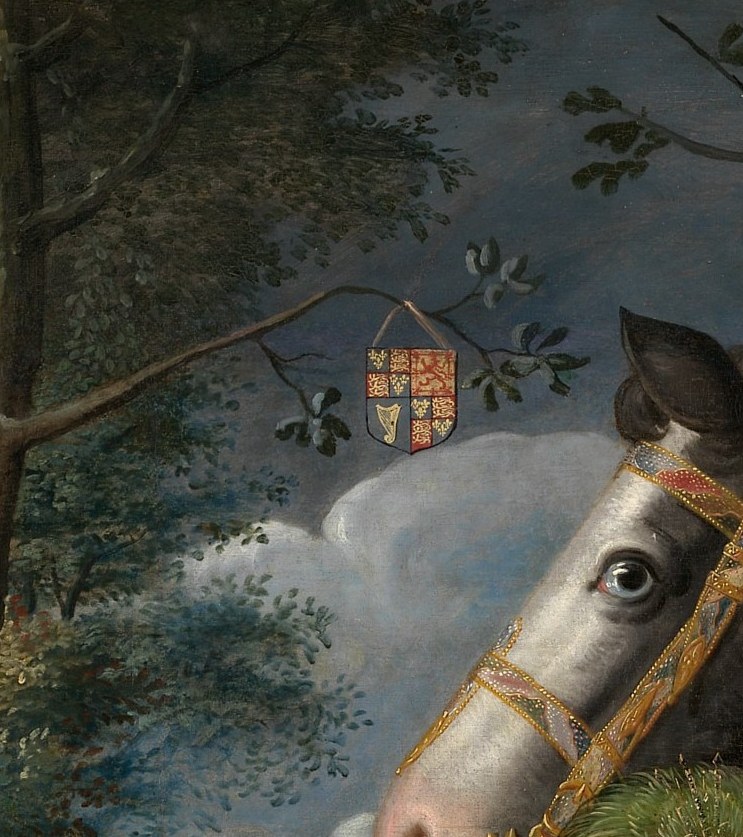
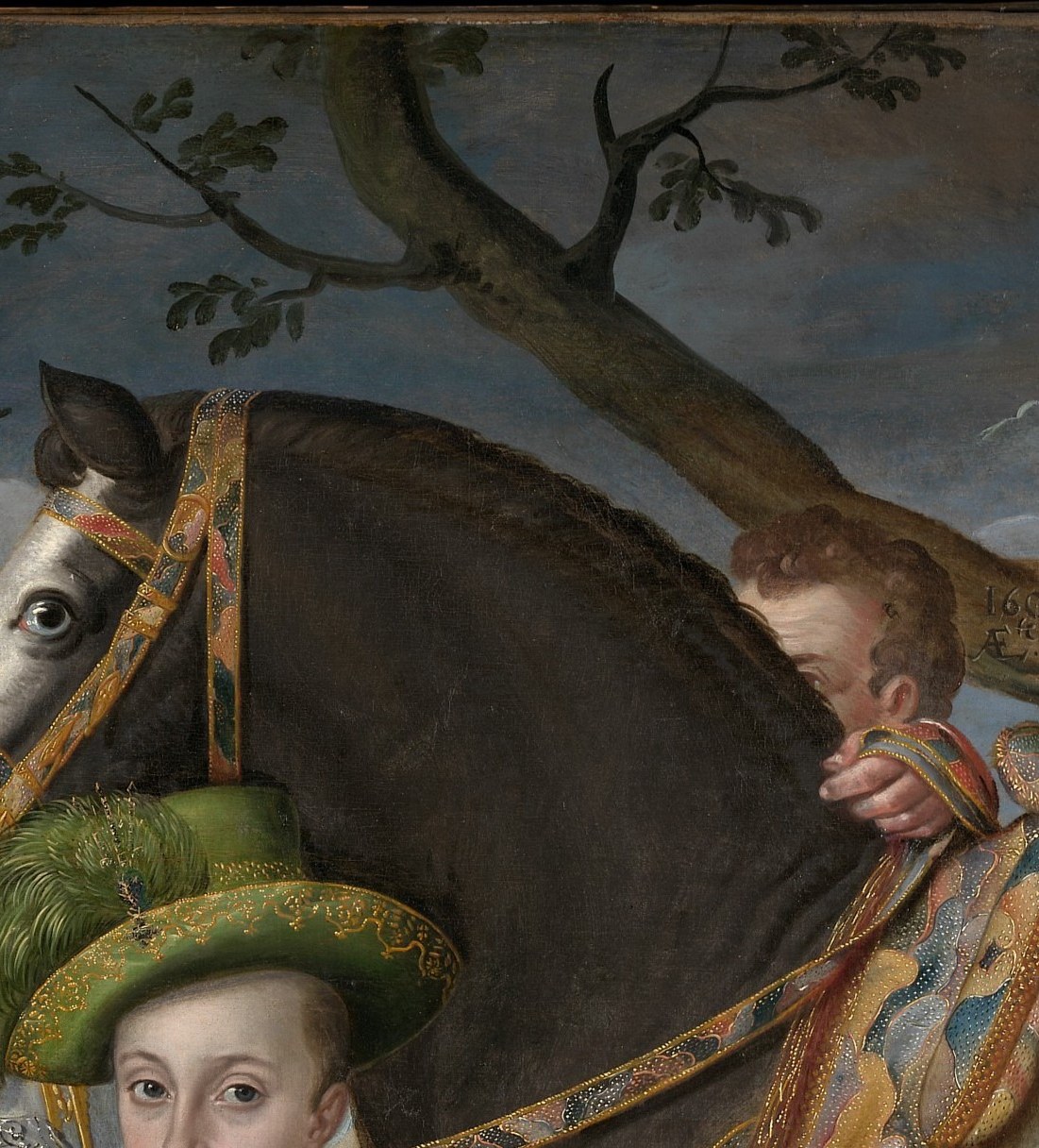
Look at the staging. Henry stands above the dead stag, a sword vertical at his side, a dark horse looming behind him. His companion, John Harington, kneels in near-identical green but grips the antler like a servant. A hidden attendant materializes behind the horse's flank. The architecture in the distance places this on a managed estate, not in wild nature. Every element is a demonstration of a specific idea: the prince commands, others labor, and even the forest bends to the heir.
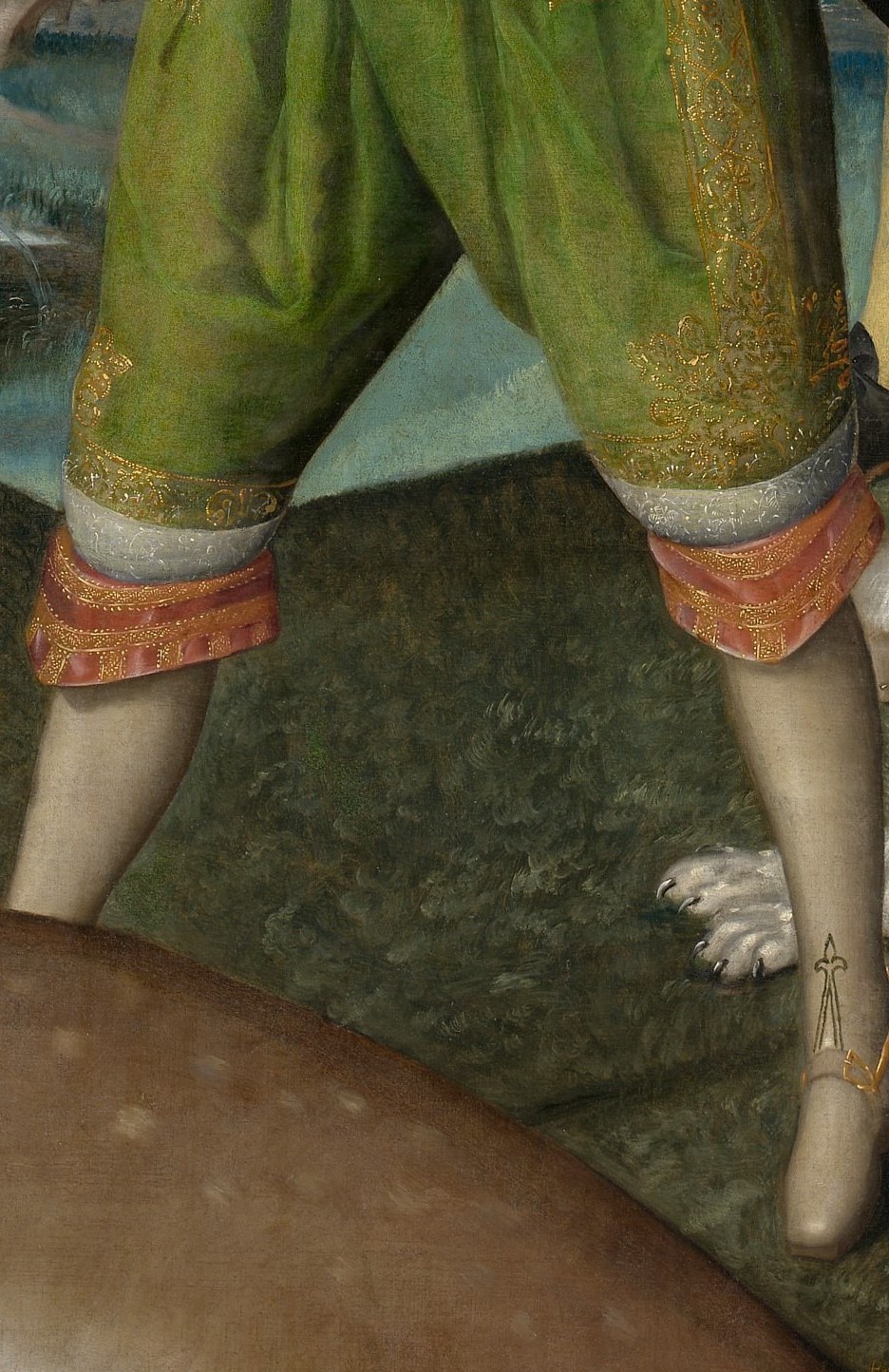
Peake was appointed the prince's official picture maker in 1604, a year after this canvas was painted. He belonged to a tight group of Jacobean court painters who specialized in these densely symbolic costume pieces. The gold embroidery on Henry's doublet is the most technically demanding passage in the whole work, an announcement of status rendered in oil paint. Henry Frederick would die of typhoid at eighteen, never becoming king. His younger brother Charles took the throne instead.
This painting preserves a moment when the succession felt certain. Everything in the frame is designed to say: the future is standing right here, and he is ready.
#arthistory #jacobean #tudorportraiture
Details
Transcript
He looks ready to rule. He is nine. 1603. James I is king, and this boy is suddenly the heir. His companion, John Harington, kneels with the stag. He holds the antler so the prince does not have to. The doublet's gold thread is a show of dynastic wealth. This is not a hunt. It is a lesson in command.