Lake George, Free Study by John Frederick Kensett
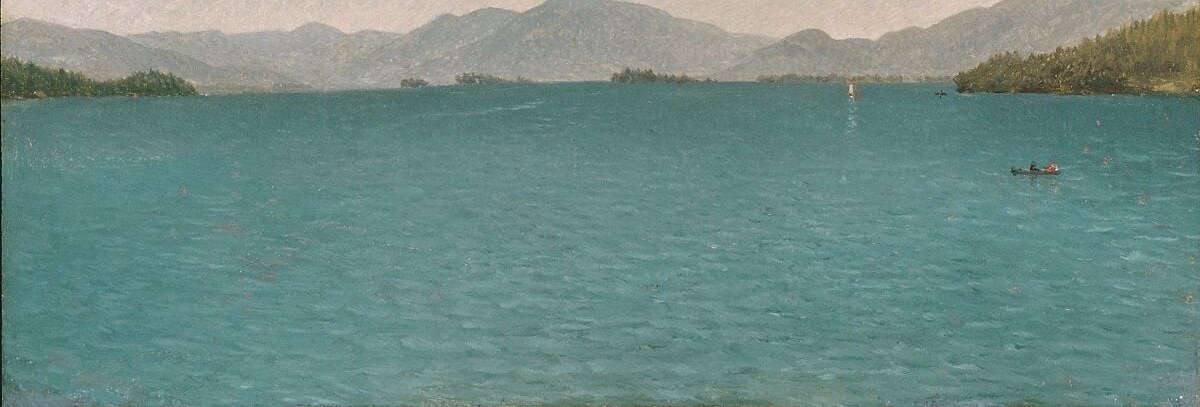
John Frederick Kensett's 'Lake George, Free Study' (1872) is a small, rapid oil sketch made outdoors in the final year of his life. Painted in a single session, it captures a suspended moment on the lake where the water is so still and the light so even that the horizon threatens to dissolve entirely.
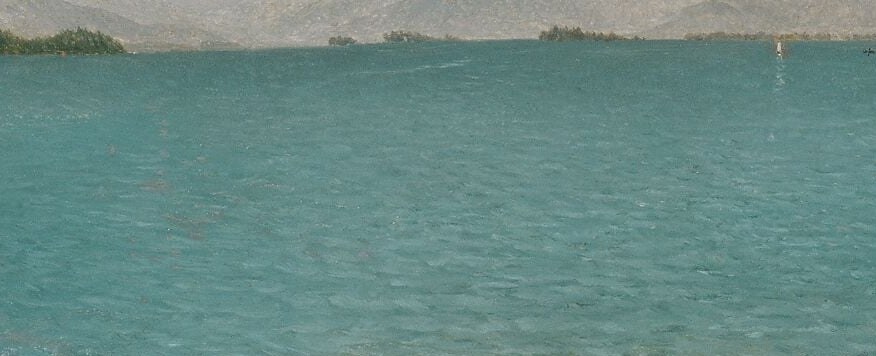
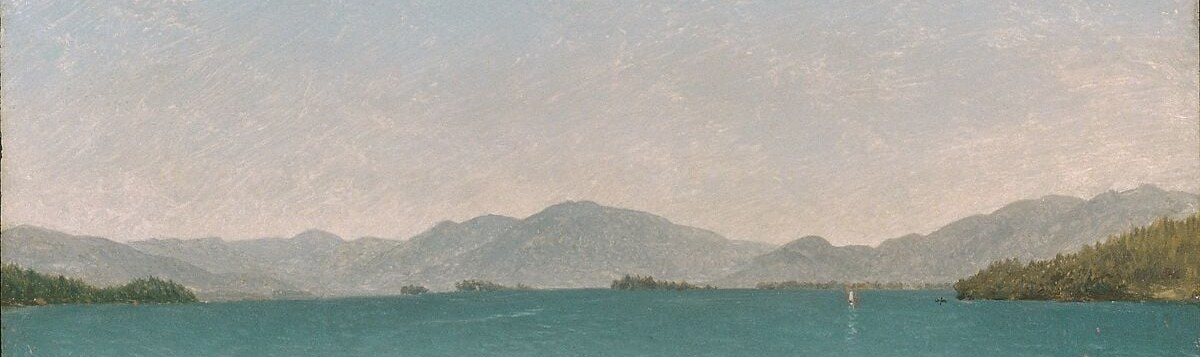
Look at the band where mountain meets water. Kensett painted no hard edge there, just a soft passage of tone that melts the mountain base into pale haze. Then look at the water itself: the horizontal brushstrokes are quick and loose, shifting from deep teal near the shore to a pale, luminous center. The sky and lake share nearly identical values, a vertical symmetry that makes the scene feel like it could be flipped.
This is one of many 'free studies' Kensett painted directly from nature, working fast to capture an impression of light and air before it changed. Unlike his finished studio canvases, these sketches were never meant for exhibition. They were acts of observation, and they reveal the raw mechanics of his Luminist style: edges dissolved, detail withheld, color used as atmosphere.
The painting lives in The American Wing at the Metropolitan Museum of Art. Kensett helped found the Met, he was on the board that brought it into existence in 1870.
Details

Transcript
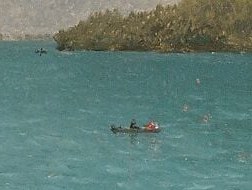
Look at where the mountain meets the lake. The edge dissolves into a band of soft haze. No hard line. No edge. Just tone shifting into tone. Kensett painted this outdoors in a single wet session. The horizontal brushwork is fast and visible. He died later that year. This was his last summer. He called these rapid sketches 'free studies.' And the boat? Two figures, held in a stillness that has no time.