Washington and Lafayette at Mount Vernon, 1784 (The Home of Washington after the War) by Thomas Pritchard Rossiter|Louis Remy Mignot
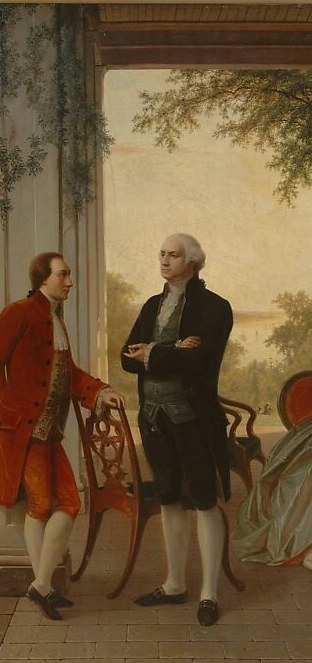
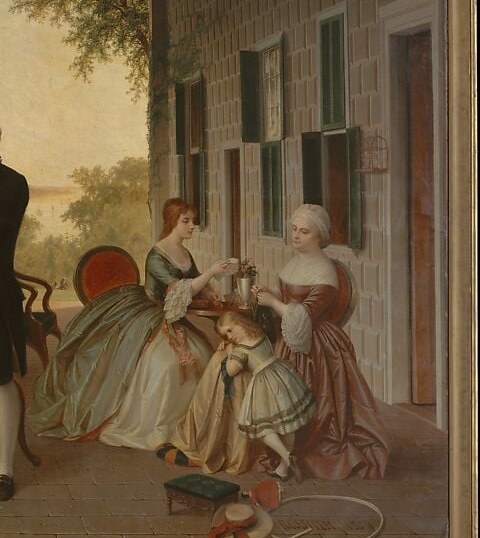
This is 'Washington and Lafayette at Mount Vernon, 1784 (The Home of Washington after the War),' painted by Thomas Pritchard Rossiter and Louis Remy Mignot in 1859. It hangs in the Metropolitan Museum of Art. The monumental canvas, over twelve feet wide, imagines a peaceful reunion after the Revolution, as the aging general enjoys retired life on his Virginia estate.
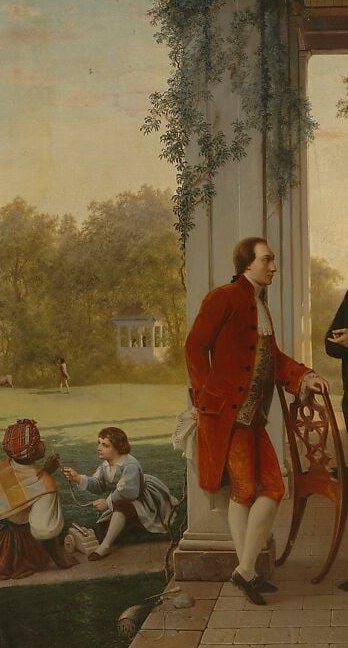
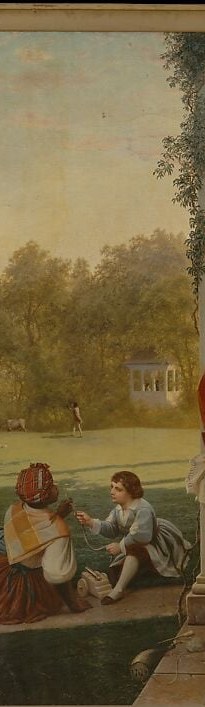
The eye is pulled first to the two heroes on the piazza, easy in their friendship. Washington's face is unguarded, a rare intimate portrayal from an era of stiff formal portraits. Your gaze then drops to the lawn, where a child in the foreground plays with a toy cannon, a gentle echo of the war just finished.
But the most important figure in the frame is easy to miss. In the lower left, an African American woman tends to the child. She is enslaved, part of the household at Mount Vernon. Her presence complicates every ideal of liberty discussed on the porch above her. Rossiter and Mignot completed this work in 1859, the very year the Mount Vernon Ladies' Association began restoring the crumbling estate, and on the eve of the Civil War.
The painting was an instant nostalgia piece, a vision of harmony that never quite existed. Its message was so popular that a steel engraving circulated widely just a few years later, during the darkest days of the war. What do you think an artist would be obligated to show if they painted this scene honestly today?
#arthistory #americanart #metmuseum
Details
Transcript
August 1784. The war is over. Washington has resigned his commission and come home. Lafayette visits Mount Vernon. They talk like old friends. Now look down. Into the yard below the porch. A child plays with a toy cannon, watched by an attendant. She is enslaved. She serves the household of the man who wrote that all men are created equal. The painting was made in 1859, as the actual Mount Vernon crumbled. It gave America an idealized past. Not an honest one.