The Annunciation by Veronese
Veronese's "The Annunciation," painted around 1584 and now housed in a prominent collection, masterfully blends the divine with the everyday. This oil on canvas depicts the pivotal moment when the Archangel Gabriel announces to Mary her impending divine conception.
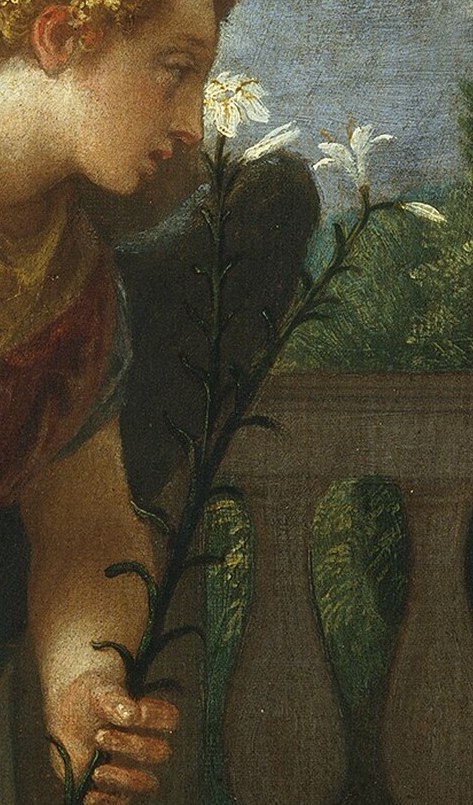
The painting invites viewers into an intimate, seemingly familiar domestic setting. Observe how Gabriel, with his gentle focus, offers a lily, a traditional symbol of purity. Mary's downcast eyes and folded hands convey a quiet, humble acceptance, making the miraculous feel deeply personal.
Veronese consistently humanized sacred subjects throughout his career. By placing biblical events within contemporary, often opulent, Venetian environments, he made religious narratives more resonant for his audience, bridging the gap between heaven and earth. Even small details, like the cat near the balustrade, serve to ground this extraordinary event in a tangible reality.
What other subtle details do you notice that make this divine encounter feel so real?
Details
Transcript
This painter brought heaven to earth. Look at the Angel Gabriel, a messenger in human form. His lily, a symbol of purity, reaches Mary. Mary accepts the divine news with humble grace. Her folded hands, a gesture of quiet consent. Even a small cat is here, grounding the miraculous. This choice made sacred stories feel immediate to his audience.