Self-Portrait by Chase, William Merritt
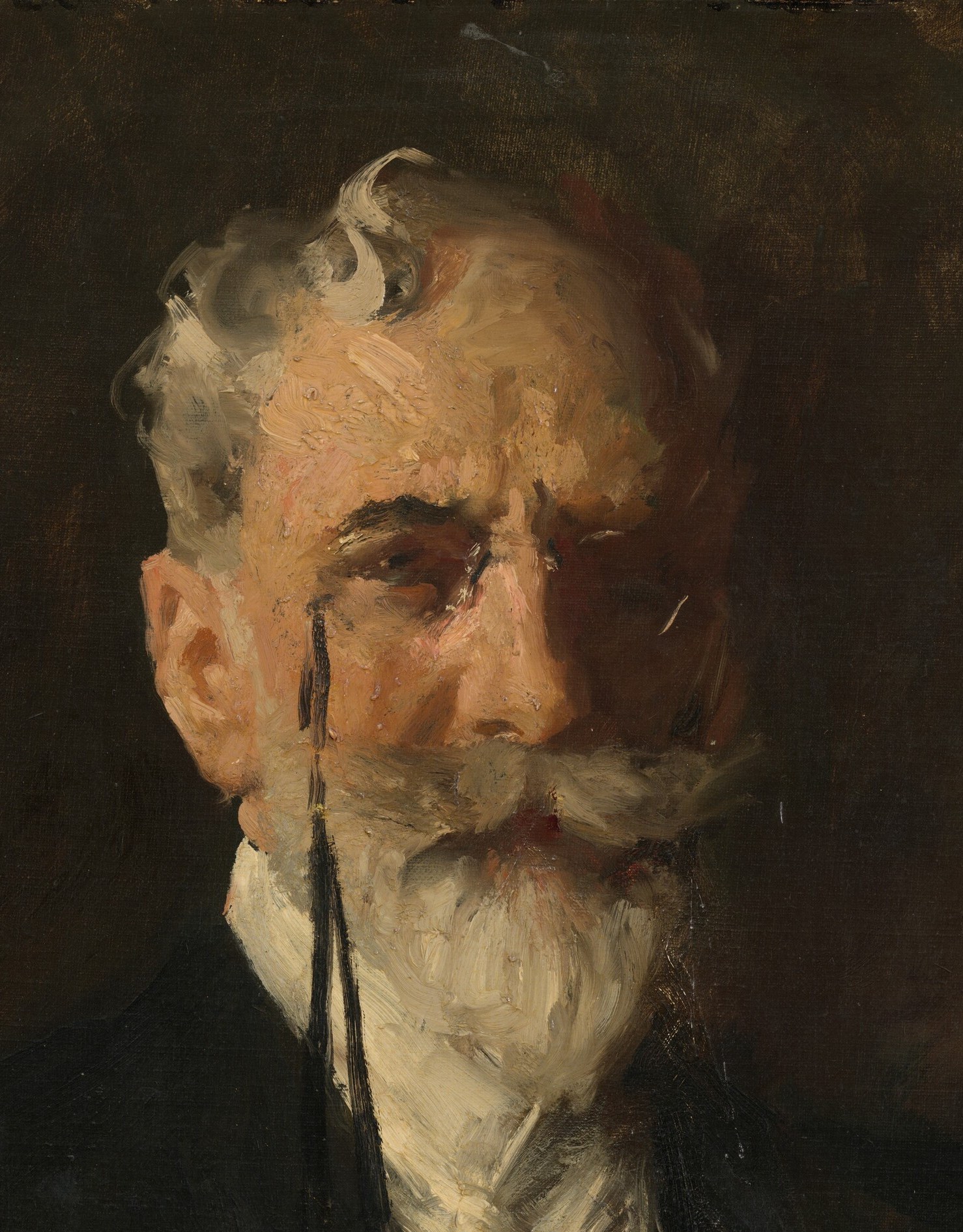
This is William Merritt Chase's final self-portrait, painted in 1915, the year before his death. It now hangs in the collection of the Metropolitan Museum of Art.
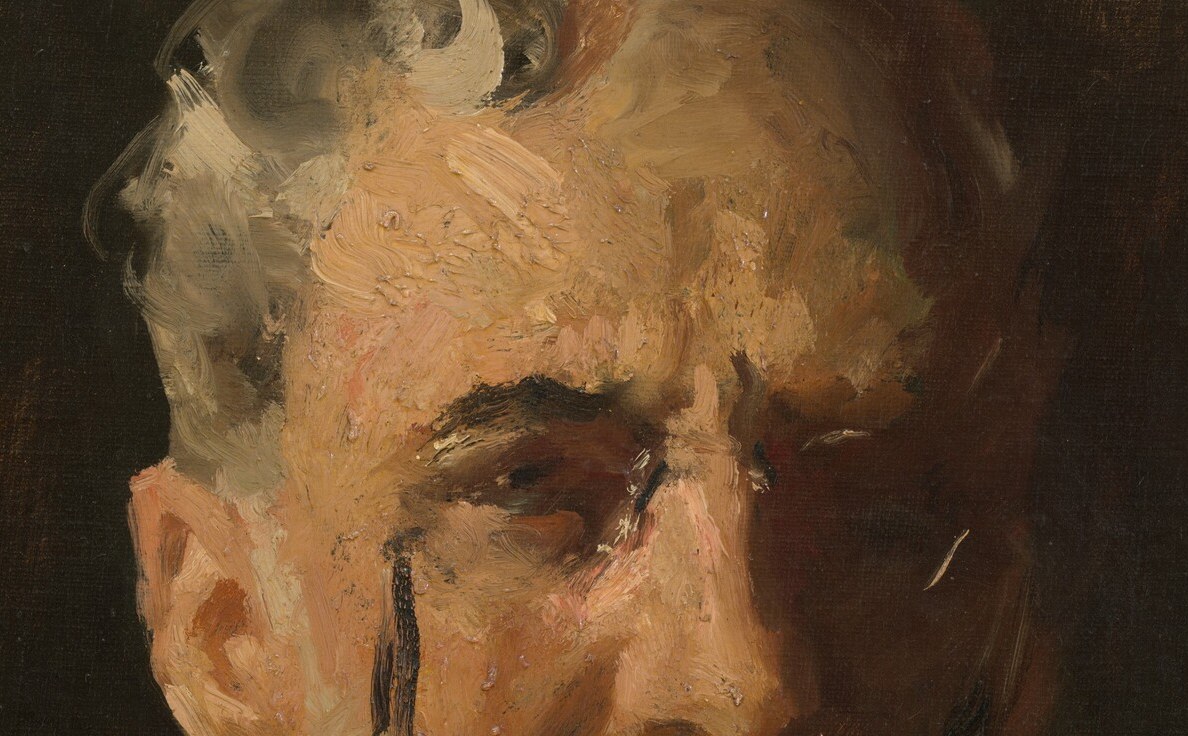
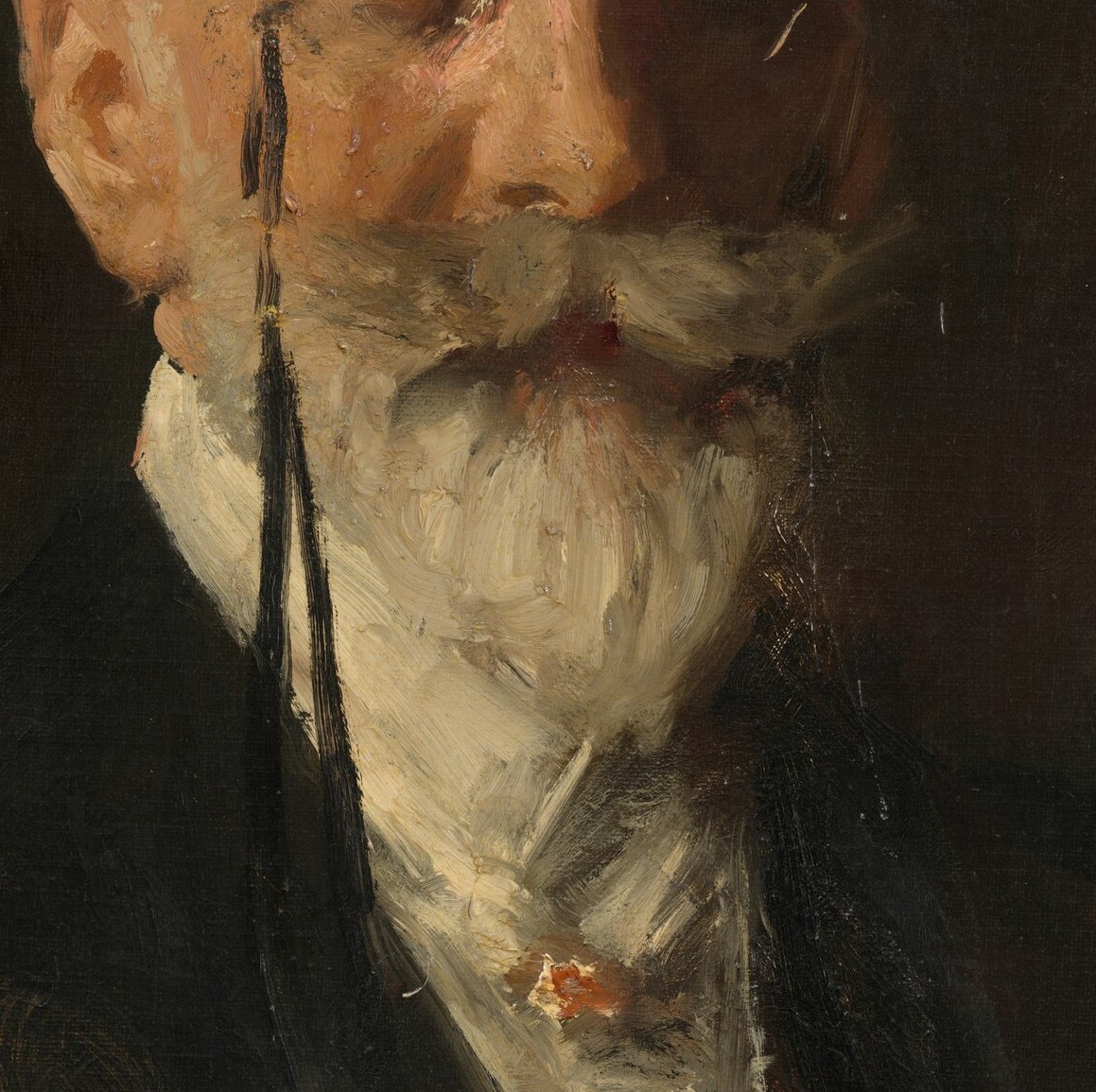
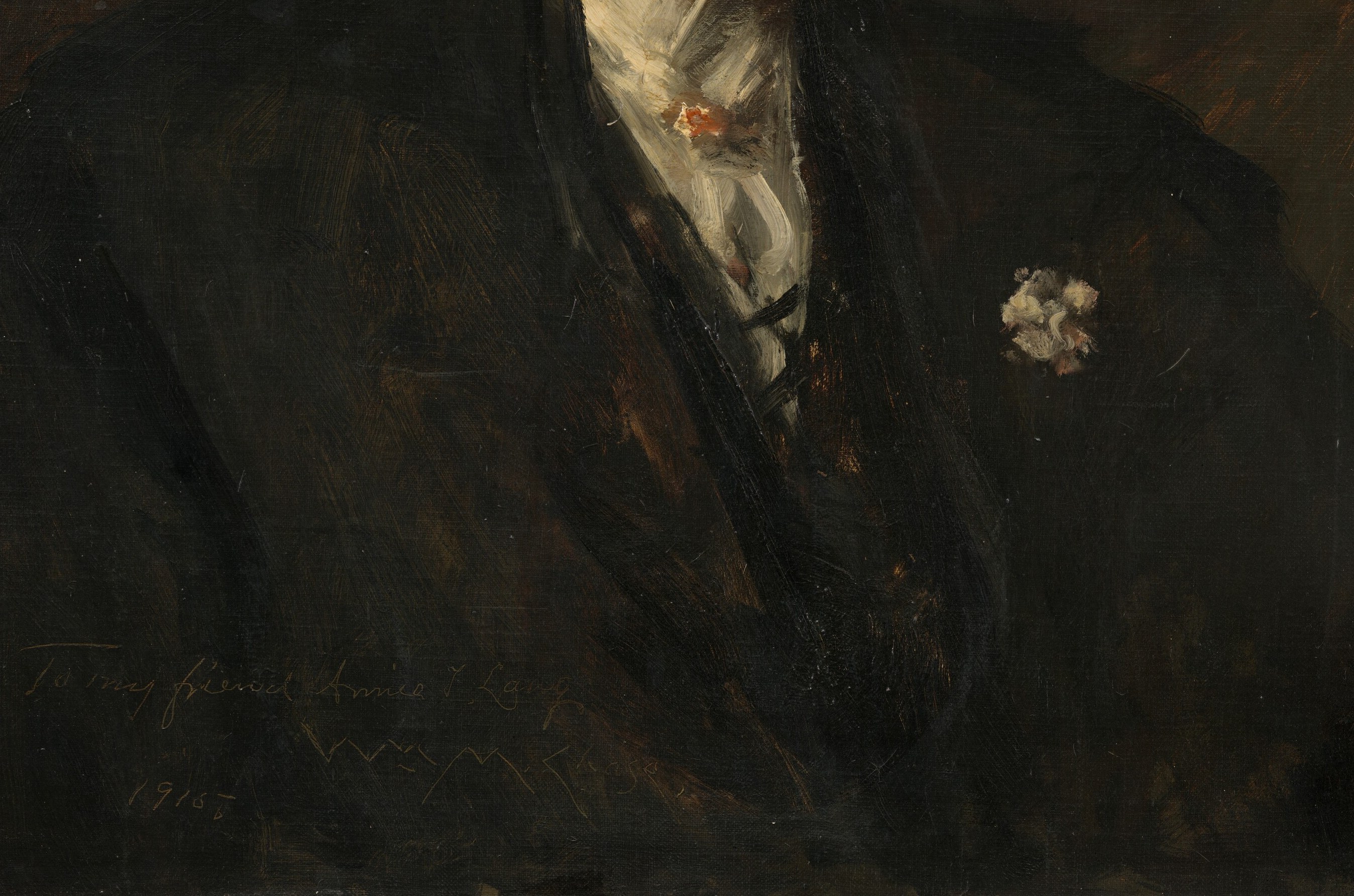
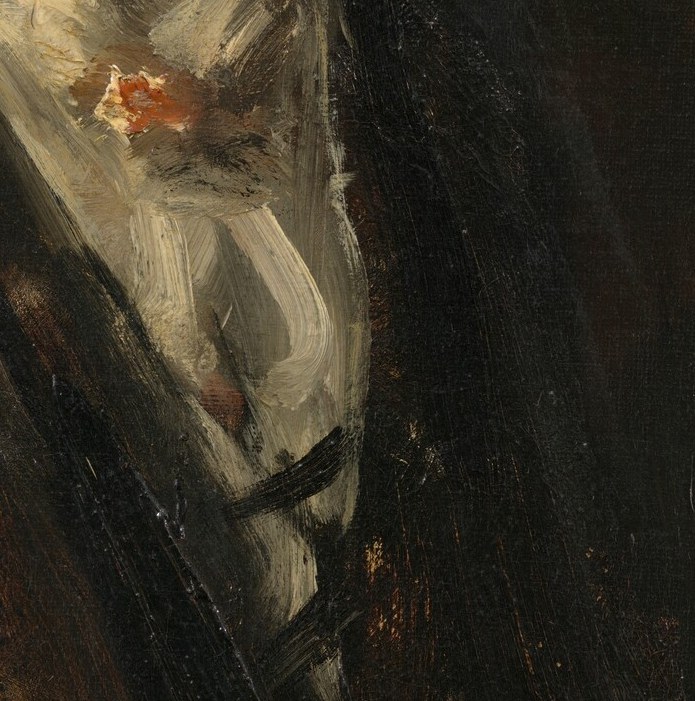
The painting hits differently when you know the date. Chase was sixty-six, a titan of American art who had taught an entire generation of painters. He presents himself in a dark formal suit with a white boutonniere in his lapel: the uniform of a gentleman, not a craftsman. His expression is direct, unsmiling, alert. He had been shaping his own public image for decades, and this was the final draft.
The face is built from luminous strokes of white paint against a near-black background. Look at how the silver hair catches a warmer light behind the head, separating it from the void. The dark jacket takes up the lower half of the canvas like a pedestal for the face. Every compositional choice pushes you toward the eyes.
Chase had lived through the entire arc of Gilded Age painting in America. He was born in Indiana in 1849, studied in Munich, and became the most influential teacher of his generation in New York. His students included Georgia O'Keeffe and Edward Hopper. This self-portrait is his last word, painted as Europe tore itself apart and the world he had built slipped into history.
What do you see in his face? Not resignation, I think. Something more like accounting.
Details
Transcript
1915. The Gilded Age is over. World War I has already been grinding for a year. This man has survived the entire arc of American impressionism. He faces us not in a painter's smock, but a formal suit. A white carnation on his lapel. Chase insisted on being seen as a gentleman. The year he paints this, he dies.