Majas on a Balcony by Francisco Goya
Francisco Goya painted "Majas on a Balcony" between 1808 and 1814, during the brutal Peninsular War that followed Napoleon's invasion of Spain. The original is believed to be in a private Swiss collection, while the Metropolitan Museum of Art holds a period copy. It is one of Goya's great genre scenes from his later period, where the darkness pressing in from the edges of the frame is as much political as it is painterly.
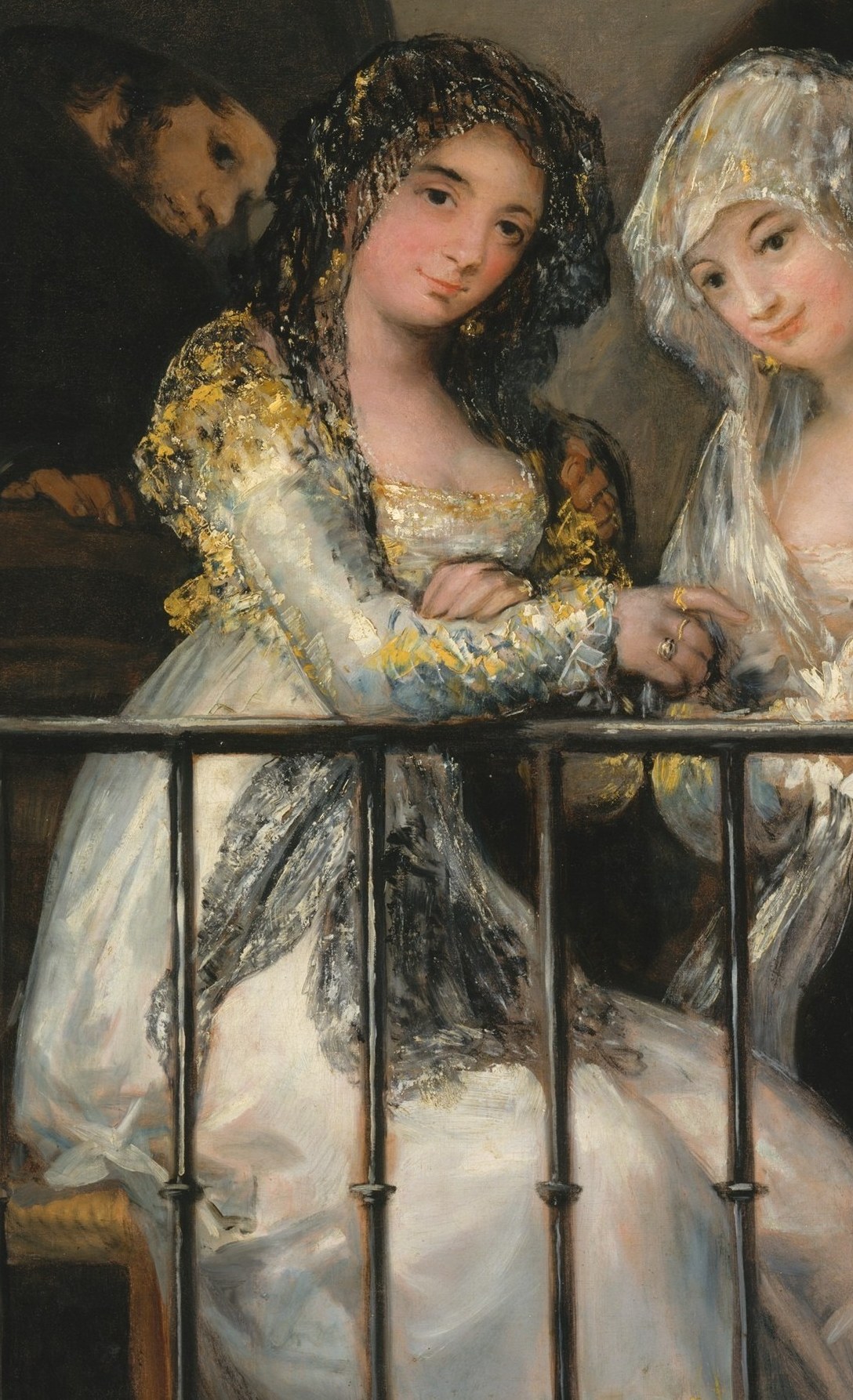
Start with the women. The left maja meets your eye directly from under dark curls, her expression knowing and unguarded. Her companion is veiled in white lace that Goya rendered with rapid, almost reckless brushwork. Their dresses are elegant but the embroidery is worn. These are not aristocrats. They are majas, working-class Madrid figures Goya turned into an icon of Spanish popular culture.
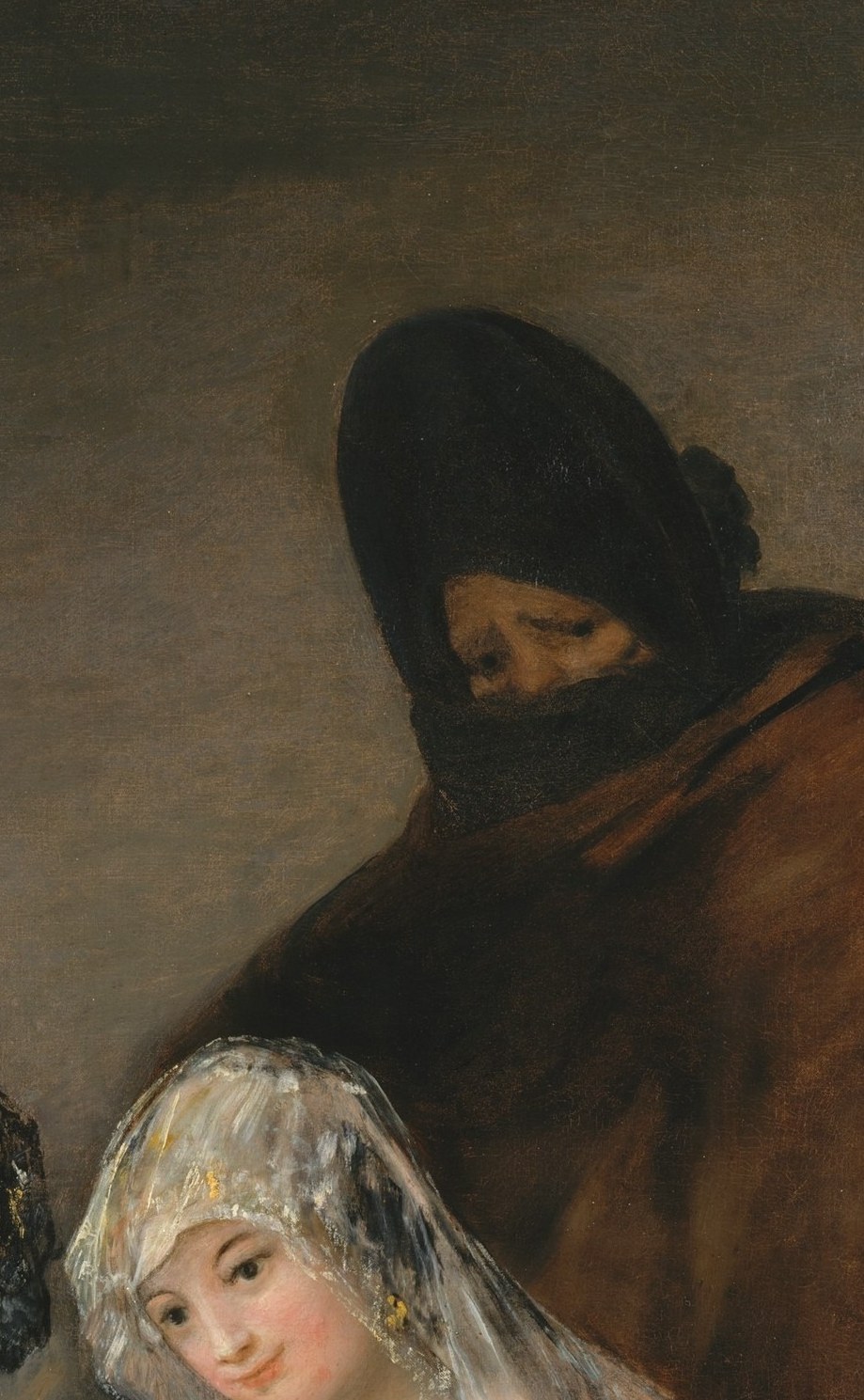
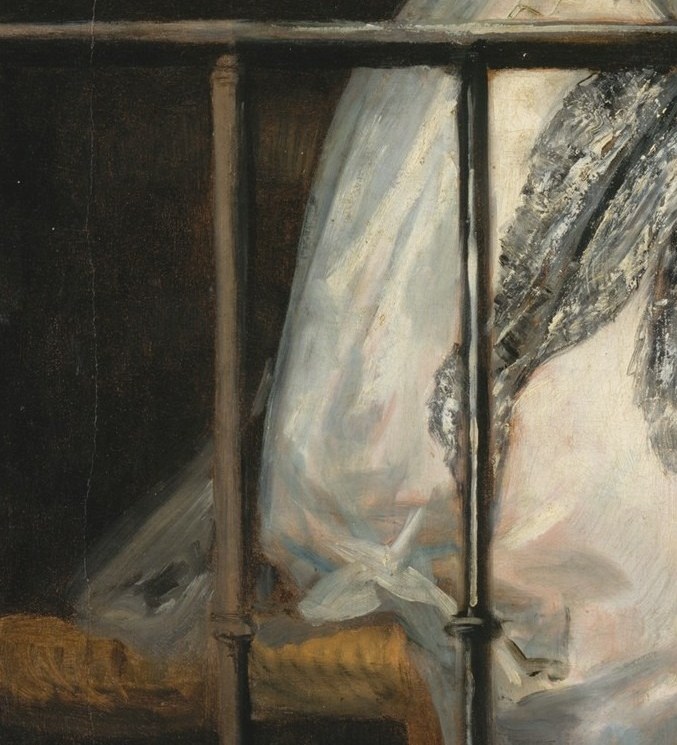
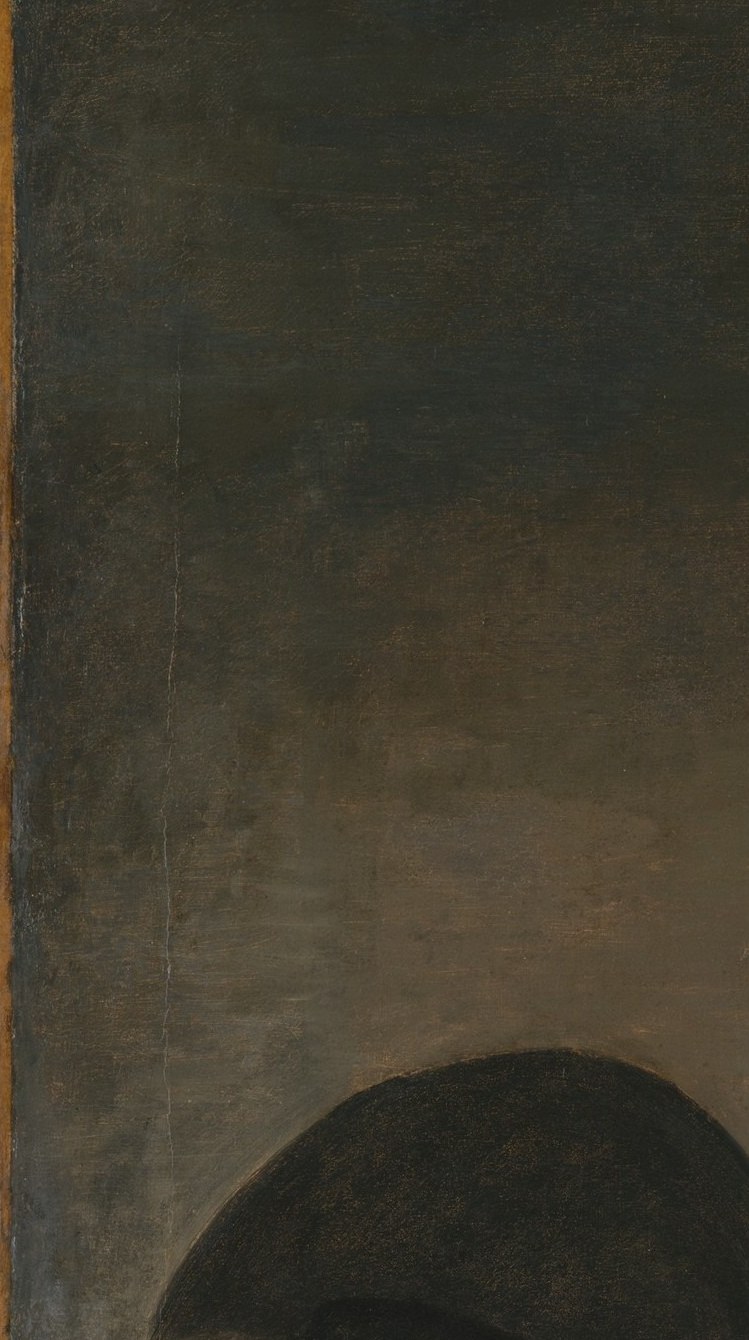
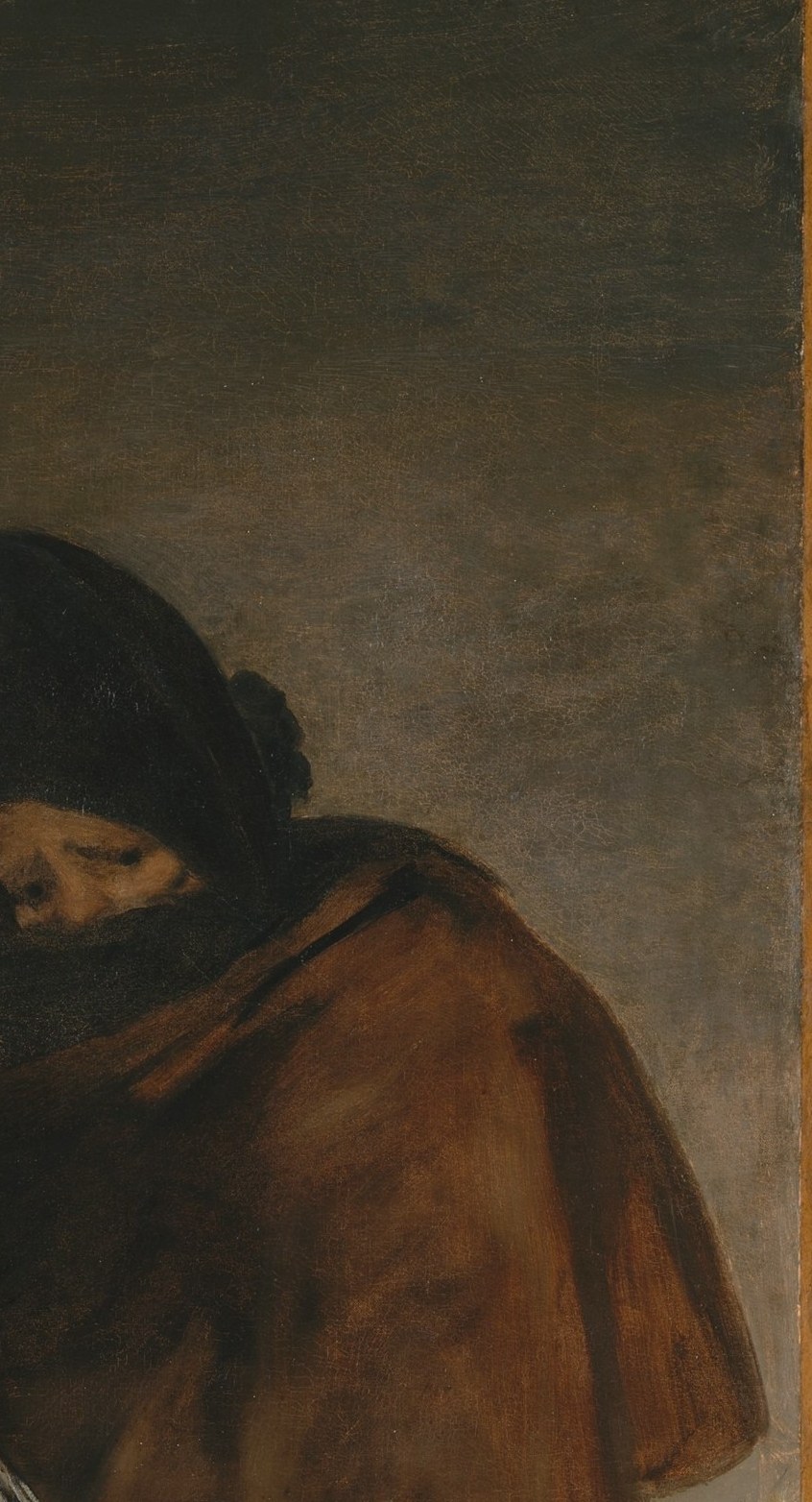
Now move your eye past them, into the upper shadows. Two men in dark cloaks stand against a void of black paint. Goya refuses to give them readable faces. They flank the women like living architecture, present but anonymous. A tricorn hat sits on the railing between the viewer and the women, a casual male accessory that implies a recent visit or an ongoing claim. The whole scene is a display, and the viewer is part of it.
Goya was already deaf by this point, and his work had turned toward the unflinching observation of power, pleasure, and surveillance. Here the darkness is literal, but it is also the occupation. Who are those men? You are left with the question.
Details
Transcript
Madrid, around 1810. The city is occupied. Two majas sit on a balcony, draped in white lace. Goya painted their clothes with loose, dazzling speed. A hat rests on the railing. Someone else is here. Now look behind them, into the shadow. Two men watch from the dark. Goya gives them no faces. The painting lived through Napoleon's invasion of Spain.