明 佚名 郭忠恕 僞款 輞川圖 卷|Wangchuan Villa by Guo Zhongshu|Unidentified artist
This is Wangchuan Villa, an anonymous Ming dynasty handscroll painted in ink and color on silk around 1599. The artist set out to reconstruct a place that had vanished eight centuries earlier: the Wangchuan estate of the Tang dynasty poet and painter Wang Wei.
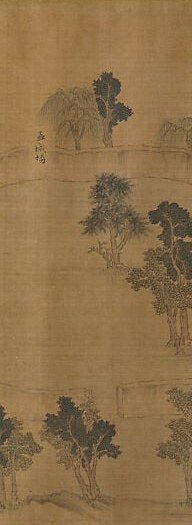
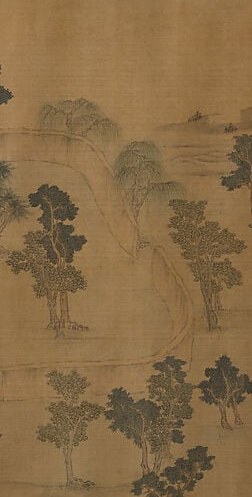
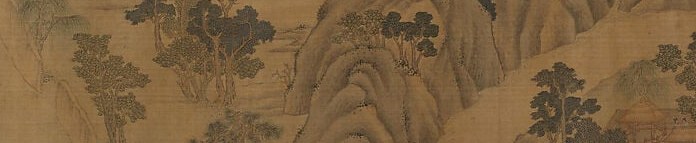
Look at the blank silk above the mountains. In the Chinese landscape tradition this is not empty space, it is sky, mist, and silence. The pale washes rising through the peaks are atmospheric perspective turned into a kind of memory. A faint pavilion hides among the trees center-left; finding it feels like spotting the hermit himself, still just out of reach.
Wang Wei died in 761, and his twenty Wangchuan poems became legendary. But the real buildings, the gardens, the river he described were lost long before the Ming. Later painters returned to those poems again and again, building the estate back from words. This particular scroll carries a false signature of Guo Zhongshu, a common practice that linked a newer work to a revered earlier master.
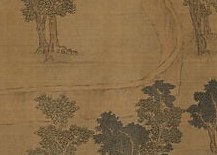
The result is not a map but a pilgrimage route. Each misted valley is named in verse; each tree cluster stands in for a remembered retreat. The real Wangchuan is gone, but the visit is still here.
Details
Transcript
Wang Wei was a poet who just wanted to be left alone. He wrote twenty poems about his mountain estate. Then he died. The buildings crumbled. The poems survived. A thousand years later, a painter rebuilt it from the words alone. The blank silk is sky. Not empty, just silent. Mist splits the mountains into planes of memory. A pavilion hides in the grove. The hermit is still invisible. Every valley here holds a named retreat from the poems.