The Daughter's Return by Robert MacCameron
The Daughter's Return by Robert MacCameron, 1909. This painting captures a poignant moment of domestic drama, hinting at a complex emotional reunion. Most striking is the deliberate use of light and shadow to convey unspoken tension.
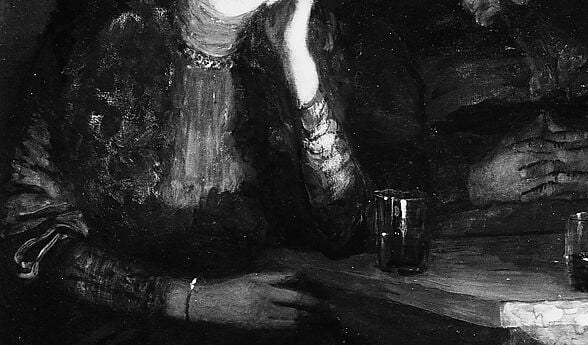
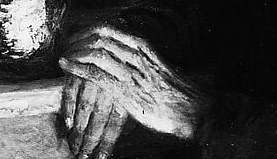
Notice how the young woman's luminous white dress contrasts sharply with the dark, shadowed interior. Her face, turned away and partially obscured, adds an air of mystery, while the man at the table, seen in profile, displays a palpable sense of unease in his clasped hands.
Robert MacCameron, born in Chicago, painted this scene in 1909, a period when genre scenes exploring everyday life and emotion were popular. The painting's power lies in its stillness and the suggestion of a narrative unfolding beyond the frame.
What do you imagine has just happened, or is about to happen?
Details


Transcript
She appears at the threshold, a vision in white. Her dress seems to glow in the dim light. But her face is shadowed, her gaze outward. He sits at the table, facing away. His folded hands suggest a deep tension. This scene was painted in 1909. Light and shadow build the quiet drama. An everyday reunion, filled with unspoken words.