Eleonora di Toledo by Bronzino, Agnolo
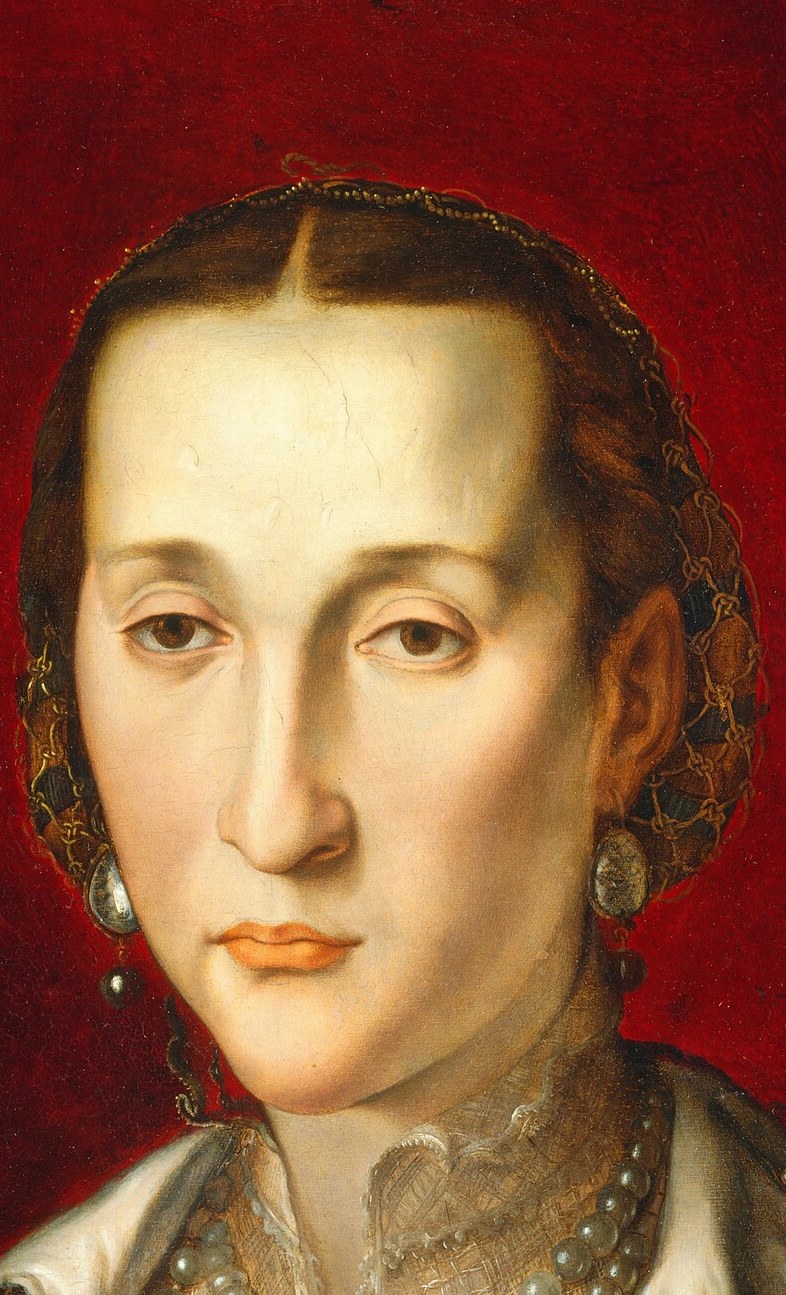
Agnolo Bronzino's Eleonora di Toledo, c. 1560, housed in the Uffizi Gallery, Florence. This portrait showcases the Duchess of Florence draped in unimaginable wealth, yet the painting itself was a political statement.
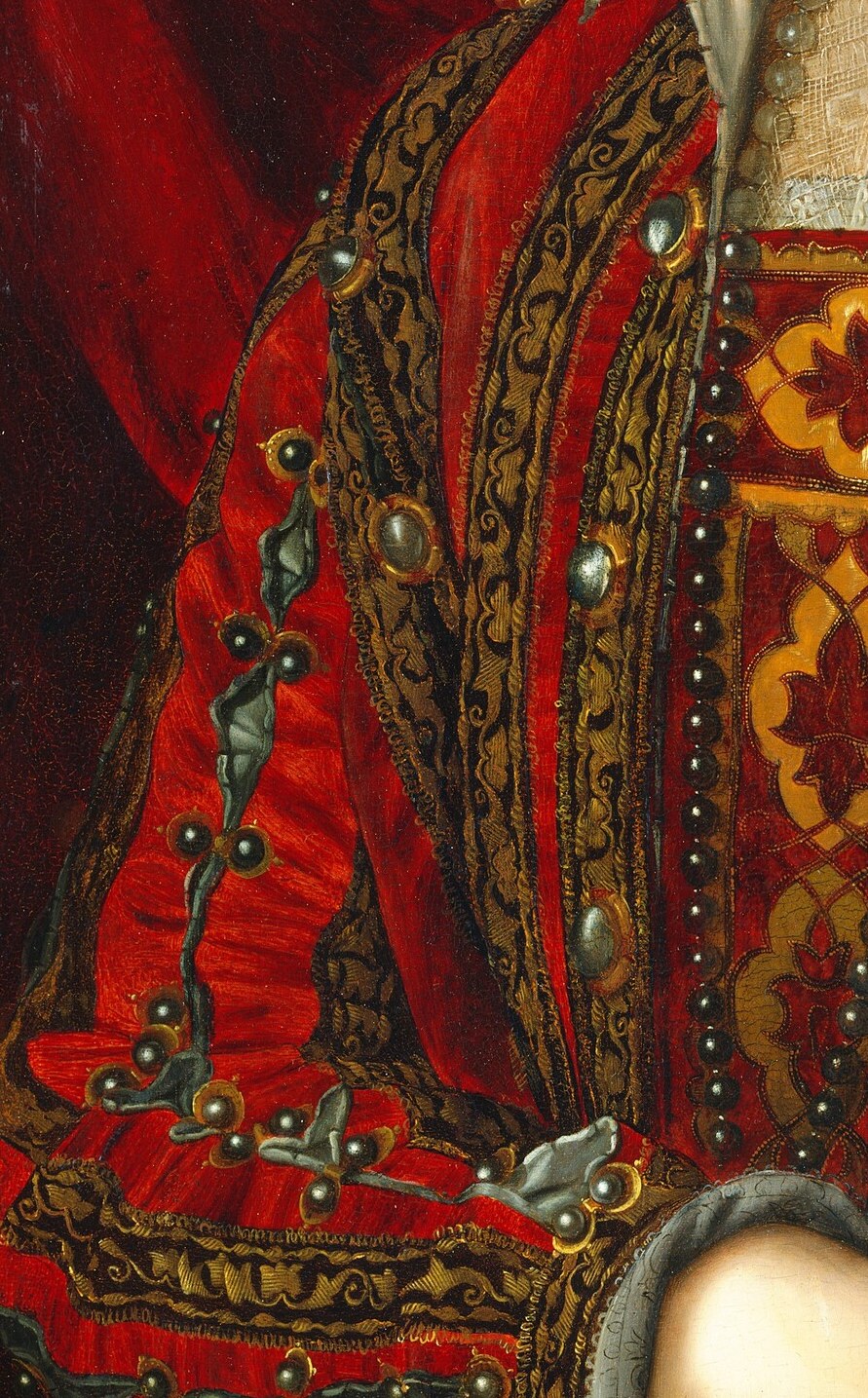
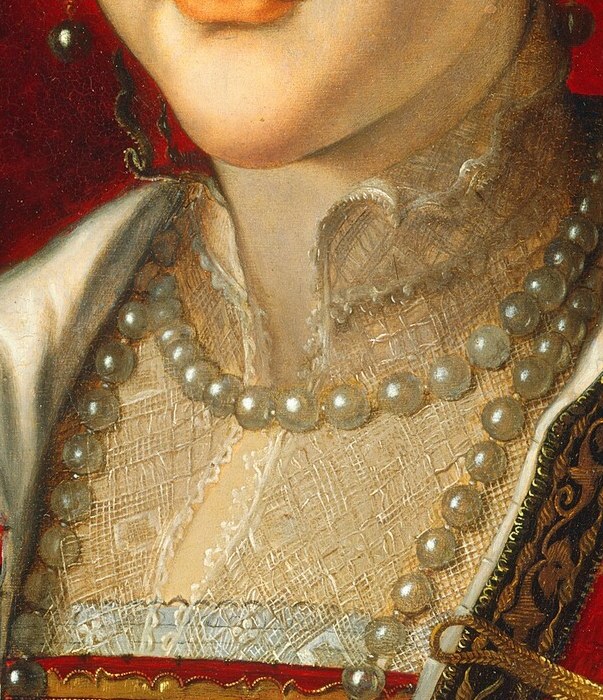
Look at the intricate gold thread woven into her sleeve and the multiple strands of pearls, each rendered with individual highlights. Bronzino's meticulous detail extends to the jeweled ornament at her chest, a symbol of her dynastic power.
Commissioned by her husband, Cosimo I de' Medici, shortly after he consolidated his rule over Florence through a coup, this portrait was designed to project an image of stability and legitimate authority. Eleonora's serene, statuesque pose and opulent attire were intended to impress upon viewers the power and permanence of the Medici dynasty.
Bronzino's genius here is not just in rendering fabric and jewels, but in painting political capital. Was this portrait a reassurance, or a warning?
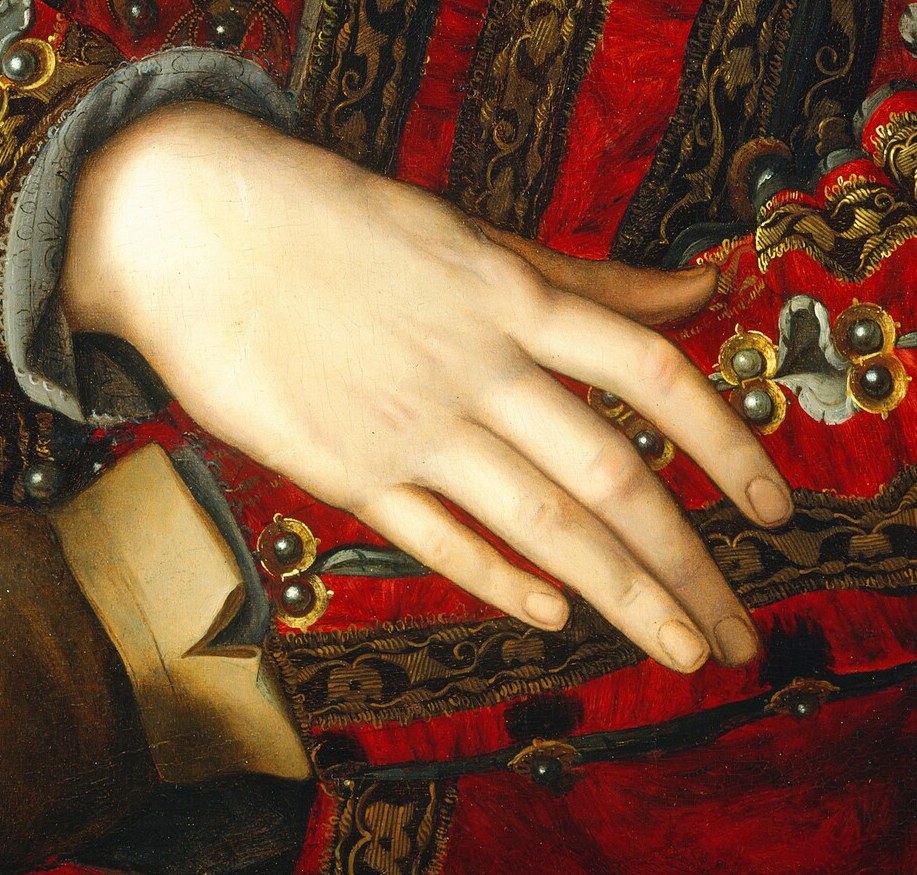
Details
Transcript
This gown is woven with real gold thread. Her pearls alone could fund a small army. Bronzino paints her like a statue. She was Duchess of Florence. Her husband ruled. This portrait announced her power to the world. Her jewelry signals dynastic power. The Duke had Bronzino paint this after a coup.