A Winter Sky by George Inness
George Inness's "A Winter Sky" (1866) captures a profound sense of quietude and the artist's internal reflection. This painting, created early in his career while associated with the Hudson River School, showcases his masterful depiction of atmospheric light and the stillness of a winter evening. Inness began to infuse his landscapes with a spiritual resonance, a theme that would deepen throughout his life.
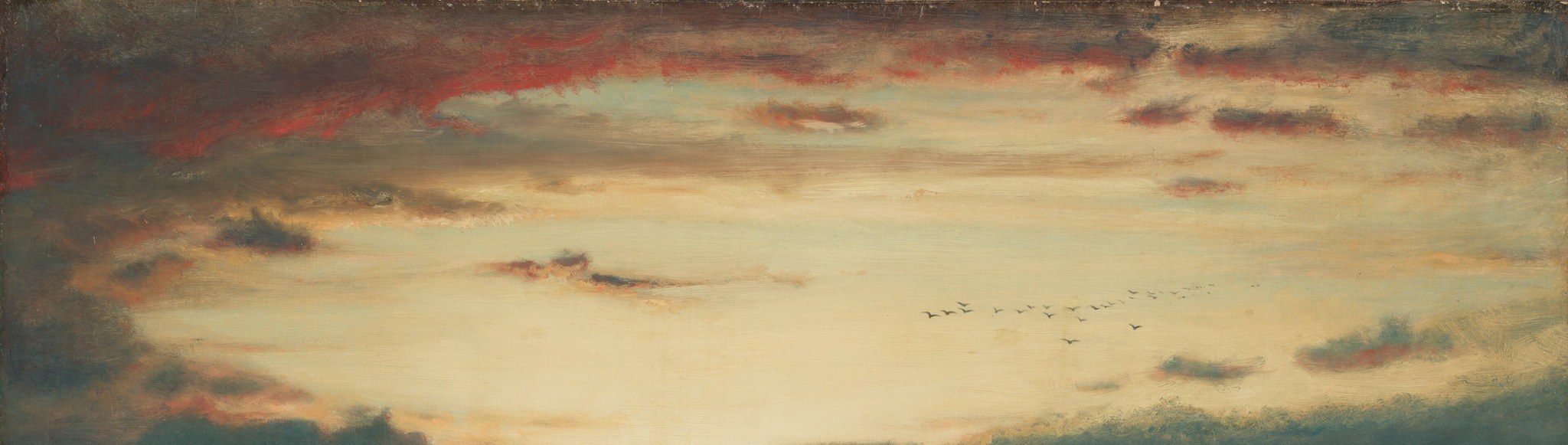
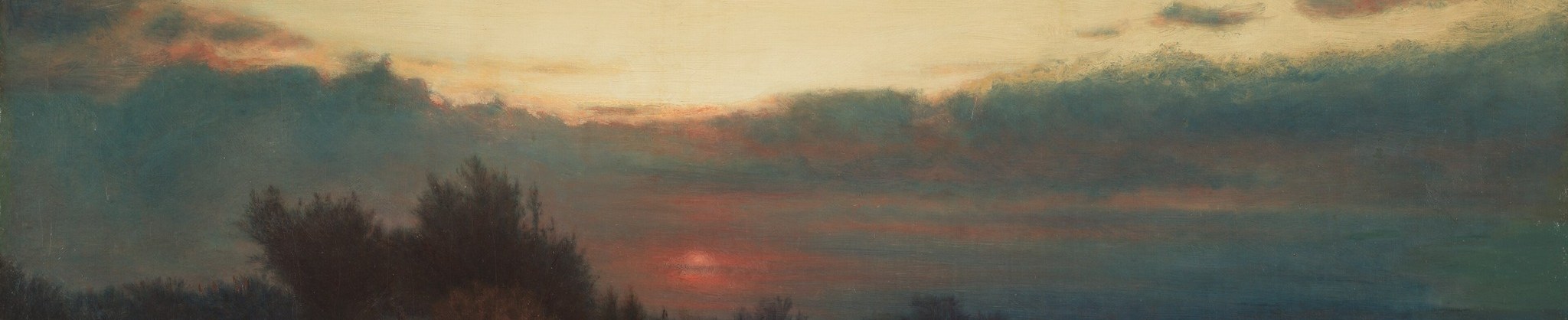
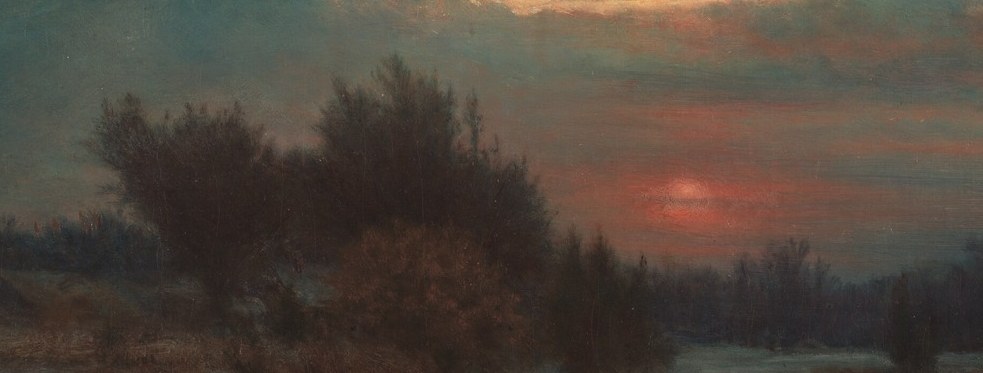
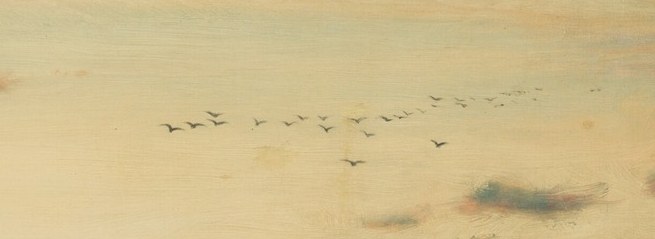
The work draws our eye upwards to the dramatic sky, where luminous amber clouds transition to cooler slate tones at the horizon, illuminated by the setting sun. Stark, bare trees rise from the muted winter field, their silhouettes sharp against the fading light, while a flock of birds marks a final movement before nightfall.
Painted in 1866, this work reflects Inness's early style before he incorporated influences from European art and the theology of Emanuel Swedenborg. It embodies his lifelong pursuit to capture the essence of a locale by interweaving the earthly and the ethereal.
Consider the mood Inness conveys, a silent testament to the beauty found even in winter's end.
Details
Transcript
The painter watched the day end in winter. Amber clouds glowed, a warm farewell. He saw this specific red glow. Cooler tones met the fading light. Bare trees stood like stark outlines. Birds flew, a final flight. He painted this sky in 1866.