Still Life, Flowers, and Fruit by Roesen, Severin
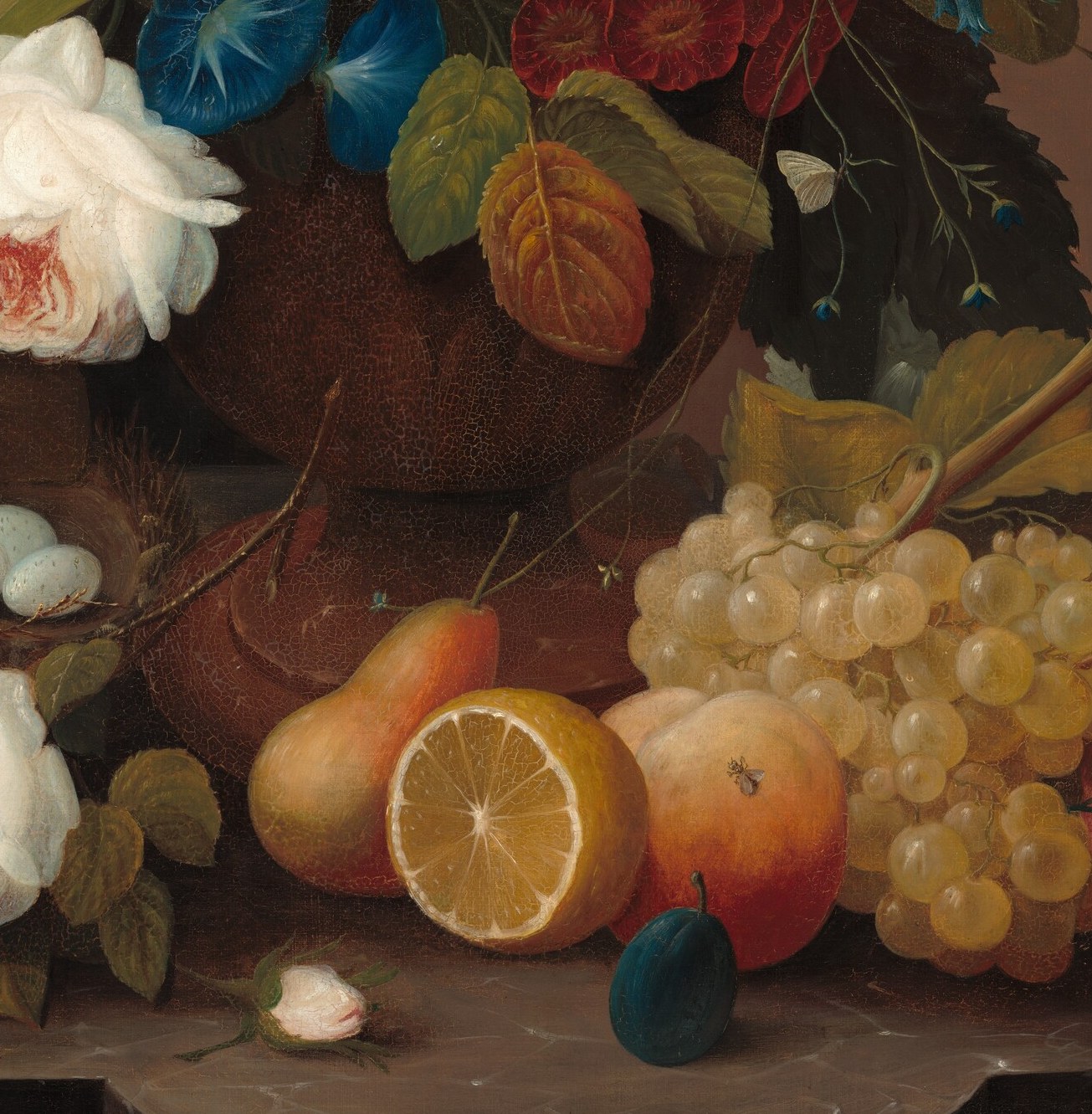
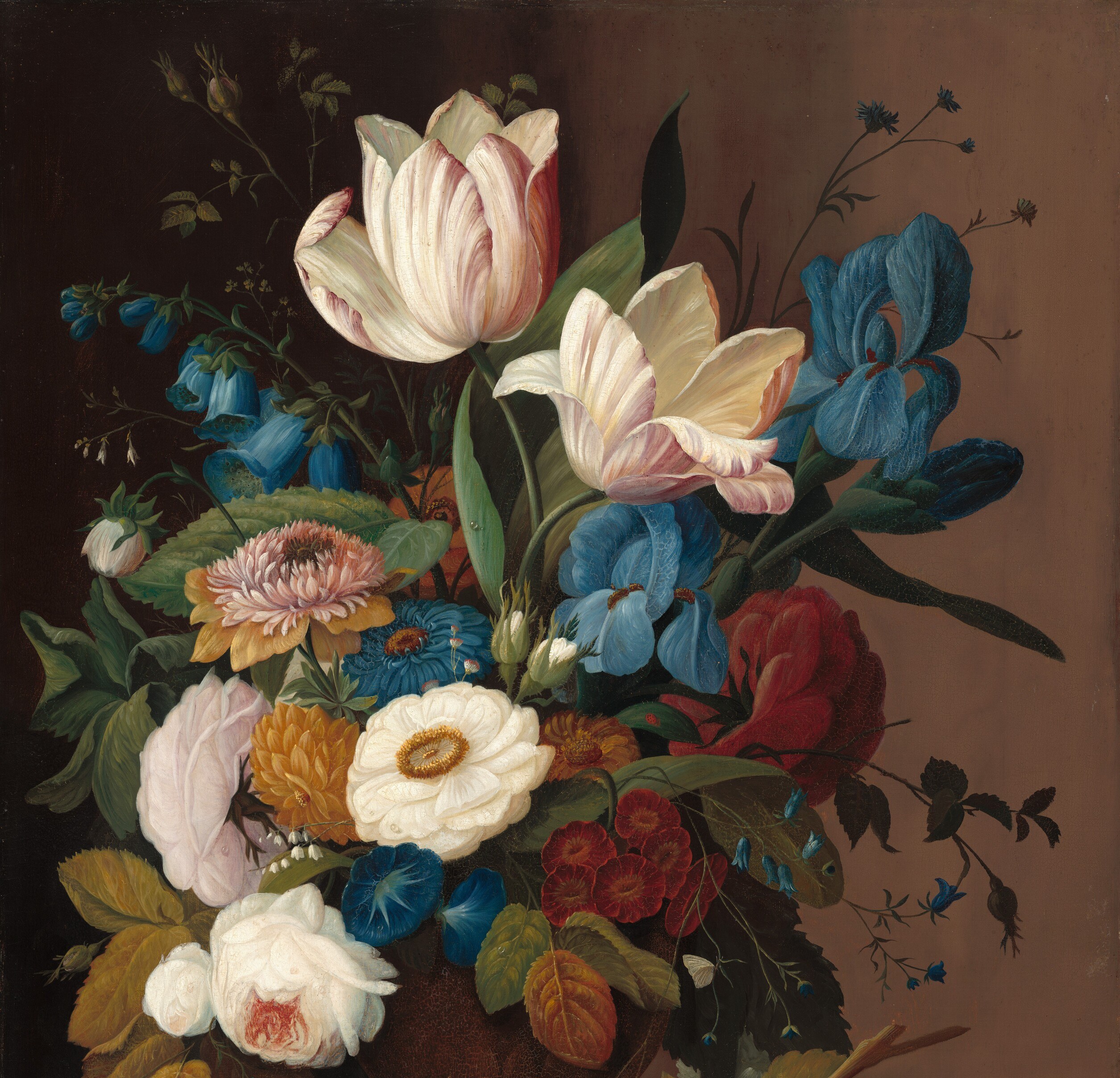
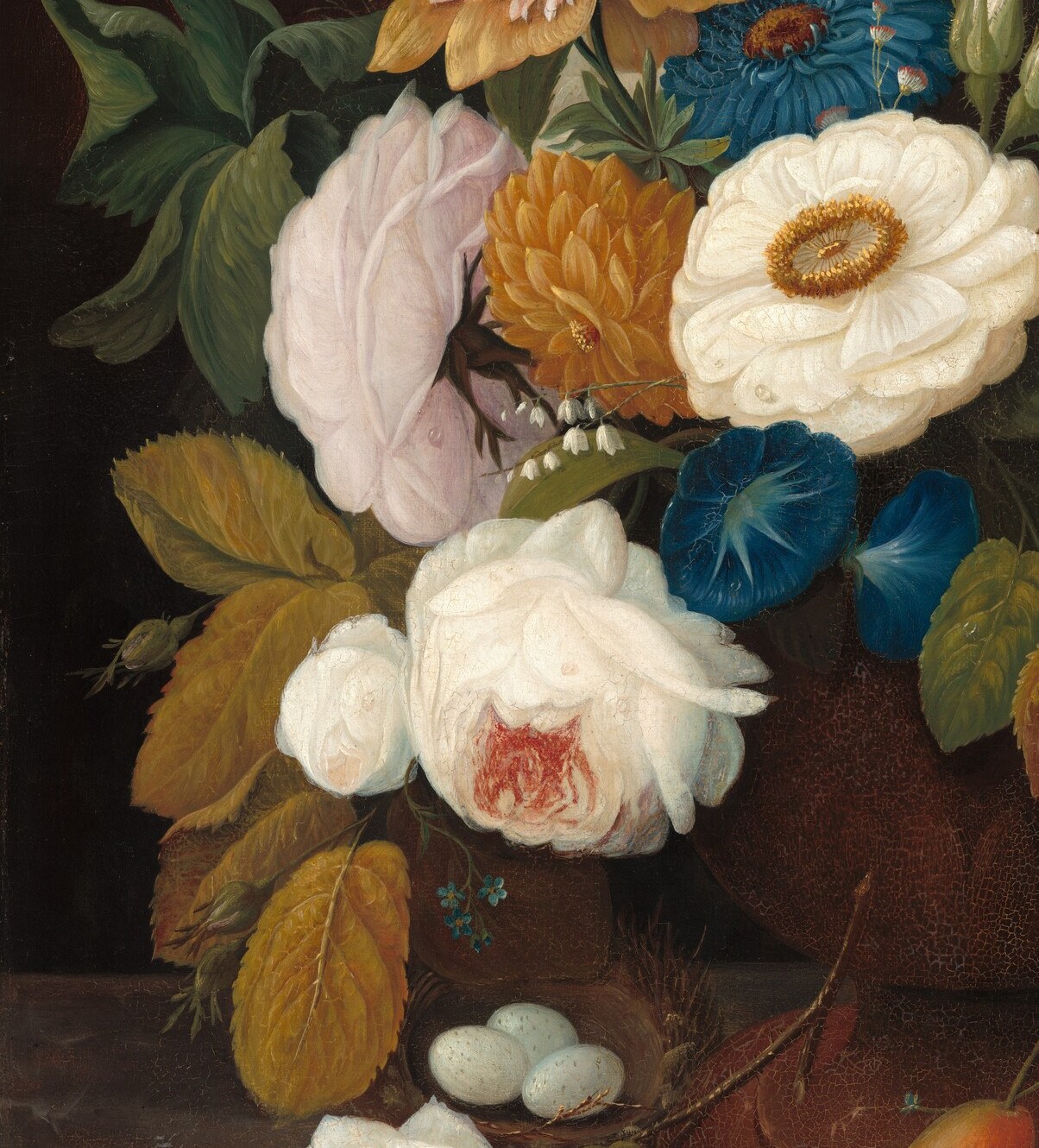
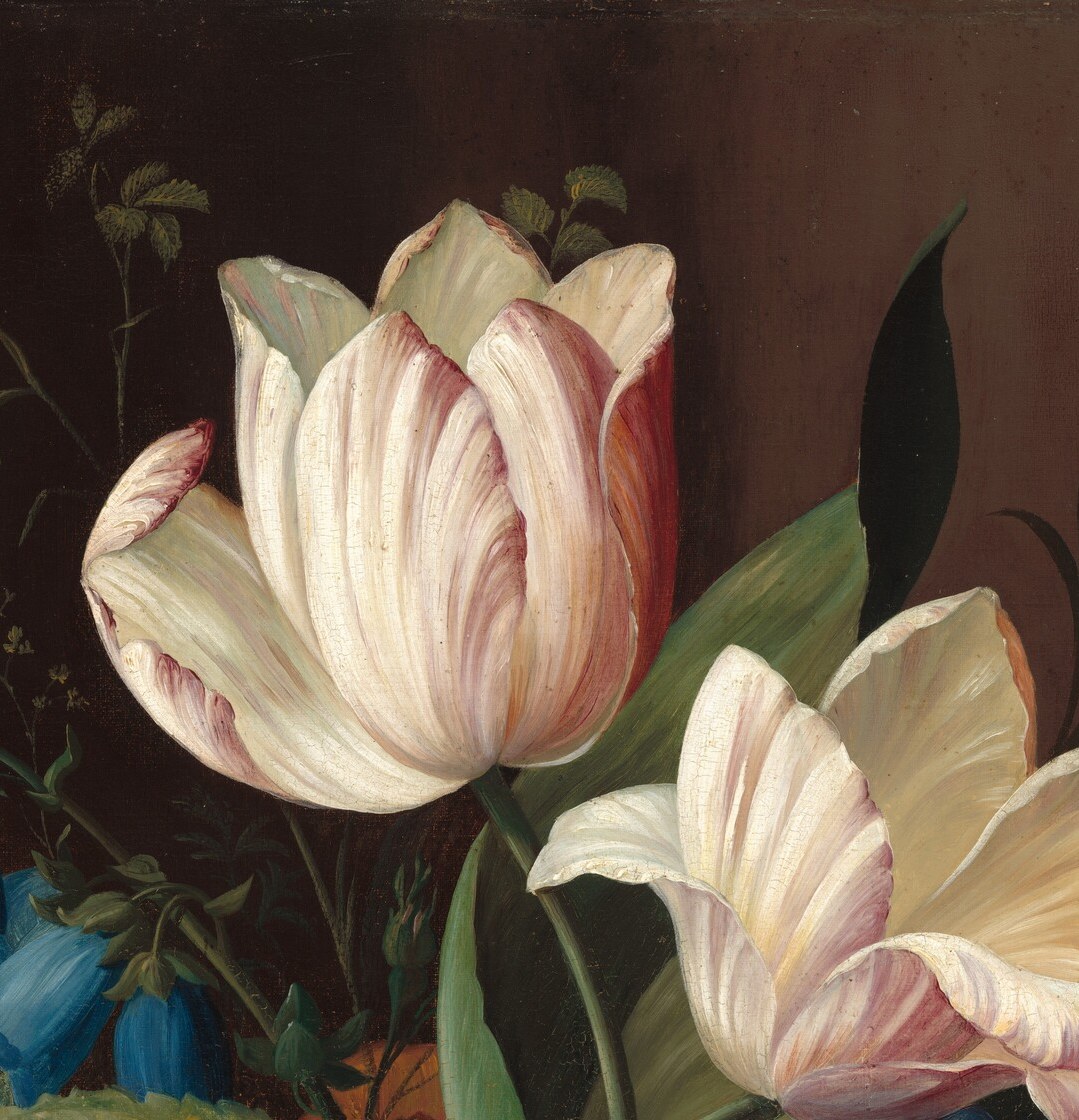
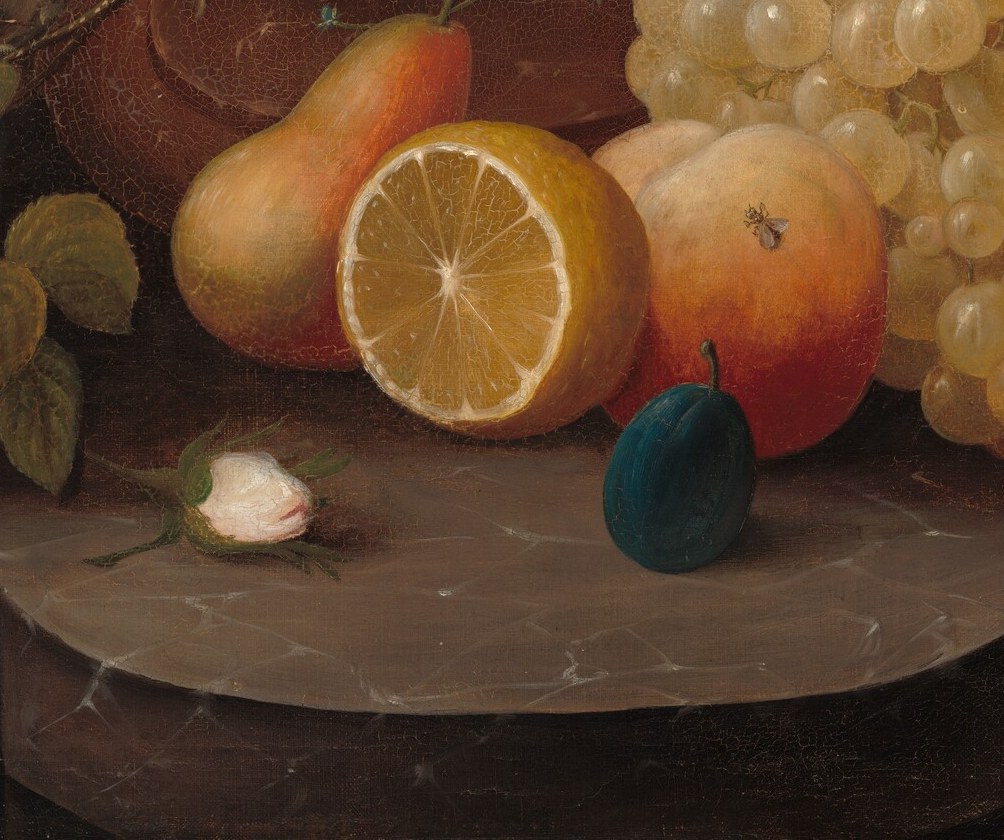
Severin Roesen's "Still Life, Flowers, and Fruit," painted in 1848 and now in the collection of the Metropolitan Museum of Art, is a signature work by America's most prolific mid-century still life painter. It arrives roaring with abundance: a glass vase packed with blooms, a stone ledge heavy with peaches, plums, and a halved orange glistening in the dark. Roesen painted hundreds of canvases just like this, each one a machine for delight.
Find the glass vase first. The right rim catches a cool white curve of reflected light, and through the glass you can see the ghostly green stems submerged within. That transparency is the painter's handshake to the Dutch Golden Age, a technique Roesen brought with him from Prussia. Then look lower left, at the white roses: their outer petals carry a faint brown edge, the quiet signal that all this ripeness is already turning.
Roesen was born in Germany, trained somewhere in the European tradition, and landed in New York around 1848, the same year this painting is dated. For roughly two decades he supplied the booming American middle class with exactly this kind of opulent, optimistic picture. Then, sometime in the 1870s, the trail stops cold. Researchers have found no death certificate, no grave, no newspaper notice. He simply vanished into the century he spent his career decorating.
His paintings are not psychological portraits, but they are evidence. A perfectly glazed grape, a passionflower with its crown-of-thorns corona half-hidden in shadow, these things outlasted the man who made them.
Details
Transcript
In 1848, an immigrant painter arrived in New York. He brought the Dutch still life with him. He made it American. Look at the glass. See the stems inside, the light on the rim. Roesen painted this translucency with tiny, perfect white strokes. He stuffed America's grandest parlors with abundance like this. Then, in the 1870s, he simply disappeared. No death record. No obituary. Just paintings signed in a steady hand. We still don't know where or when Severin Roesen died.