Madame Cézanne à la jupe rayée (Madame Cézanne in a Red Armchair) by Paul Cézanne
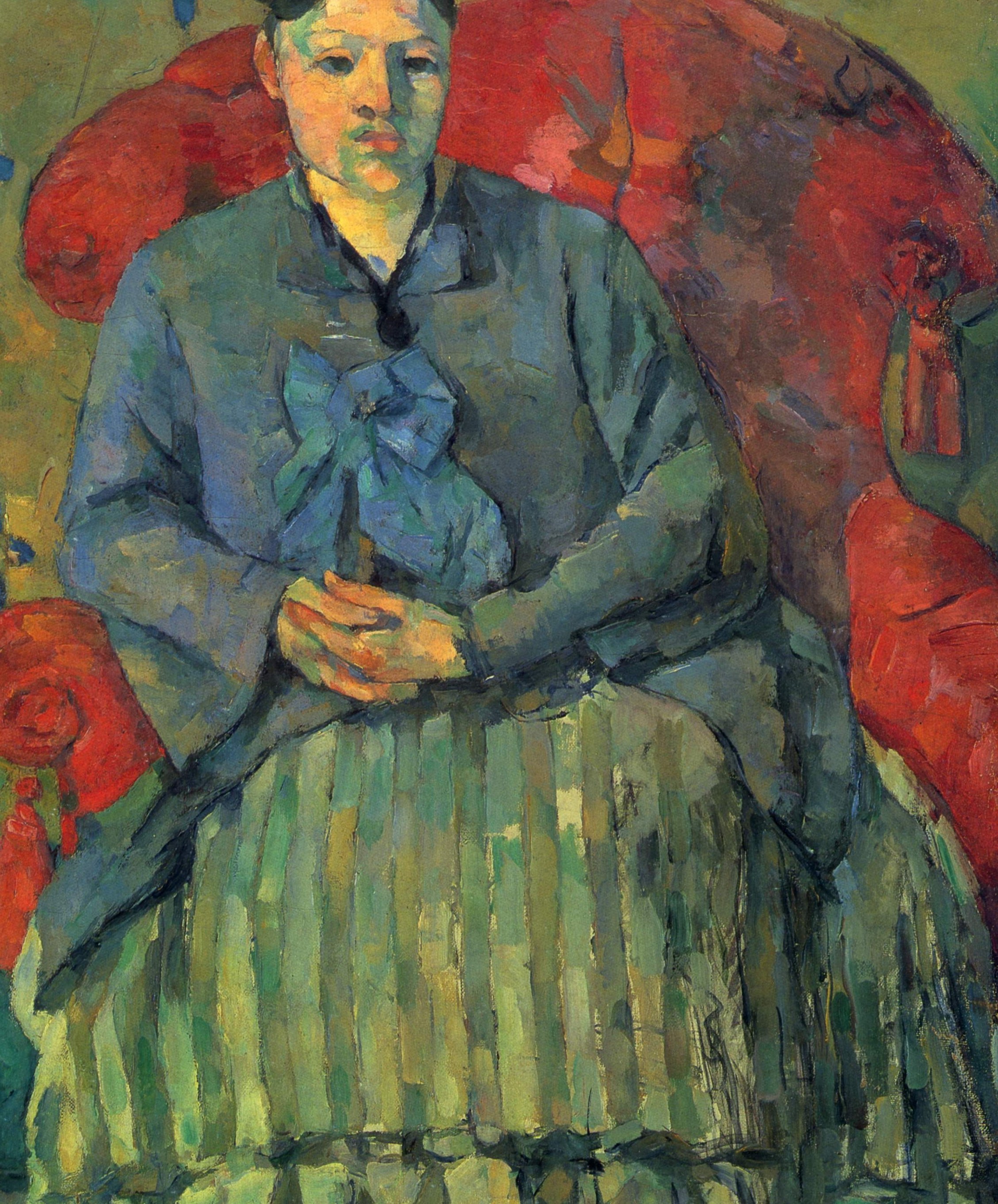
Paul Cézanne's 1889 painting, Madame Cézanne à la jupe rayée, offers a fascinating study of domestic tension. While appearing as a simple portrait of his wife, Marie-Hortense Fiquet, the composition uses subtle visual cues to convey a complex emotional undercurrent. The painting is held at the Museum of Fine Arts, Boston.
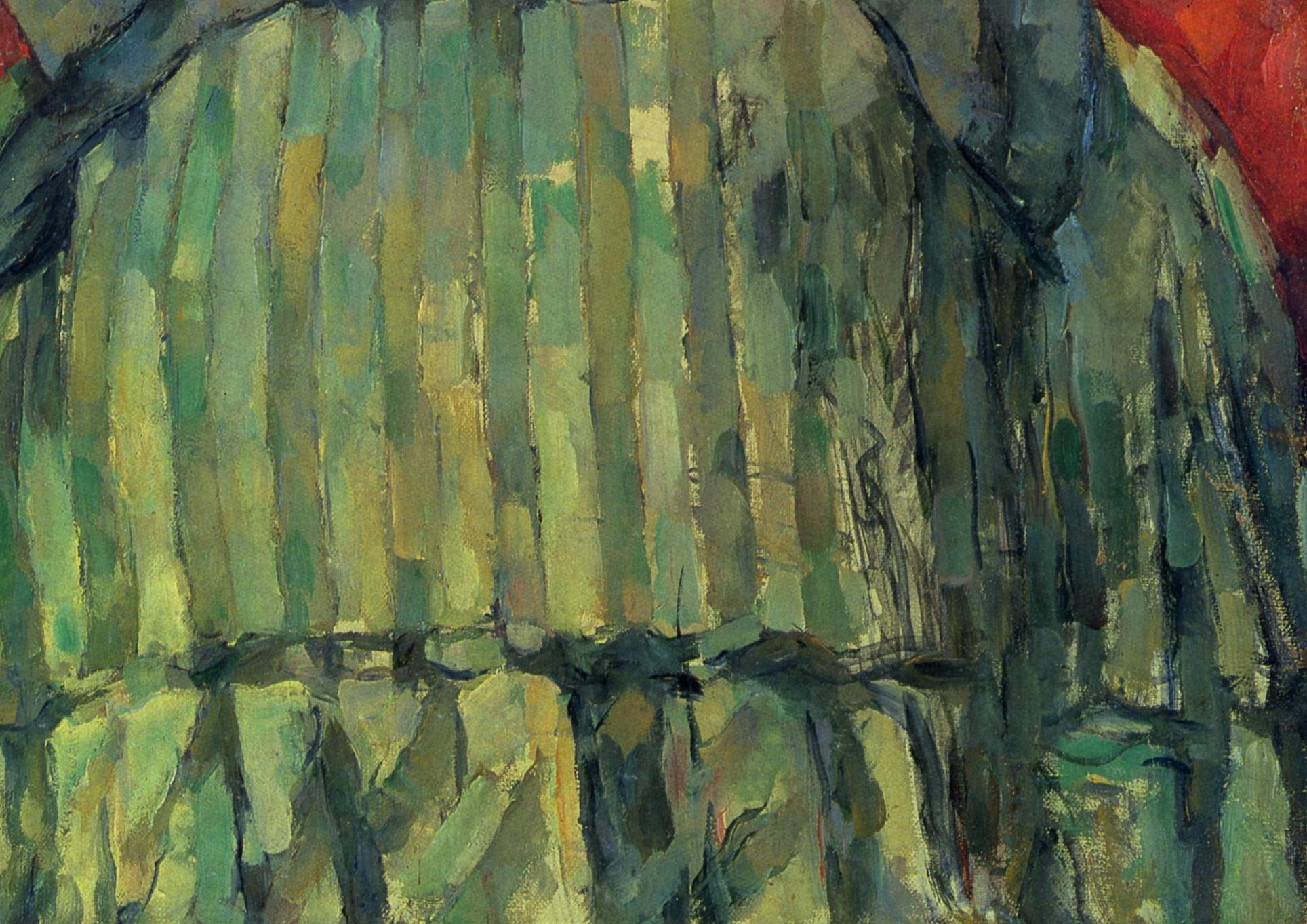
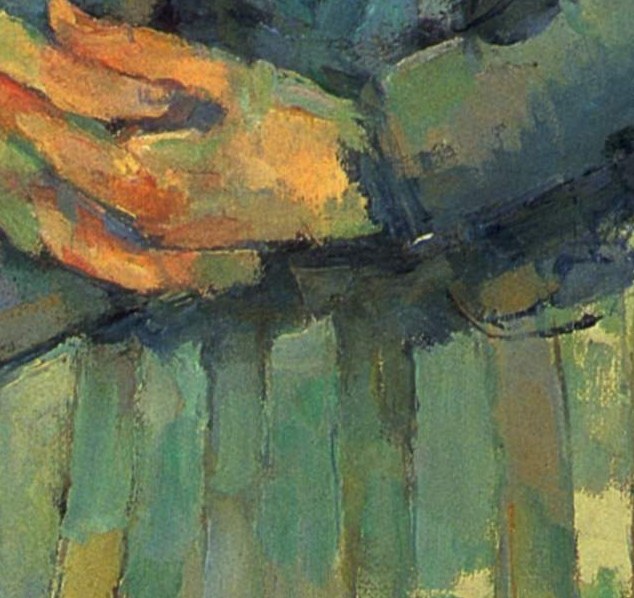
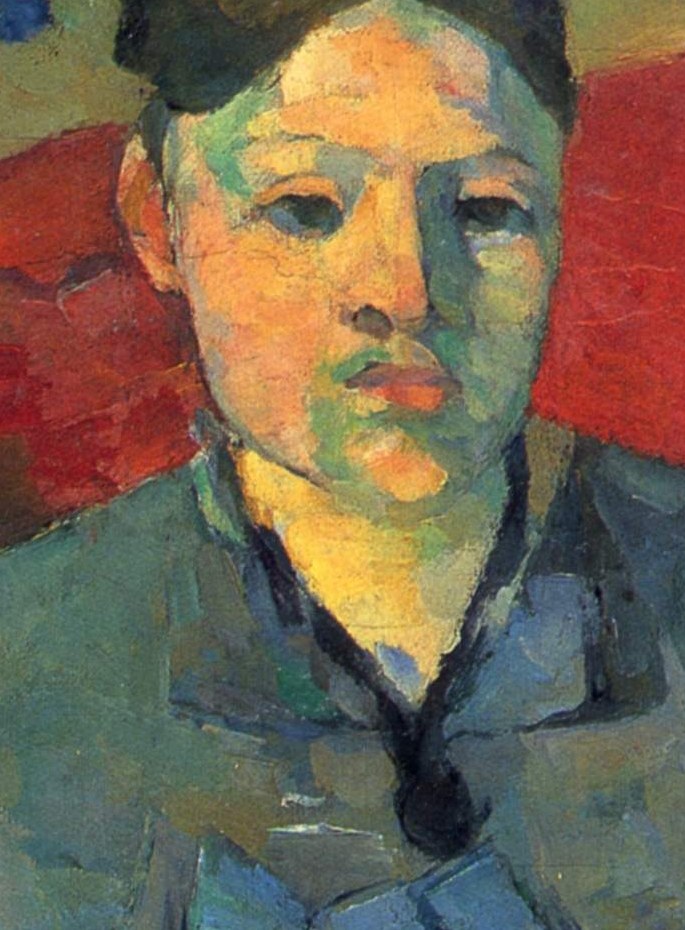
Notice the striking contrast between the subdued figure of Madame Cézanne and the vibrant red armchair. Her striped skirt, rendered with thick, tactile brushstrokes, suggests a sense of constraint, while her folded hands appear to contain a suppressed energy. The blue bow at her neck offers a hint of softness against the formal attire.
Cézanne, known for his role in bridging Impressionism and Post-Impressionism, explored form and color relationships with scientific precision. This portrait exemplifies his interest in geometric simplification and the way color can create visual tension, moving beyond purely optical effects to suggest underlying structure and emotion.
This work invites viewers to look beyond the surface, decoding the artist's careful arrangement of elements to understand the nuanced portrayal of his subject.
Details
Transcript
He painted his wife Marie-Hortense in 1889. Her striped skirt speaks of confinement. The red chair means passion, or maybe anger. Her hands hold back a physical outburst. Her blue bow adds a soft, elegant touch. But this is Cézanne’s subtle color contrast. A quiet portrait, yet full of visual tension.